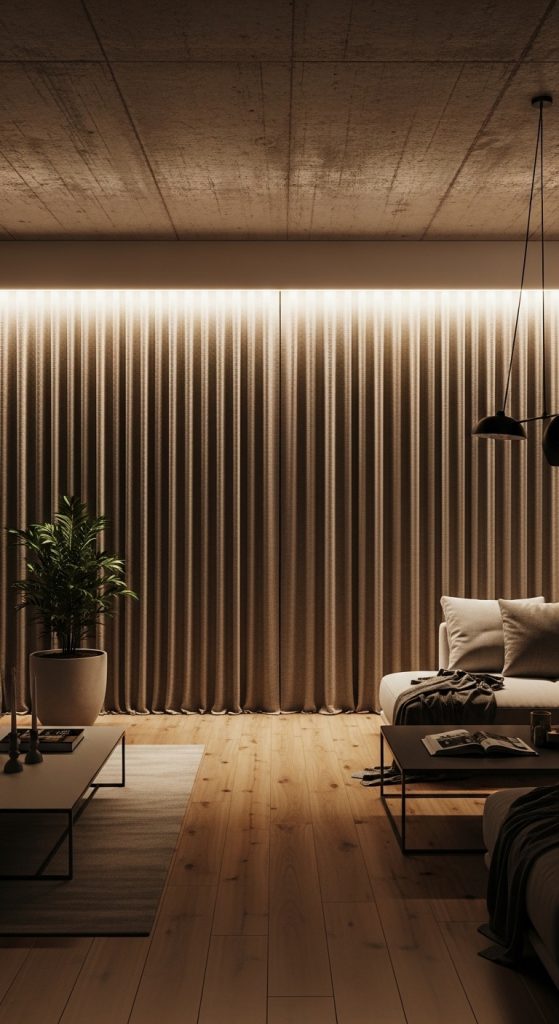
Curtains are one of the most underrated design tools for basements. While most people think of curtains strictly for windows, they can transform entire basement walls — hiding storage, softening concrete, dividing open layouts, covering unfinished areas, improving acoustics, and adding warmth to otherwise cold environments. Because basements often have exposed foundation walls, utility panels, pipes, or awkward layouts, curtain wall solutions offer a flexible and budget-friendly alternative to permanent renovations.
Unlike drywall construction, curtains allow you to adapt the space as your needs change. Want to create a temporary guest room? Add privacy to a studio basement? Hide shelving? Soften a home theater wall for better sound quality? Curtains make it possible without major remodeling. They also help visually raise ceilings when installed from ceiling to floor, making low basement heights feel taller.
Fabric choice matters in basement environments. Because basements can have higher humidity, it’s important to choose mildew-resistant, washable, or synthetic-blend fabrics when possible. Heavier materials like velvet and blackout curtains help with sound absorption and light control. Sheer curtains brighten dark spaces while maintaining softness. Layered curtains provide both function and style.
Hardware is equally important. Ceiling-mounted curtain tracks create a seamless look and maximize vertical space. Industrial rods add character. Hidden tracks produce a sleek finish. Proper anchoring ensures durability, especially if curtains are used as room dividers.
In this guide, you’ll discover 10 practical, stylish curtain basement wall ideas. Each one includes a clear explanation, step-by-step setup instructions, and a materials list so you can confidently execute the look. Whether your basement is finished or unfinished, large or small, these ideas will help you turn blank walls into functional, beautiful features.
Let’s upgrade your basement walls with smart, stylish curtain solutions.
1. Full Wall Floor-to-Ceiling Curtain Panel
Introduction
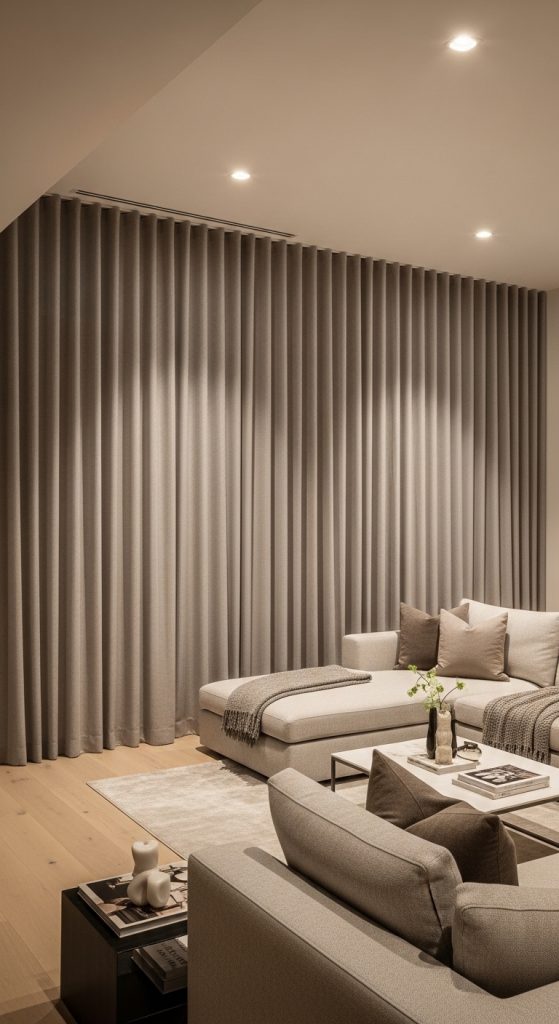
One of the most impactful ways to elevate a basement wall is by installing floor-to-ceiling curtain panels across the entire wall. This instantly softens hard surfaces like concrete or drywall while adding warmth and elegance. It’s especially effective in media rooms, bedrooms, or lounge spaces.
Full-length curtains visually elongate walls, making low ceilings appear taller. They also improve acoustics and insulation.
What This Idea Is
A continuous curtain wall covering from ceiling to floor, installed along an entire basement wall.
Step-by-Step How-To
- Install a ceiling-mounted curtain track spanning the wall.
- Choose long curtain panels (at least 1–2 inches touching the floor).
- Use neutral or textured fabric for versatility.
- Add LED strip lighting above the curtain track (optional).
- Keep curtains slightly wider than wall for full coverage.
Materials Needed
- Ceiling curtain track
- Floor-to-ceiling curtain panels
- Anchors and screws
- Drill
- Optional LED strip lighting
2. Curtain Wall to Hide Storage Shelving
Introduction
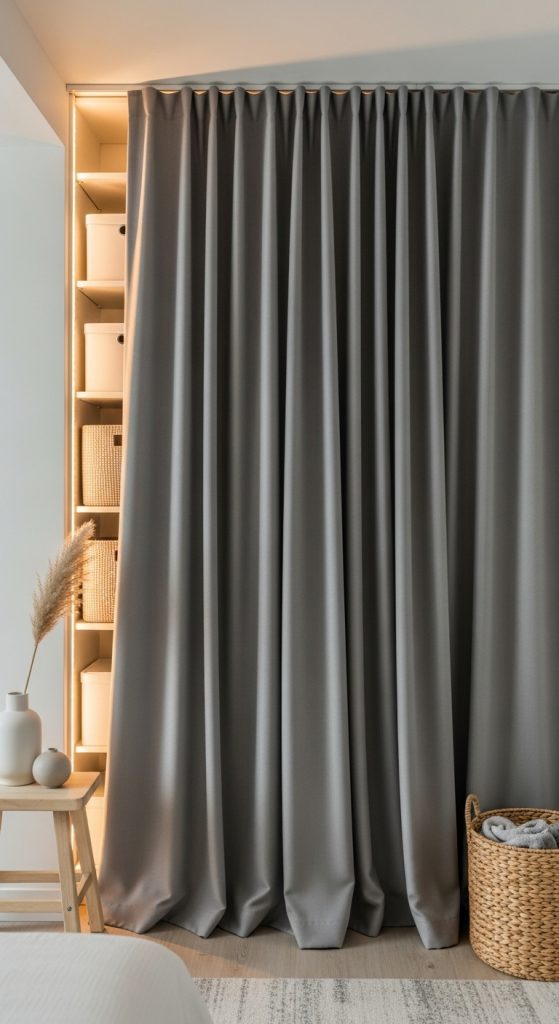
Basements often double as storage areas. Instead of building permanent closet doors, you can install a curtain wall to hide open shelving units. This keeps the space looking tidy while maintaining easy access.
What This Idea Is
A fabric curtain installed in front of shelving or storage racks.
Step-by-Step How-To
- Measure width of shelving area.
- Install rod or ceiling track above storage.
- Choose durable, washable fabric.
- Ensure curtains extend past edges for full coverage.
- Use tie-backs for easy access.
Materials Needed
- Curtain rod or track
- Curtain panels
- Wall anchors
- Measuring tape
- Tie-backs
3. Curtain Divider Wall for Open Basement Layout
Introduction
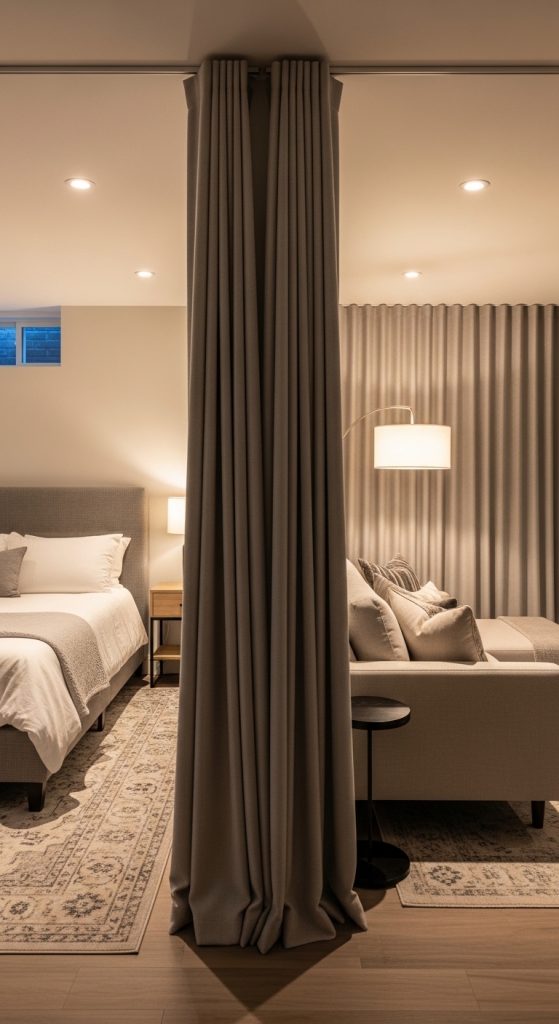
If your basement is open concept, curtains can create flexible room divisions without permanent walls. Perfect for separating a bedroom area from a lounge or office zone.
What This Idea Is
A suspended curtain acting as a soft partition wall.
Step-by-Step How-To
- Install ceiling track across dividing line.
- Choose thicker fabric for privacy.
- Ensure track is securely anchored.
- Use neutral tones for seamless integration.
- Add weighted hems for stability.
Materials Needed
- Heavy-duty curtain track
- Thick curtain panels
- Anchors
- Weighted hem tape
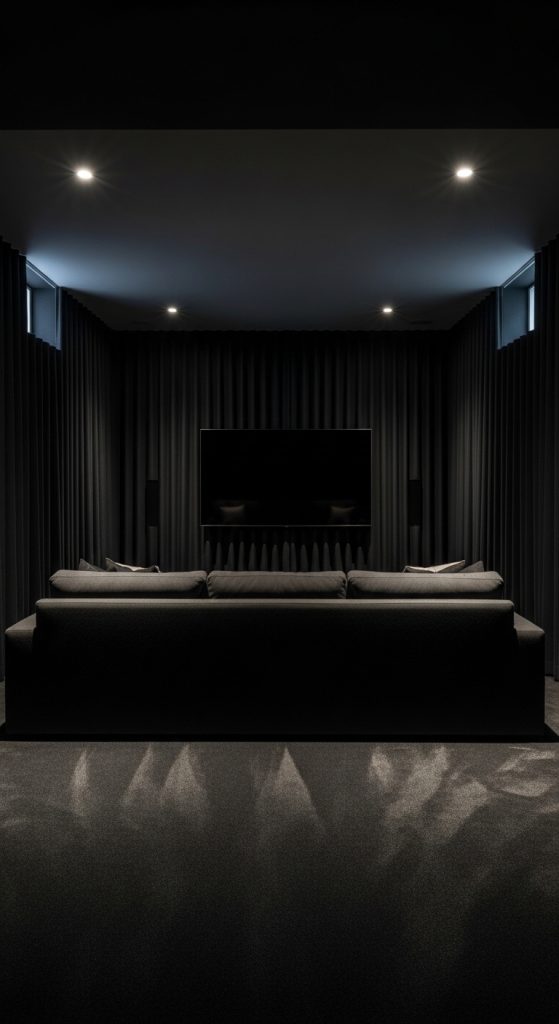
4. Blackout Curtain Media Wall
Introduction
For basement theaters or TV rooms, blackout curtains can cover walls to reduce glare and enhance sound absorption.
What This Idea Is
A functional curtain wall designed for light control and acoustics.
Step-by-Step How-To
- Mount curtain track above TV wall.
- Choose blackout fabric.
- Install curtains wide enough to overlap.
- Add dimmable lighting.
- Pair with dark wall paint.
Materials Needed
- Blackout curtains
- Ceiling-mounted track
- Anchors
- LED dimmable lights
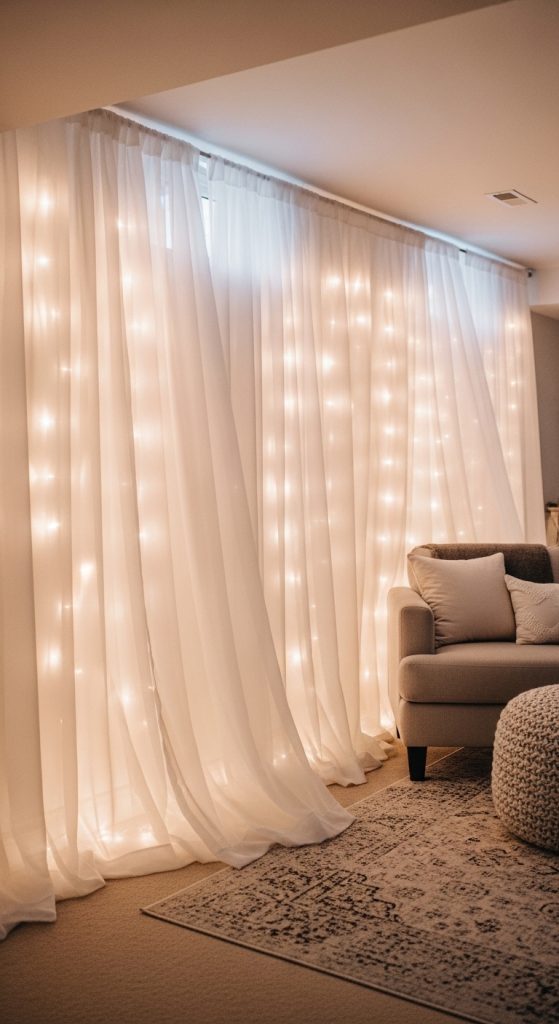
5. Sheer Curtain Softening Wall
Introduction
Sheer curtains add lightness to basements, especially if walls feel heavy or dark.
What This Idea Is
A decorative curtain wall using translucent fabric for softness.
Step-by-Step How-To
- Install slim curtain rod.
- Choose white or light sheer fabric.
- Layer with string lights behind curtain.
- Keep floor-length for elegance.
- Use lightweight tie-backs if desired.
Materials Needed
- Sheer curtain panels
- Curtain rod
- String lights
- Hooks
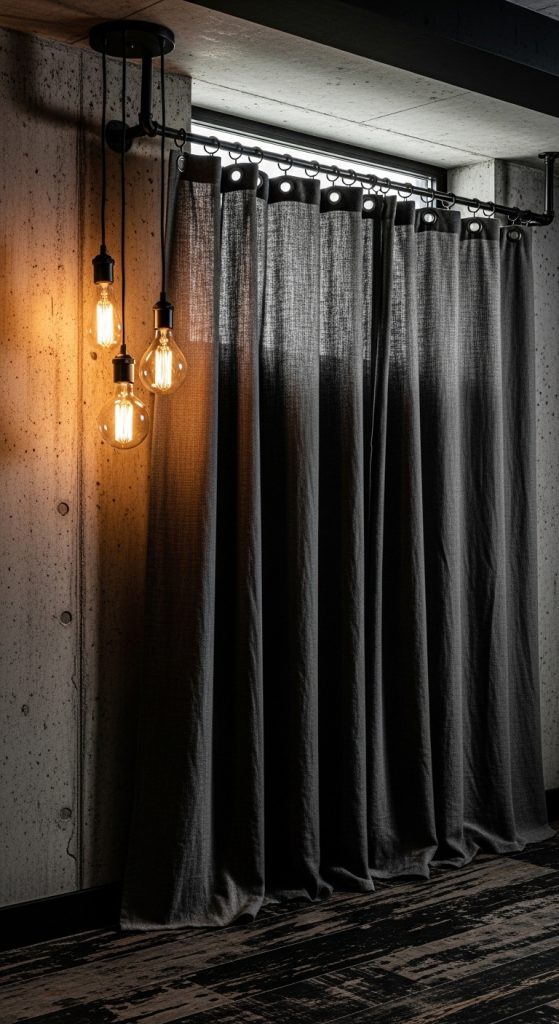
6. Industrial Pipe Rod Curtain Wall
Introduction
For a modern industrial basement, using black metal pipe rods creates a bold aesthetic.
What This Idea Is
Curtains hung on exposed pipe-style rods for industrial appeal.
Step-by-Step How-To
- Install pipe rod brackets.
- Attach metal pipe rod.
- Choose neutral linen or canvas curtains.
- Ensure proper anchoring.
- Pair with industrial lighting.
Materials Needed
- Industrial pipe rod
- Curtain panels
- Wall anchors
- Drill
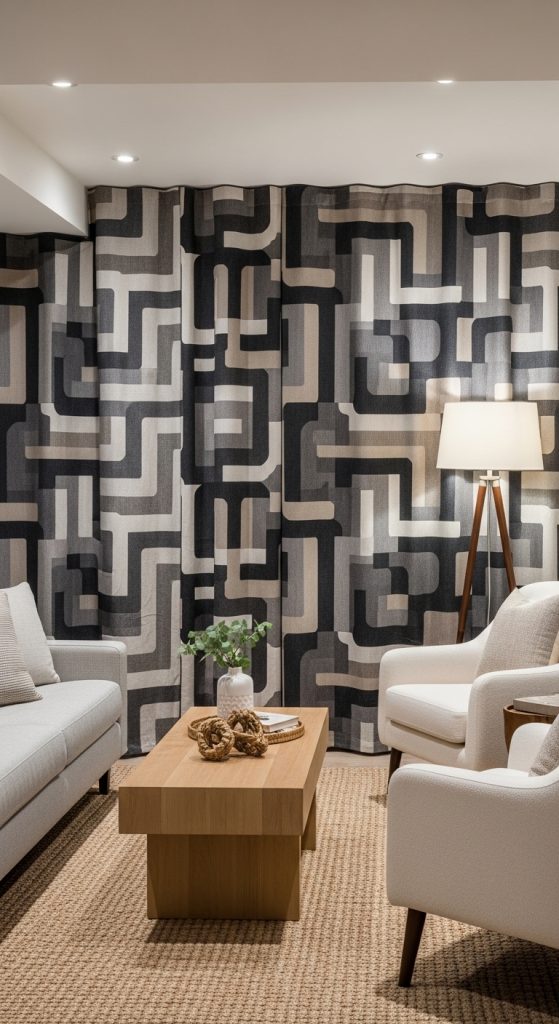
7. Patterned Accent Curtain Wall
Introduction
A patterned curtain wall acts like removable wallpaper, adding personality without commitment.
What This Idea Is
A bold or patterned fabric covering an accent wall.
Step-by-Step How-To
- Choose patterned fabric.
- Install curtain rod or track.
- Keep surrounding decor neutral.
- Ensure even pleating.
- Add simple lighting.
Materials Needed
- Patterned curtains
- Curtain hardware
- Measuring tape
- Drill
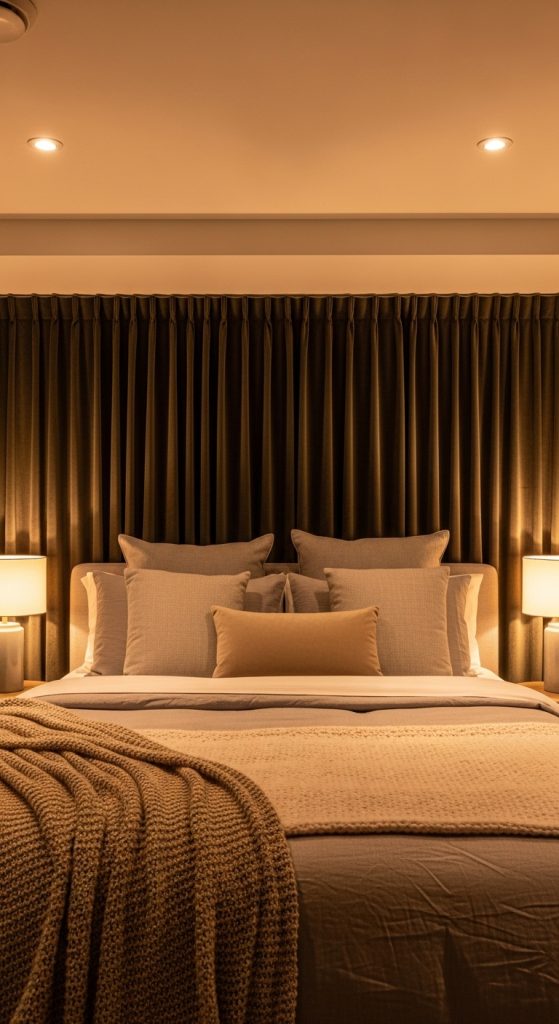
8. Curtain Wall Behind Bed Headboard
Introduction
Instead of a headboard, use a curtain wall behind the bed to add softness and drama.
What This Idea Is
A fabric backdrop behind a basement bed for texture and warmth.
Step-by-Step How-To
- Install track above bed.
- Choose velvet or linen fabric.
- Extend curtain wider than bed.
- Add soft bedside lighting.
- Keep bedding neutral.
Materials Needed
- Curtain track
- Velvet or linen panels
- Anchors
- Lamps
9. Two-Tone Layered Curtain Wall
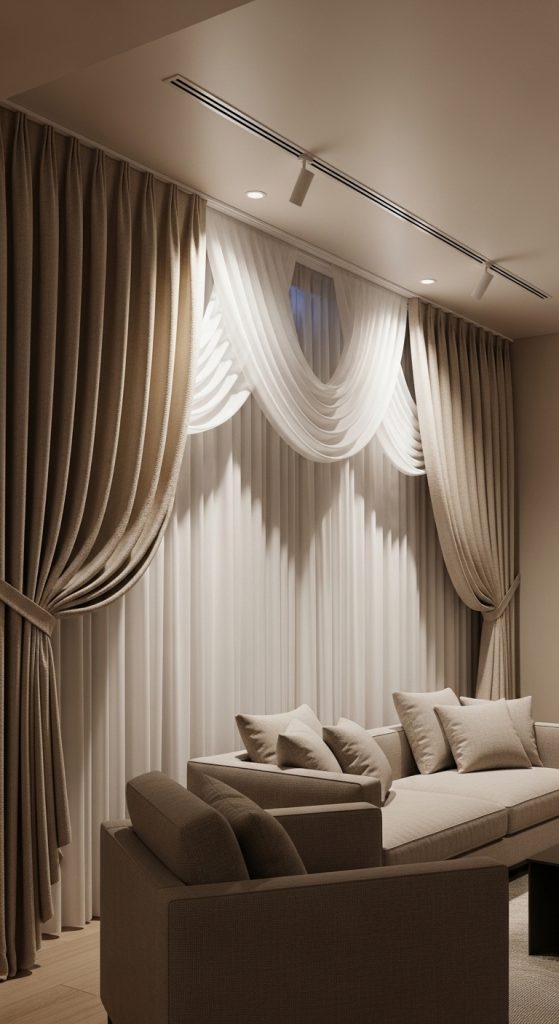
Introduction
Layering sheer and solid curtains creates depth and flexibility.
What This Idea Is
A double-track system with two curtain layers.
Step-by-Step How-To
- Install double curtain track.
- Hang sheer layer closest to wall.
- Add heavier outer curtain.
- Coordinate colors.
- Adjust lighting accordingly.
Materials Needed
- Double curtain track
- Sheer curtains
- Solid curtains
- Anchors
10. Ceiling-to-Floor Curtain Covering Concrete Wall
Introduction
If your basement has unfinished concrete walls, curtains can fully conceal them while adding insulation and style.
What This Idea Is
A full-coverage curtain solution hiding exposed foundation walls.
Step-by-Step How-To
- Inspect wall for moisture issues.
- Install heavy-duty ceiling track.
- Choose thick insulating fabric.
- Allow slight pooling on floor.
- Add hidden LED strip lighting.
Materials Needed
- Heavy curtain panels
- Ceiling track
- Anchors
- LED strip lights