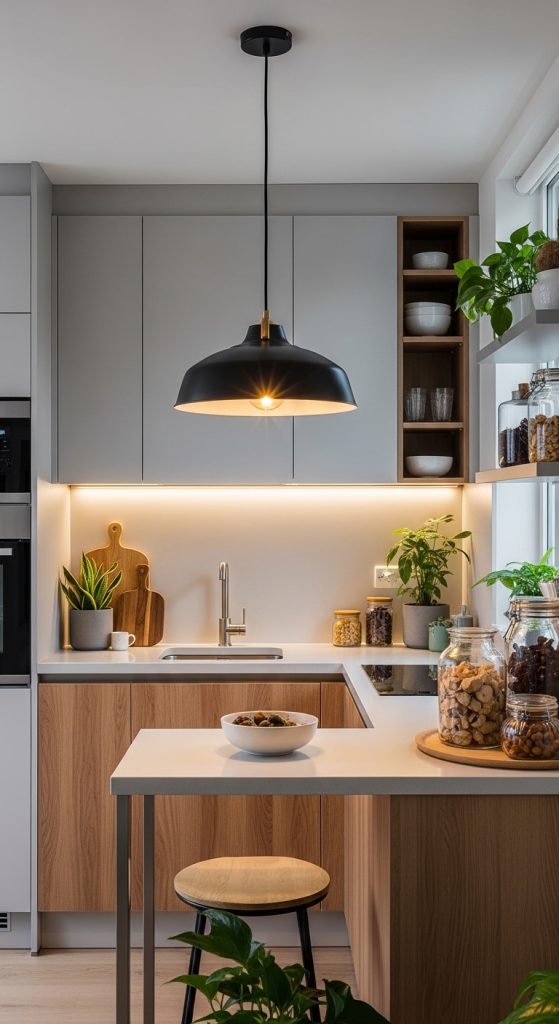

Designing a tiny kitchen can be both a challenge and an opportunity for creativity. Small kitchens are common in apartments, studios, and compact homes, and while they may have limited square footage, they can still be incredibly stylish and functional with the right design strategies. In fact, many designers believe that smaller kitchens encourage smarter planning and innovative solutions, resulting in spaces that are efficient, organized, and visually appealing.
One of the most important aspects of designing a tiny kitchen is maximizing every inch of available space. Unlike larger kitchens that can accommodate oversized cabinets and appliances, tiny kitchens require careful planning to ensure everything has a purpose. Compact appliances, vertical storage, and multifunctional furniture are often essential for making the most of a limited area.
Vertical storage plays a significant role in tiny kitchen design. Since floor space is limited, walls can be used to store utensils, dishes, and cooking tools. Open shelving, hanging racks, pegboards, and wall-mounted organizers allow homeowners to keep kitchen essentials within reach without cluttering the workspace. These storage solutions also help maintain a clean and organized environment.
Another key design strategy for tiny kitchens is choosing the right furniture and appliances. Slim cabinets, narrow countertops, and compact refrigerators can help save valuable space while still providing the necessary functionality. Foldable tables, extendable countertops, or rolling kitchen carts can also serve multiple purposes, making them perfect for small spaces.
Lighting is another element that can transform a tiny kitchen. Good lighting can make the room feel larger and more inviting. Under-cabinet lighting, pendant lights, or bright ceiling fixtures can illuminate the workspace while adding style to the kitchen. Natural light, if available, should also be maximized to create an open and airy atmosphere.
Color choice is equally important. Lighter colors such as white, cream, and soft gray can make a small kitchen feel more spacious. Reflective surfaces like glossy cabinets, glass tiles, and stainless steel appliances can also help bounce light around the room, creating the illusion of a bigger space.
Organization is key in tiny kitchens. Smart storage systems like drawer dividers, pull-out cabinets, and stackable containers can keep everything neatly arranged and easy to access. When everything has its place, even the smallest kitchen can feel calm and functional.
Decorating a tiny kitchen also requires a thoughtful approach. Instead of overcrowding the space with too many decorative elements, it’s better to focus on a few meaningful details. A small plant, stylish dishware, or decorative jars can add personality without overwhelming the room.
Tiny kitchens also offer a great opportunity to experiment with creative layouts. Galley kitchens, corner kitchens, or compact kitchen nooks can all be designed to maximize functionality while maintaining a visually appealing style.
The goal of any tiny kitchen design should be to create a space that feels comfortable, efficient, and enjoyable to use. With the right design ideas, even the smallest kitchen can become a beautiful and functional heart of the home.
In this article, we will explore 10 creative tiny kitchen ideas that help maximize space while adding style and practicality. Each idea includes a clear explanation, step-by-step design tips, and a list of materials or elements needed to bring the idea to life.
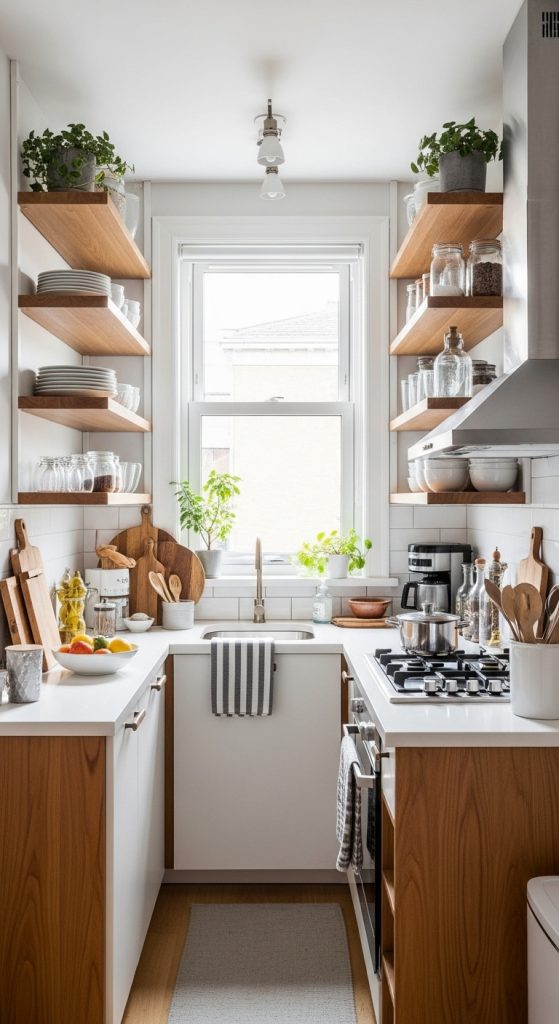
1. Vertical Storage Kitchen
Introduction
Vertical storage is one of the most effective solutions for tiny kitchens because it utilizes wall space instead of valuable floor space.
Idea Explanation
Wall-mounted shelves and hanging racks keep cooking tools organized and accessible.
How to Create This Setup
- Install floating shelves on the wall.
- Use hanging racks for utensils.
- Store frequently used items on open shelves.
- Keep countertops clear.
Materials / Elements Used
- Floating shelves
- Hanging utensil rack
- Storage containers
- Wall hooks
2. Fold-Down Kitchen Table
Introduction
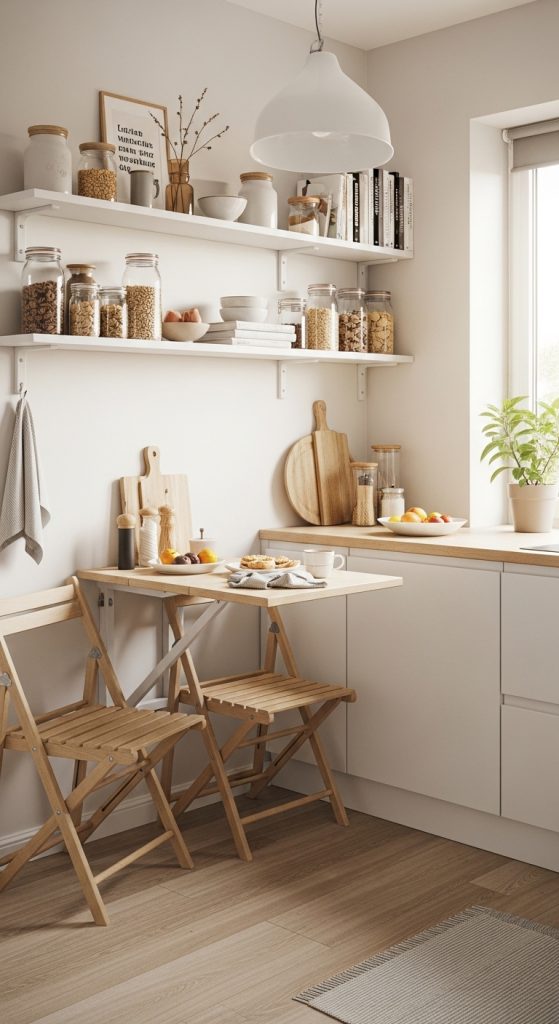
A fold-down table can provide additional workspace and dining space in a tiny kitchen.
Idea Explanation
The table folds flat against the wall when not in use, saving space.
How to Create This Setup
- Install a fold-down wall table.
- Pair with foldable chairs.
- Add wall shelves above the table.
- Use a small rug to define the area.
Materials / Elements Used
- Wall-mounted folding table
- Foldable chairs
- Floating shelves
- Area rug
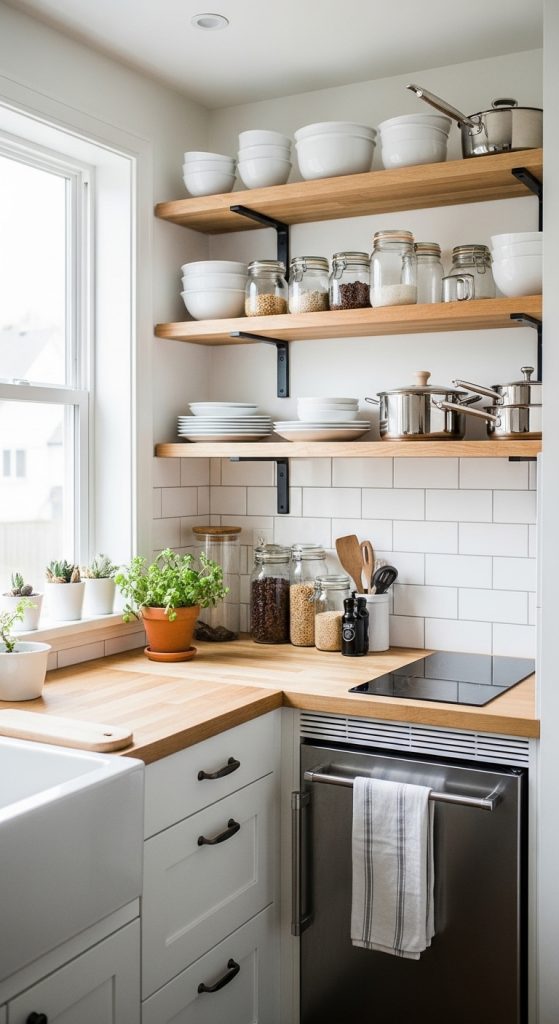
3. Open Shelving Kitchen
Introduction
Open shelving can make a small kitchen feel larger and more accessible.
Idea Explanation
Removing bulky cabinets creates a more open and airy look.
How to Create This Setup
- Install open shelves instead of upper cabinets.
- Organize dishes and jars neatly.
- Use matching containers for uniformity.
- Add decorative plants.
Materials / Elements Used
- Wooden shelves
- Storage jars
- Dishware
- Small plants
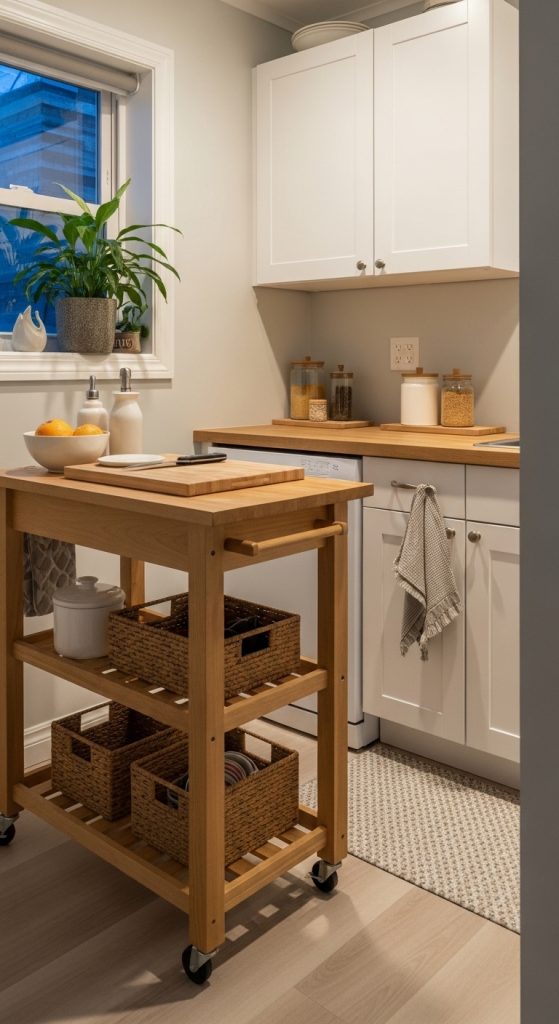
4. Rolling Kitchen Cart
Introduction
A rolling cart provides extra storage and counter space.
Idea Explanation
The cart can be moved around depending on the cooking needs.
How to Create This Setup
- Choose a compact rolling cart.
- Store kitchen tools on lower shelves.
- Use the top surface for food preparation.
- Move it aside when not needed.
Materials / Elements Used
- Rolling kitchen cart
- Storage baskets
- Cooking tools
- Decorative items
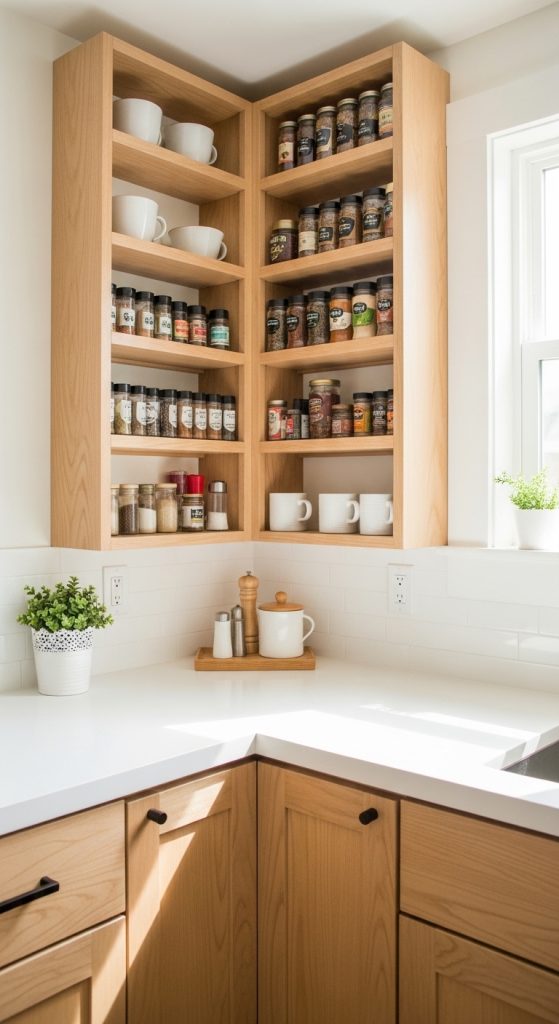
5. Corner Kitchen Storage
Introduction
Corners are often underused in tiny kitchens but can provide valuable storage.
Idea Explanation
Corner shelves or cabinets help maximize awkward spaces.
How to Create This Setup
- Install corner shelves.
- Use rotating storage trays.
- Organize small appliances.
- Keep items accessible.
Materials / Elements Used
- Corner shelves
- Lazy Susan trays
- Storage containers
- Kitchen tools
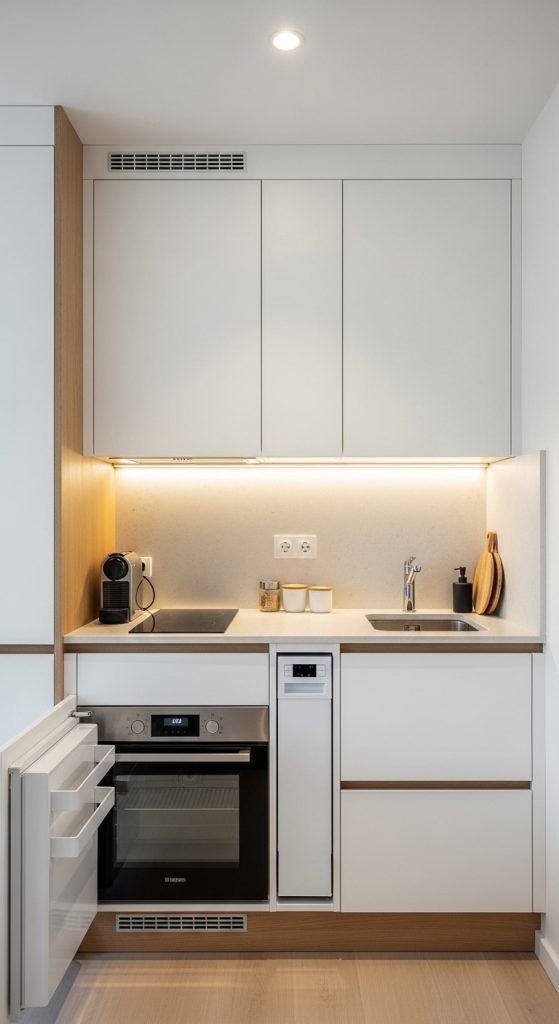
6. Compact Appliance Kitchen
Introduction
Using smaller appliances can free up valuable space in tiny kitchens.
Idea Explanation
Compact refrigerators, dishwashers, and ovens are designed for small homes.
How to Create This Setup
- Replace large appliances with compact versions.
- Arrange appliances efficiently.
- Use built-in storage around them.
- Maintain open counter space.
Materials / Elements Used
- Compact refrigerator
- Small oven
- Built-in cabinets
- Counter organizers
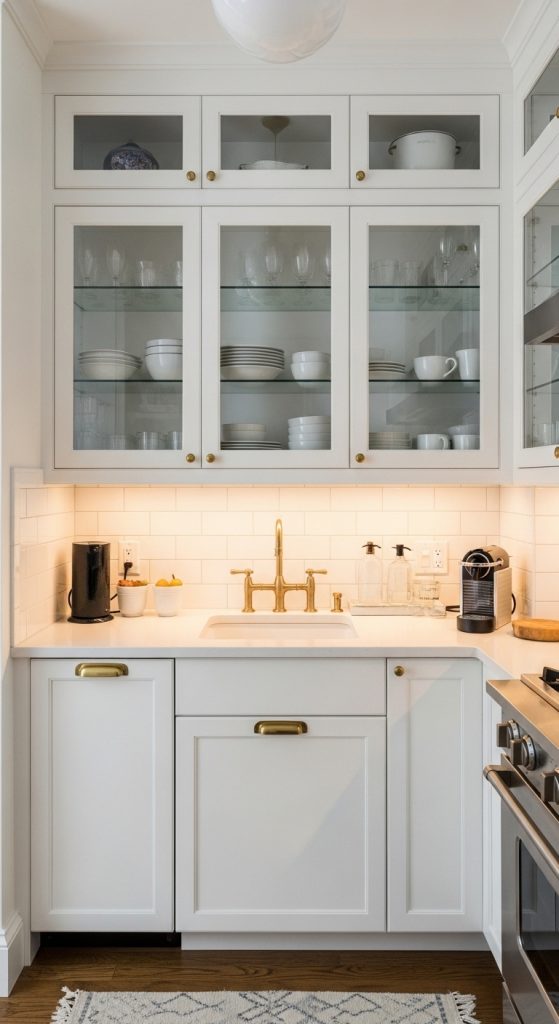
7. Glass Cabinet Kitchen
Introduction
Glass cabinet doors can make a tiny kitchen feel more open.
Idea Explanation
Transparent surfaces create the illusion of depth and space.
How to Create This Setup
- Install glass cabinet doors.
- Organize dishware neatly.
- Use light-colored cabinets.
- Add under-cabinet lighting.
Materials / Elements Used
- Glass cabinets
- Dishware
- LED lighting
- Cabinet hardware
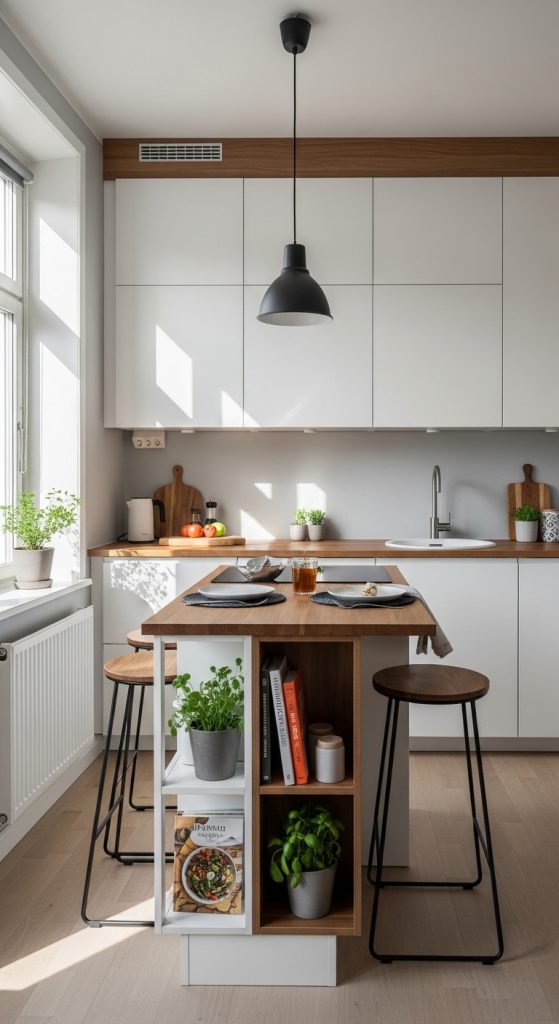
8. Multi-Functional Kitchen Island
Introduction
A small kitchen island can serve as both storage and workspace.
Idea Explanation
Compact islands often include shelves or drawers.
How to Create This Setup
- Choose a small island with storage.
- Use it for food preparation.
- Store utensils inside drawers.
- Add bar stools if space allows.
Materials / Elements Used
- Compact kitchen island
- Storage drawers
- Bar stools
- Kitchen tools
9. Light Color Tiny Kitchen
Introduction
Light colors help make small kitchens feel larger and brighter.
Idea Explanation
White or neutral palettes reflect light and create openness.
How to Create This Setup
- Paint walls in light colors.
- Choose white cabinets.
- Use reflective surfaces.
- Add minimal decor.
Materials / Elements Used
- White cabinets
- Light wall paint
- Stainless steel appliances
- Minimal decor
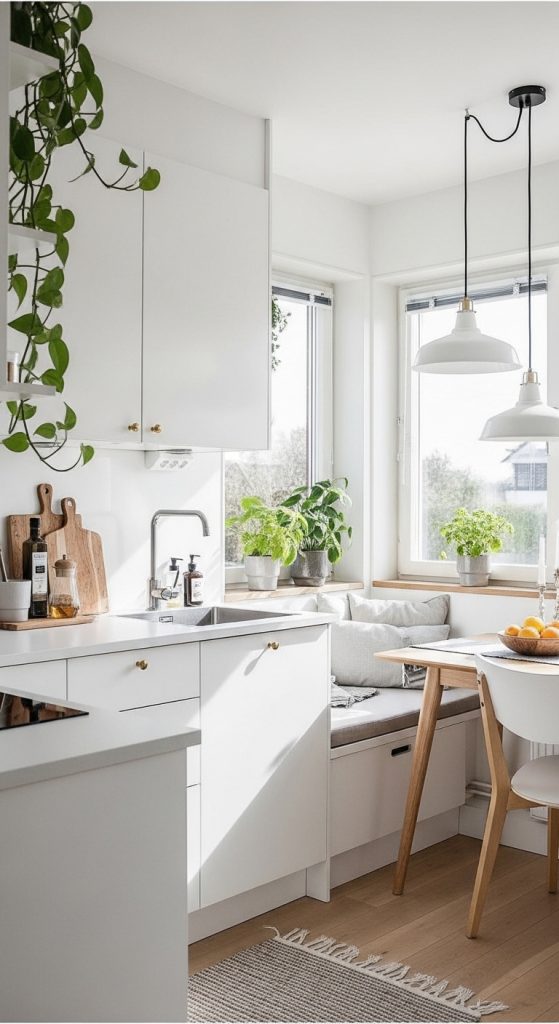
10. Statement Lighting Tiny Kitchen
Introduction
A stylish lighting fixture can transform a tiny kitchen into a design focal point.
Idea Explanation
Pendant lights or modern fixtures add character while improving illumination.
How to Create This Setup
- Install a statement pendant light.
- Position it above the workspace.
- Use simple kitchen decor.
- Balance lighting throughout the room.
Materials / Elements Used
- Pendant light
- Ceiling lighting
- Kitchen decor
- Compact furniture