
Primitive Easter décor is all about warmth, simplicity, and old-fashioned charm. Unlike bright pastel or modern minimalist Easter trends, primitive style embraces muted colors, aged finishes, natural textures, and handmade imperfections. Think distressed wood, burlap, ticking stripes, rusty metal, muslin fabric, dried florals, and hand-painted details. It’s cozy, rustic, and rooted in early American farmhouse aesthetics.

Primitive decorating focuses on character rather than perfection. Brush strokes show. Edges look worn. Colors lean toward earthy neutrals like mustard, barn red, sage green, cream, charcoal, and dusty blue. Instead of glossy plastic eggs and glittery bunnies, you’ll find hand-stitched rabbits, wooden signs, rusty bells, and tea-stained fabrics.
Pinterest searches for “primitive Easter décor” often highlight vintage-inspired homes, farmhouse mantels, rustic centerpieces, and handmade seasonal accents that feel collected over time rather than store-bought. Many of these pieces can be DIYed affordably using thrifted or simple craft materials.
In this guide, you’ll find 10 primitive Easter décor ideas that are warm, rustic, and full of timeless country charm. Each idea includes a clear explanation, step-by-step instructions, and a materials list so you can create an authentic primitive look in your home.
Let’s bring that cozy old-world Easter feeling into your space.
1. Tea-Stained Fabric Bunnies
Introduction
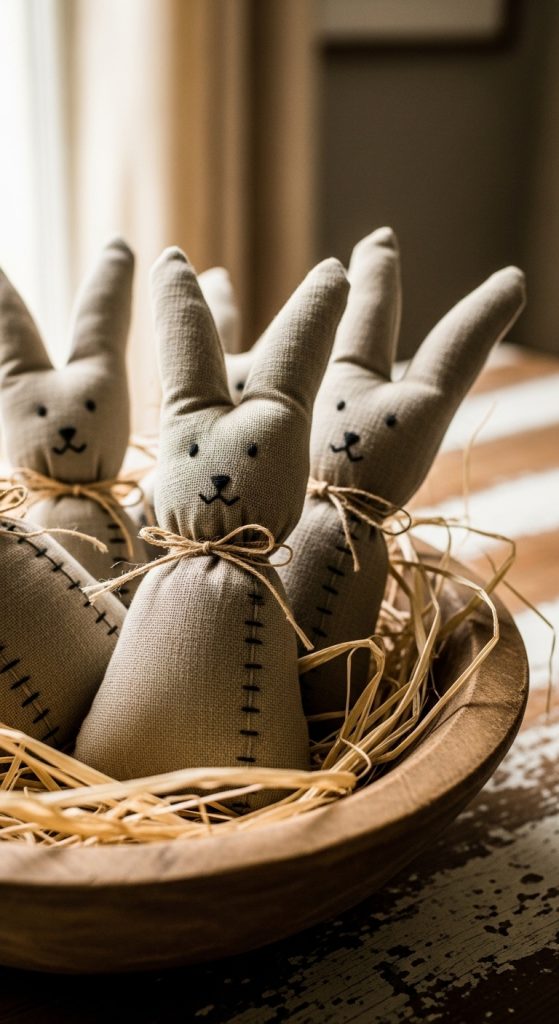
Primitive fabric bunnies are a staple of rustic Easter décor. Instead of bright patterned fabric, these are made with muslin or cotton and tea-stained for an aged look. The stitching is intentionally visible, and the faces are simple and hand-drawn.
These look beautiful displayed in wooden bowls, baskets, or on shelves.
Why It Feels Primitive
The aged fabric and imperfect hand-sewn details give it authentic old-fashioned charm.
Step-by-Step How-To
- Draw a simple bunny shape on muslin.
- Cut two identical pieces.
- Sew around edges, leaving bottom open.
- Turn right side out.
- Stuff lightly with polyfill.
- Hand stitch bottom closed.
- Soak briefly in cooled tea.
- Let dry completely.
- Draw simple face with black paint or marker.
Materials Needed
- Muslin fabric
- Thread and needle or sewing machine
- Polyfill stuffing
- Black paint or fabric marker
- Tea bags
- Bowl
2. Distressed Wooden Easter Sign
Introduction
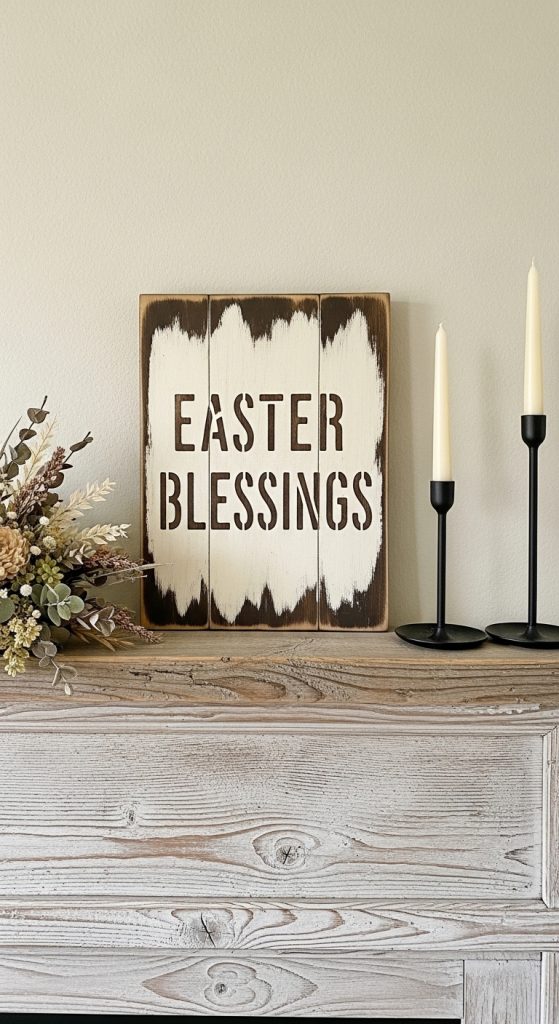
A primitive wooden sign featuring words like “Spring,” “He Is Risen,” or “Easter Blessings” adds farmhouse charm to mantels and entryways.
The key is a distressed, layered paint look.
Step-by-Step How-To
- Sand wooden board lightly.
- Paint base coat in dark brown.
- Let dry.
- Add lighter cream or sage topcoat.
- Sand edges to reveal base layer.
- Stencil wording in black.
- Lightly sand over lettering for aged effect.
Materials Needed
- Wooden board
- Acrylic paint (brown, cream, sage)
- Sandpaper
- Stencil
- Paintbrush
3. Primitive Twig Nest Display
Introduction
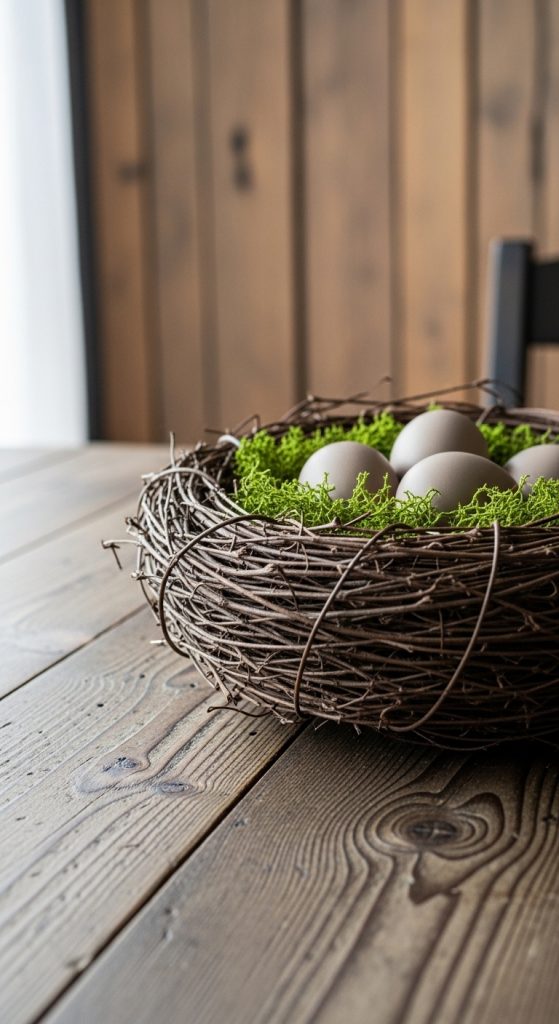
A rustic twig nest filled with neutral eggs creates a simple but beautiful centerpiece.
This display works well on coffee tables or kitchen counters.
Step-by-Step How-To
- Gather small twigs.
- Shape into circular nest.
- Secure with hot glue.
- Add moss inside.
- Place neutral faux eggs in center.
Materials Needed
- Twigs
- Hot glue gun
- Moss
- Faux eggs
4. Burlap Bunny Silhouettes
Introduction
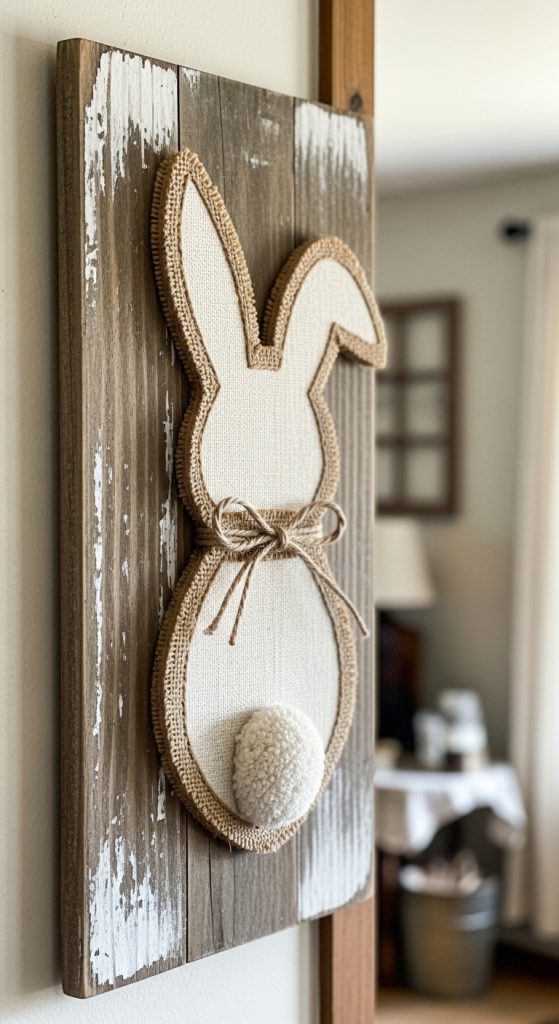
Burlap bunny cutouts mounted on distressed wood create texture and depth.
Step-by-Step How-To
- Trace bunny shape onto burlap.
- Cut carefully.
- Glue onto painted wooden board.
- Add twine bow at neck.
- Lightly distress edges.
Materials Needed
- Burlap
- Wooden board
- Acrylic paint
- Twine
- Hot glue
5. Rusty Tin Egg Bowl
Introduction
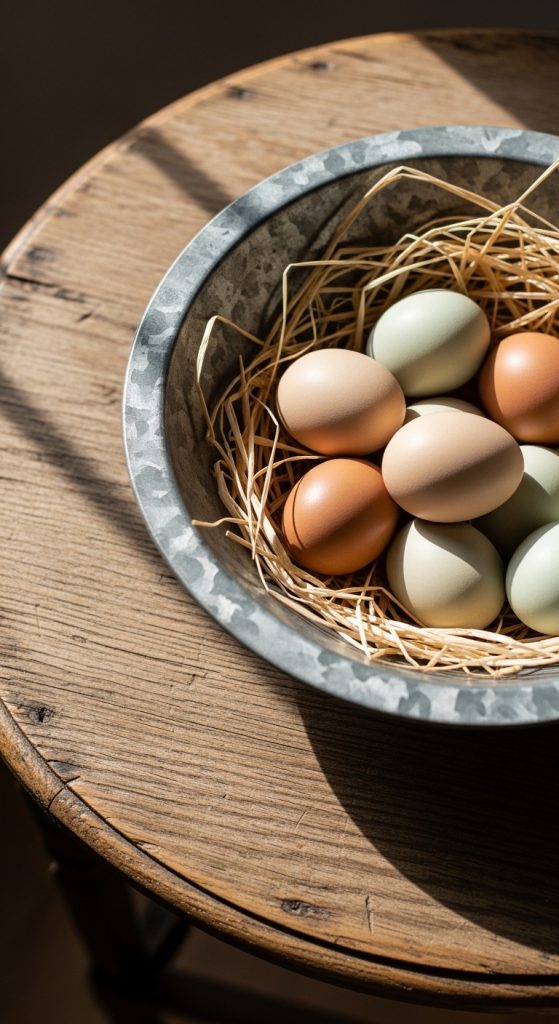
Using galvanized or aged metal containers enhances primitive charm.
Step-by-Step How-To
- Fill metal bowl with raffia.
- Add neutral eggs.
- Place small candle or greenery for depth.
- Display on wooden tray.
Materials Needed
- Metal bowl
- Raffia
- Faux eggs
- Greenery
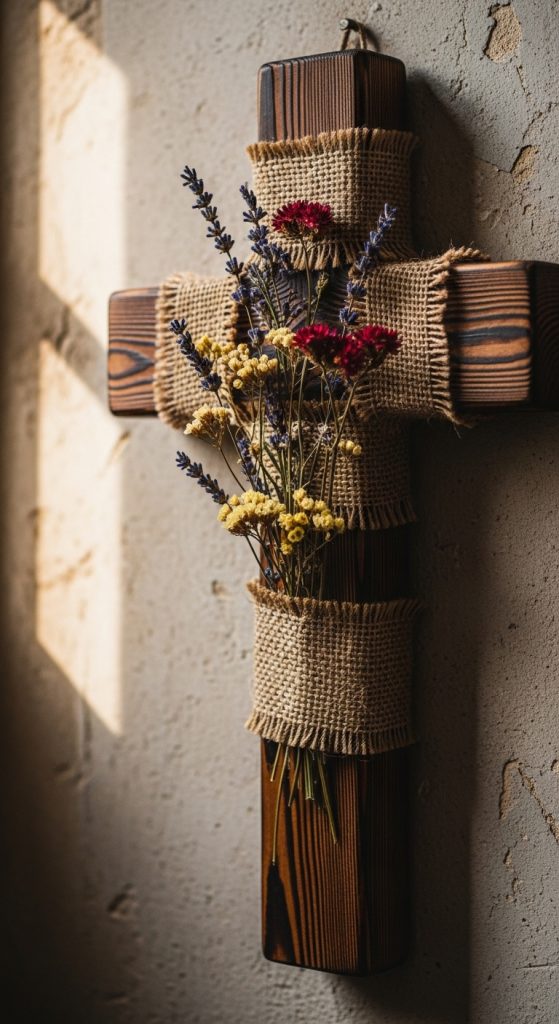
6. Primitive Cross Wall Hanging
Introduction
A wooden cross decorated with muted florals adds meaningful rustic décor.
Step-by-Step How-To
- Assemble simple wooden cross.
- Stain dark brown.
- Wrap with burlap strip.
- Attach dried flowers.
- Add jute hanger.
Materials Needed
- Wooden slats
- Wood stain
- Burlap
- Dried florals
- Jute rope
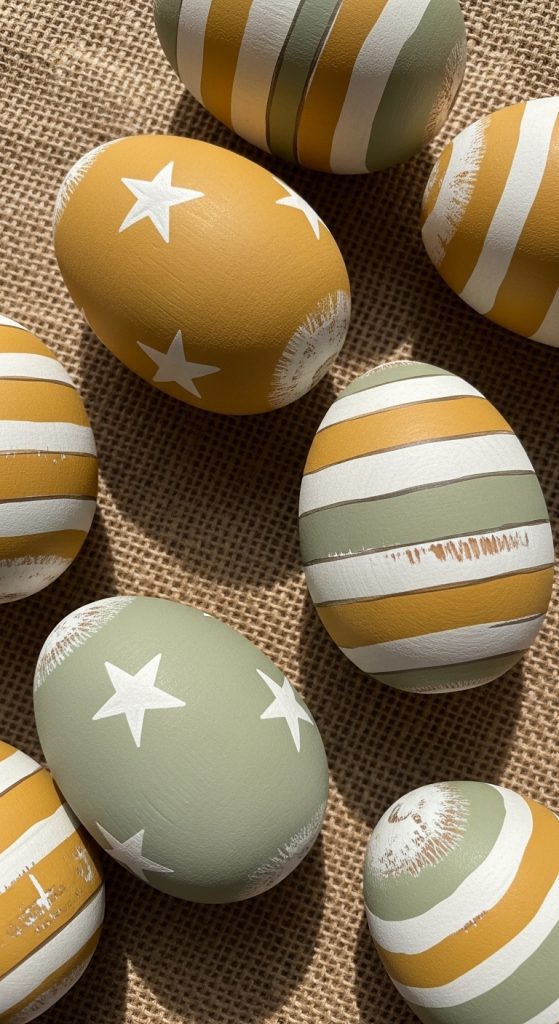
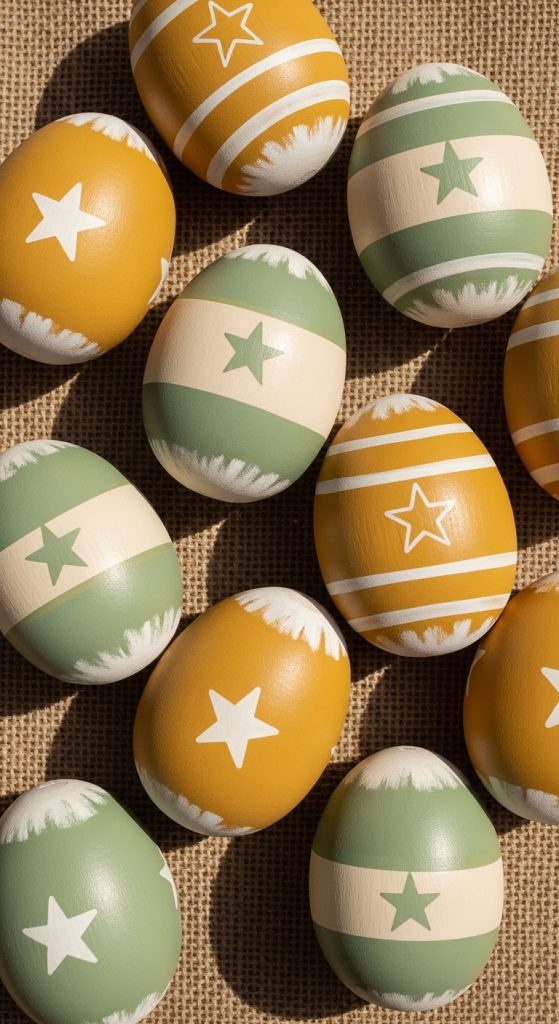
7. Hand-Painted Wooden Eggs
Introduction
Instead of glossy finishes, primitive eggs feature matte paint and simple patterns.
Step-by-Step How-To
- Paint wooden eggs in muted tones.
- Let dry.
- Add small stars, stripes, or checks.
- Lightly sand edges.
Materials Needed
- Wooden eggs
- Acrylic paint
- Small paintbrush
- Sandpaper
8. Primitive Easter Basket with Homespun Fabric
Introduction
A woven basket lined with homespun or ticking fabric adds rustic appeal.
Step-by-Step How-To
- Line basket with fabric.
- Add straw or raffia.
- Insert tea-stained eggs.
- Tie burlap bow on handle.
Materials Needed
- Woven basket
- Homespun fabric
- Raffia
- Faux eggs
- Burlap ribbon
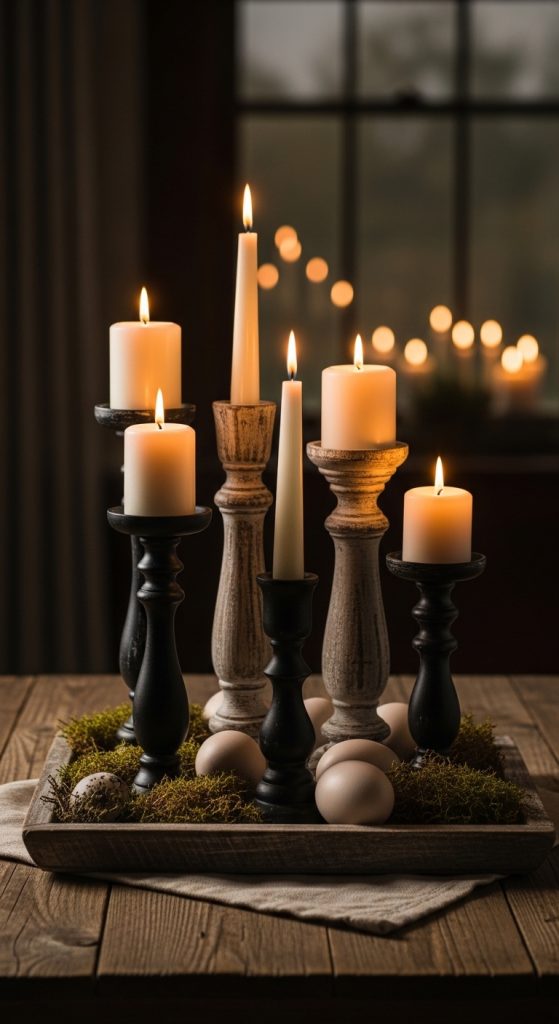
9. Vintage-Style Candle Holders
Introduction
Black metal or distressed wooden candle holders enhance cozy spring evenings.
Step-by-Step How-To
- Lightly sand holders.
- Dry brush white paint.
- Add cream taper candles.
- Place on wooden tray with moss.
Materials Needed
- Candle holders
- Acrylic paint
- Sandpaper
- Taper candles
- Moss
10. Primitive Carrot Bundle
Introduction
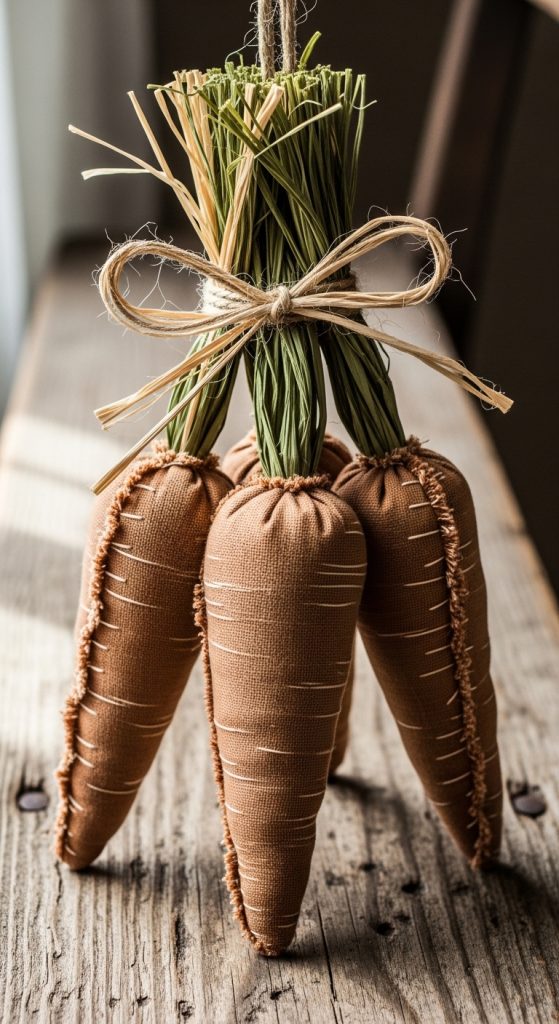
Fabric carrots made from aged fabric tied with twine create subtle Easter charm.
Step-by-Step How-To
- Cut triangle fabric pieces.
- Sew and turn right side out.
- Stuff lightly.
- Insert raffia at top.
- Tie several together with jute.
Materials Needed
- Cotton or muslin fabric
- Polyfill
- Raffia
- Jute twine
- Needle and thread