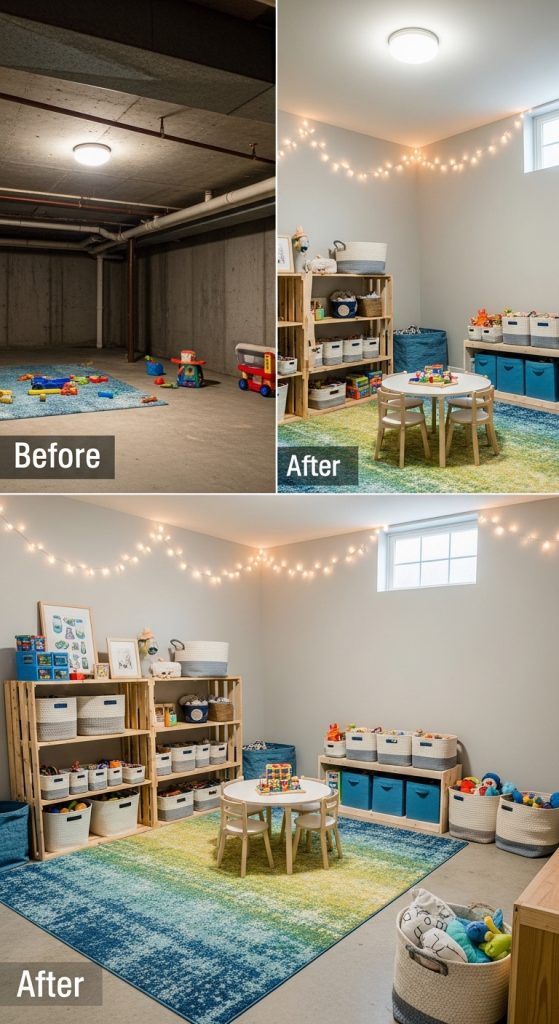
A basement playroom can become one of the most exciting spaces in your home. While basements are often underused or reserved for storage, they offer incredible potential for creating a dedicated kids’ zone filled with imagination, creativity, and movement. The key challenge? Transforming a typically dark, cool, or unfinished space into something warm, inviting, and safe for children.
The best basement playrooms focus on three major elements:
• Brightening the space with proper lighting
• Creating defined zones for different types of play
• Maximizing storage to keep clutter under control
Since basements often lack natural light, thoughtful lighting design is essential. Layered lighting — overhead fixtures, floor lamps, and LED accents — helps eliminate shadows and create a cozy atmosphere. Soft rugs, warm paint colors, and playful wall decor instantly make the space feel less like a basement and more like a cheerful family hub.
Another advantage of basement playrooms is space. Unlike smaller upstairs rooms, basements often provide room for larger play structures, art stations, movie areas, and storage walls. This makes them perfect for multi-age households or families who want a flexible space that grows with their children.
In this guide, you’ll find 10 detailed basement playroom ideas that are practical, Pinterest-worthy, and adaptable to different budgets. Each idea includes setup guidance and essential materials to help you transform your basement into a vibrant, organized, and joyful play environment.
Let’s turn that basement into the ultimate kid-friendly retreat.
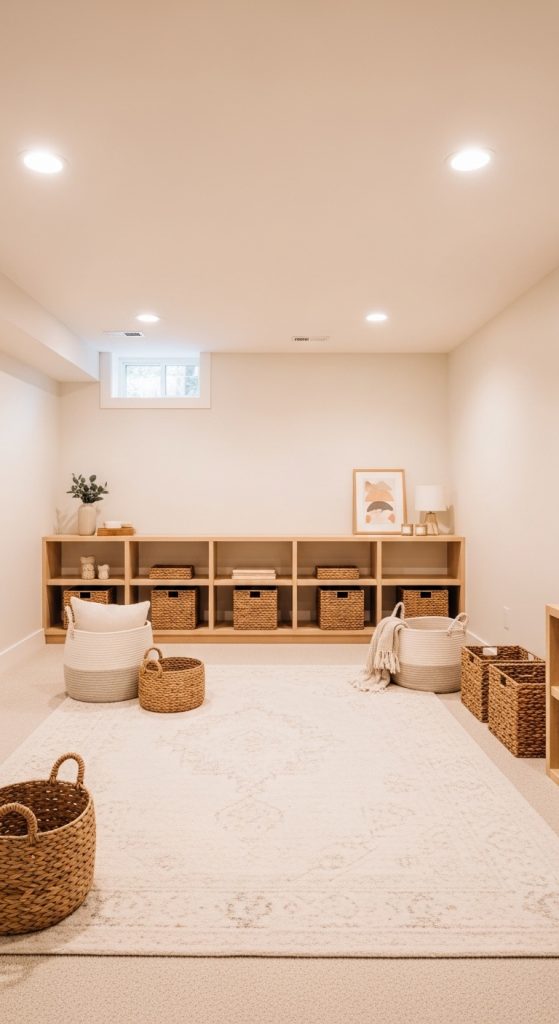
1. Bright & Airy Neutral Basement Playroom
A neutral color palette can completely transform a dark basement into a light, welcoming space. Soft whites, warm beige, and light gray walls reflect artificial light beautifully, making the room feel bigger and brighter.
What Makes It Special?
Neutral tones reduce visual clutter while allowing colorful toys to stand out naturally.
Step-by-Step Setup
- Paint walls in a warm white or light neutral tone.
- Install bright LED ceiling lights.
- Add a large light-colored area rug.
- Choose light wood or white storage shelves.
- Keep decor simple and cohesive.
- Use woven baskets to soften the look.
Materials Needed
• Interior wall paint (light neutral)
• LED ceiling lighting
• Large neutral area rug
• Open shelving units
• Woven storage baskets
This design creates a calm foundation for play.
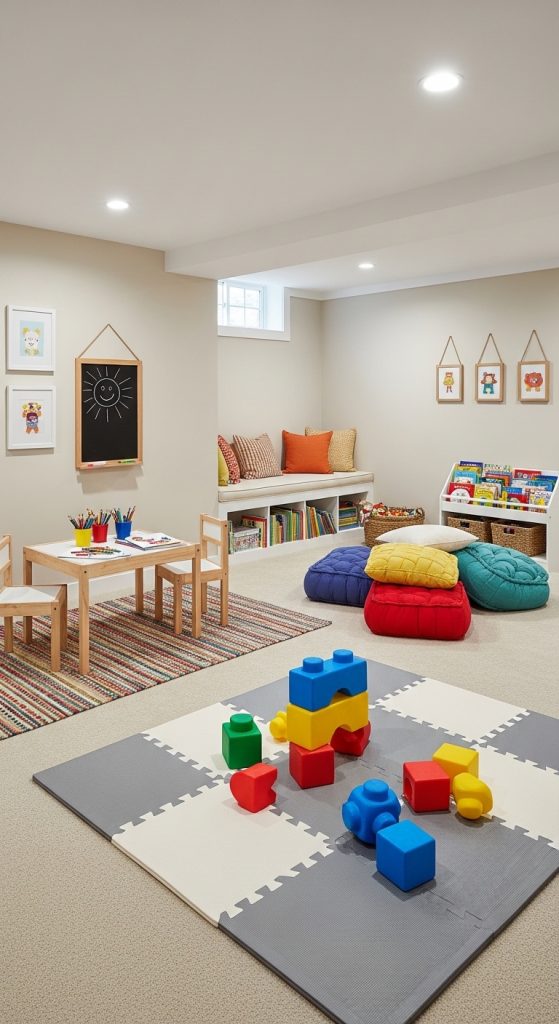
2. Zoned Activity Basement Playroom
Basements often provide generous square footage, making them ideal for dividing into activity zones.
Definition
A playroom separated into clearly defined sections for reading, art, building, and movement.
Step-by-Step Setup
- Use rugs to visually divide zones.
- Place reading nook in a quieter corner.
- Add art table near easy-clean flooring.
- Keep active play area in open section.
- Use labeled storage bins for each zone.
Materials
• Area rugs
• Child-sized table
• Bookshelf
• Storage bins
• Foam mats
Organized zones prevent chaos.
3. Indoor Adventure & Climbing Area
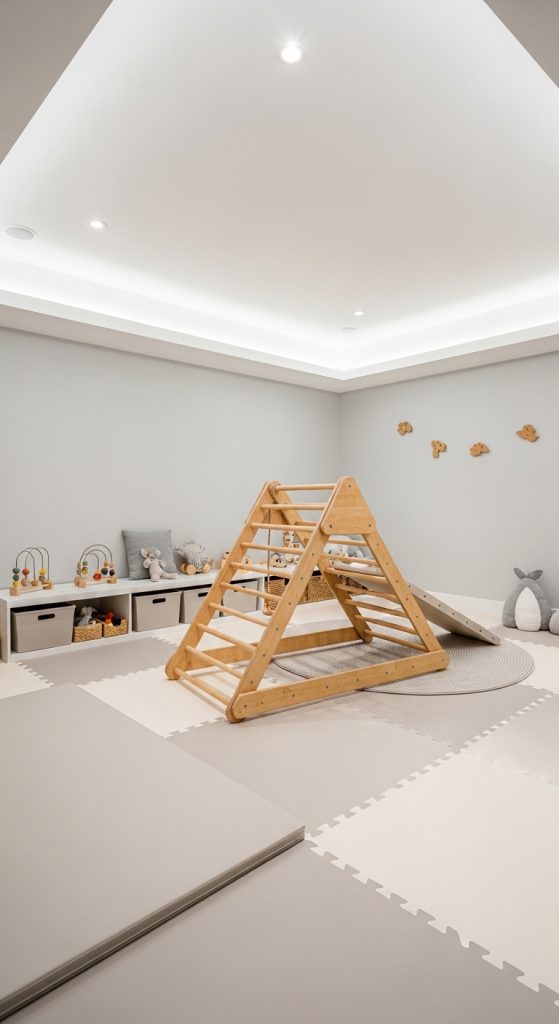
A basement is perfect for safe indoor movement play.
Definition
Dedicated gross motor space with climbing equipment and padded flooring.
Steps
- Install padded foam flooring.
- Add wooden climbing triangle or soft play blocks.
- Keep walls clear around climbing zone.
- Secure all furniture to walls.
- Maintain open floor space.
Materials
• Foam floor mats
• Climbing triangle or play gym
• Wall anchors
Great for energy release during colder months.
4. Basement Movie & Cozy Lounge Corner
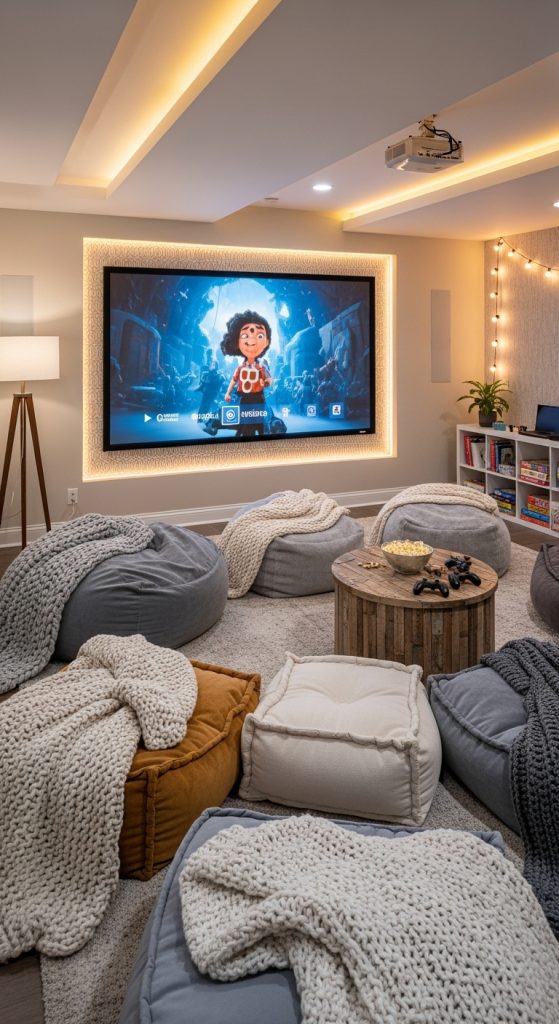
Turn part of the basement into a cozy family hangout.
Definition
Soft seating and projector setup for movie nights.
Steps
- Install wall-mounted TV or projector.
- Add oversized floor cushions or bean bags.
- Use dimmable lighting.
- Keep toy storage nearby.
Materials
• Projector or TV
• Floor cushions
• Soft throw blankets
• Storage baskets
Perfect for family bonding.
5. Creative Craft & Homework Station
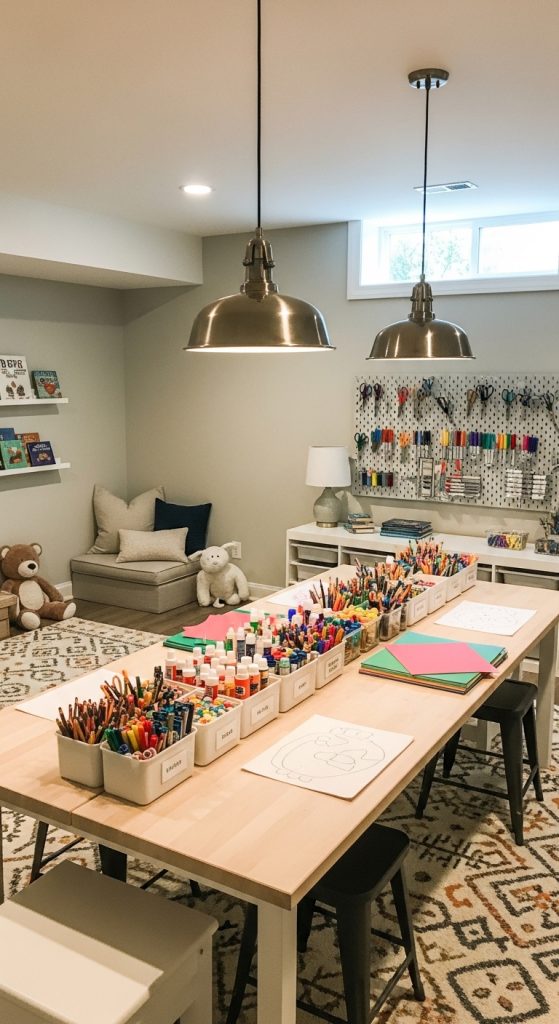
Older kids benefit from a focused workspace.
Definition
Desk area for crafts, homework, and creative projects.
Steps
- Add long table or desk.
- Install overhead task lighting.
- Use wall organizers for supplies.
- Store art materials in labeled bins.
Materials
• Desk or table
• Storage organizers
• Desk lamp
• Supply containers
Encourages productivity.
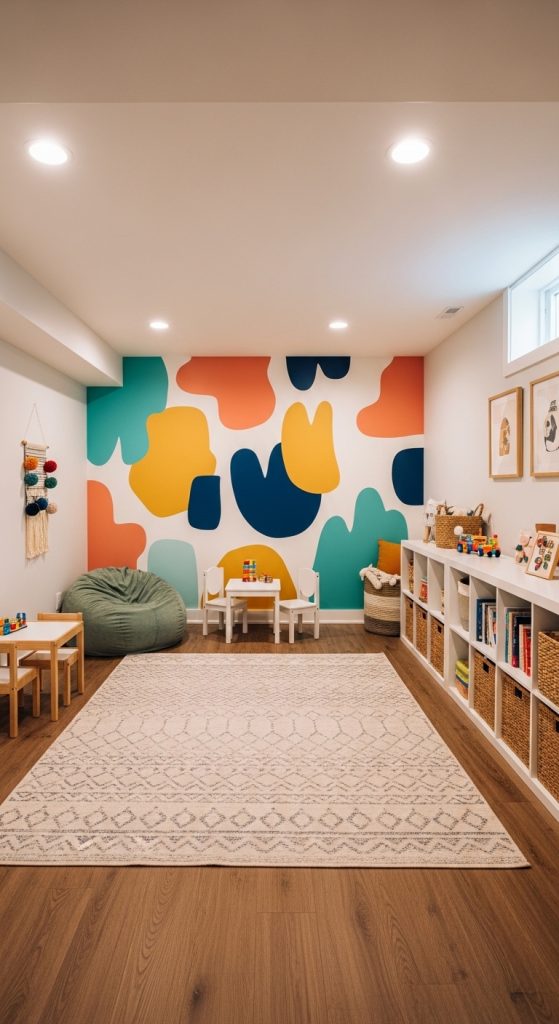
6. Colorful Accent Wall Playroom
Basements benefit from a bold design element.
Definition
One feature wall with bright paint or wallpaper.
Steps
- Choose playful wallpaper or mural.
- Keep remaining walls neutral.
- Add coordinating decor pieces.
- Balance color with soft rugs.
Materials
• Wallpaper or paint
• Wall decor
• Neutral rug
Adds personality instantly.
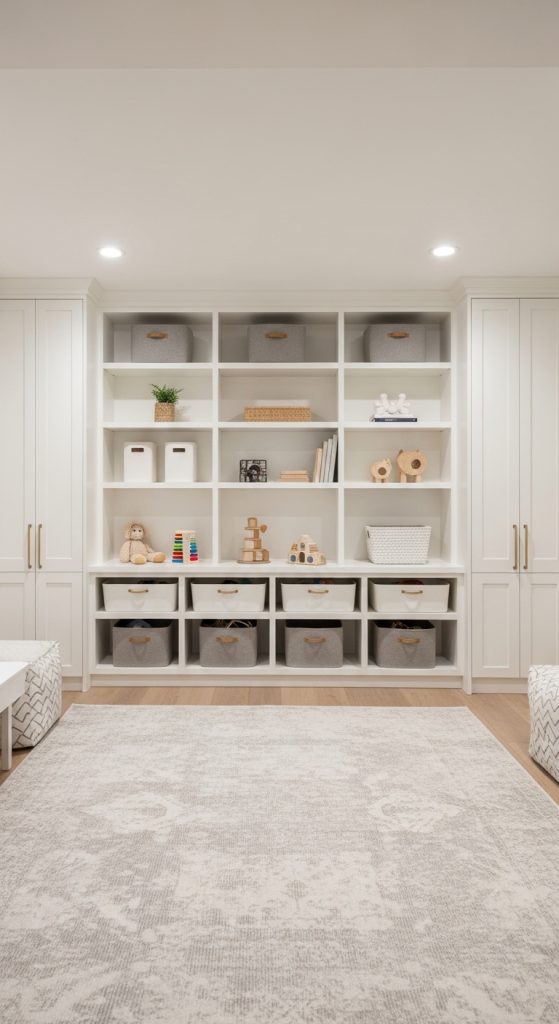
7. Storage Wall with Built-In Cabinets
Basements can hide clutter beautifully.
Definition
Full wall of built-in cabinets and shelves.
Steps
- Install floor-to-ceiling cabinetry.
- Use closed cabinets for clutter.
- Display select toys on open shelves.
- Label bins clearly.
Materials
• Built-in cabinets
• Storage bins
• Labels
Keeps playroom tidy long-term.
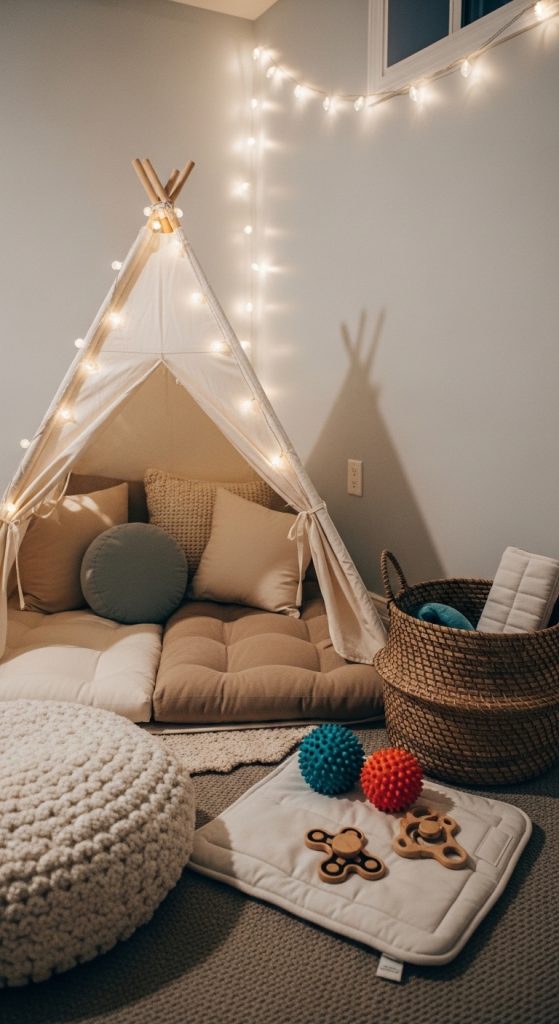
8. Sensory & Calm Down Corner
A quiet retreat space helps with emotional regulation.
Definition
Soft corner with calming sensory elements.
Steps
- Add soft tent or canopy.
- Use dim warm lighting.
- Add weighted blanket or plush pillows.
- Include sensory toys.
Materials
• Small play tent
• Soft cushions
• String lights
• Sensory toys
Perfect for calming breaks.
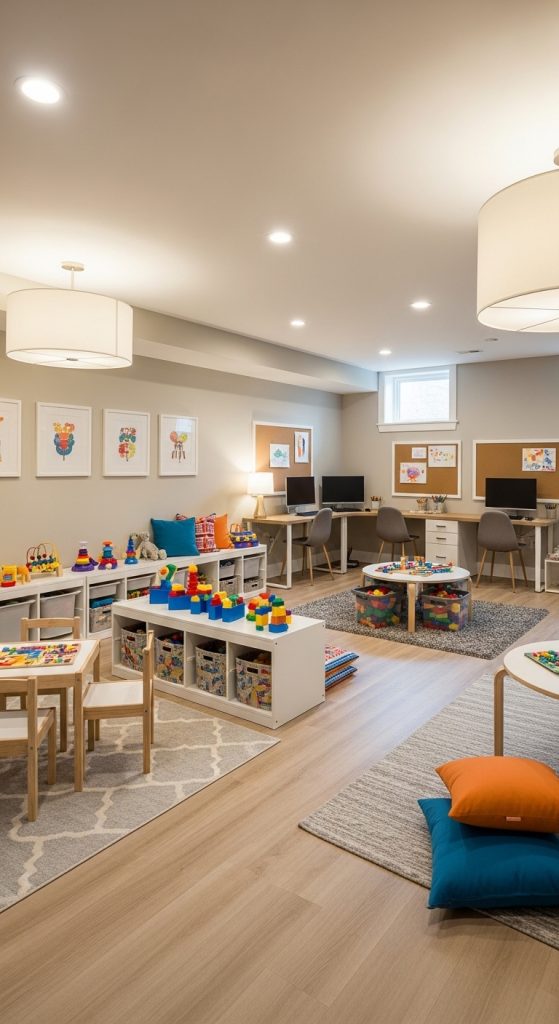
9. Multi-Age Shared Playroom
Designed for toddlers and older kids.
Definition
Separate areas based on age group needs.
Steps
- Keep toddler toys in low shelves.
- Store small parts out of reach.
- Divide zones with rugs.
- Add flexible seating.
Materials
• Open shelving
• Storage bins
• Area rugs
Grows with your family.
10. Small Basement Playroom on a Budget
Even unfinished basements can shine.
Definition
Affordable transformation using simple upgrades.
Steps
- Add peel-and-stick floor tiles or rugs.
- Use affordable shelving units.
- Paint walls in bright neutral color.
- Add string lights for warmth.
Materials
• Area rugs
• Budget shelving
• LED string lights
• Storage baskets