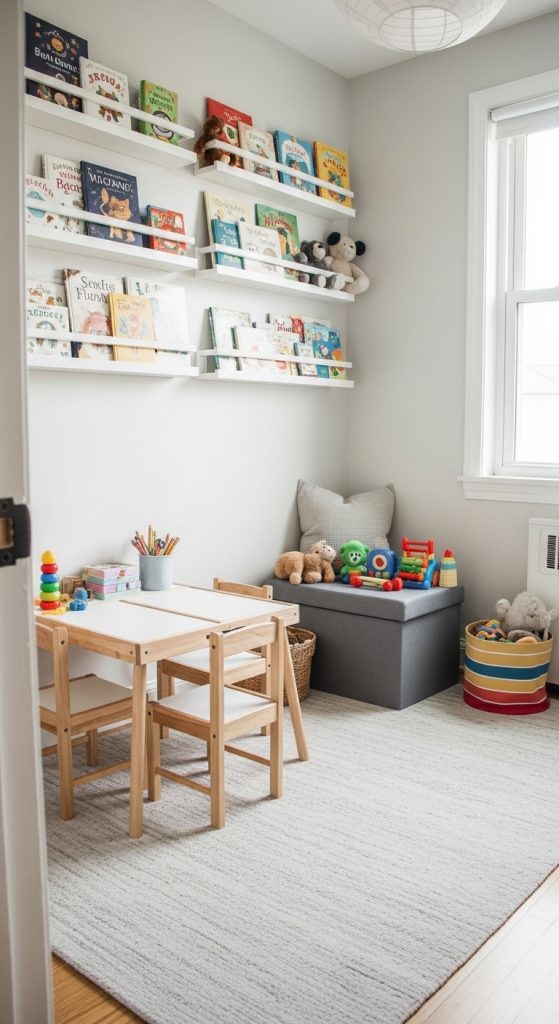
Designing a toddler playroom is about much more than filling a space with toys. It’s about creating an environment where imagination grows, independence develops, and learning happens naturally through play. A thoughtfully designed playroom supports creativity, emotional regulation, fine and gross motor skills, and early problem-solving — all while staying safe and easy to maintain for parents.
Toddlers thrive in spaces that are predictable, organized, and scaled to their size. Low shelves, soft textures, accessible storage, and clearly defined play zones help little ones feel confident navigating their environment. At the same time, aesthetic design matters. Pinterest-worthy toddler playrooms balance function and beauty, often using neutral palettes, natural materials, and clever storage solutions that reduce visual clutter.
When planning a toddler playroom, keep these core principles in mind:
• Safety first (rounded edges, anchored furniture, soft flooring)
• Open floor space for movement
• Toy rotation to prevent overwhelm
• Clearly defined activity zones
• Easy clean-up systems
• Calm color palette with playful accents
This guide explores 10 detailed toddler playroom ideas that are practical, budget-friendly, and beginner-friendly. Each idea includes a clear explanation, step-by-step setup guidance, and a materials list to help you create a space your toddler will love — and you’ll enjoy maintaining.
Let’s design a playroom that encourages curiosity, creativity, and calm.
1. Montessori-Inspired Low Shelf Playroom
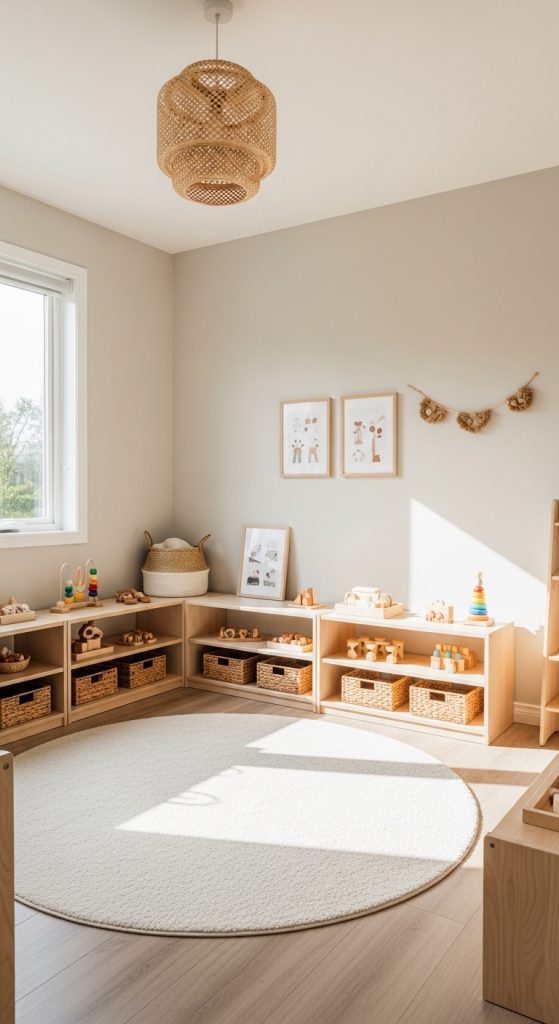
A Montessori-style playroom focuses on independence and accessibility. Everything is placed at toddler height so children can choose activities on their own. Instead of overflowing toy bins, items are displayed neatly on open shelves in small baskets or trays.
This setup encourages focus and prevents overstimulation.
What Makes It Special?
The environment is intentional. Only a limited number of toys are visible at one time, promoting deeper play.
Step-by-Step Setup
- Choose low open shelving (under 36 inches tall).
- Anchor shelves securely to the wall.
- Sort toys by category.
- Place 5–8 activities on display.
- Use baskets for smaller items.
- Keep open floor space in center.
- Rotate toys weekly.
Materials Needed
• Low wooden shelves
• Wall anchors
• Woven baskets
• Neutral rug
• Toy trays or bins
Clean, calm, and development-focused.
2. Soft Neutral Playroom with Cozy Reading Nook
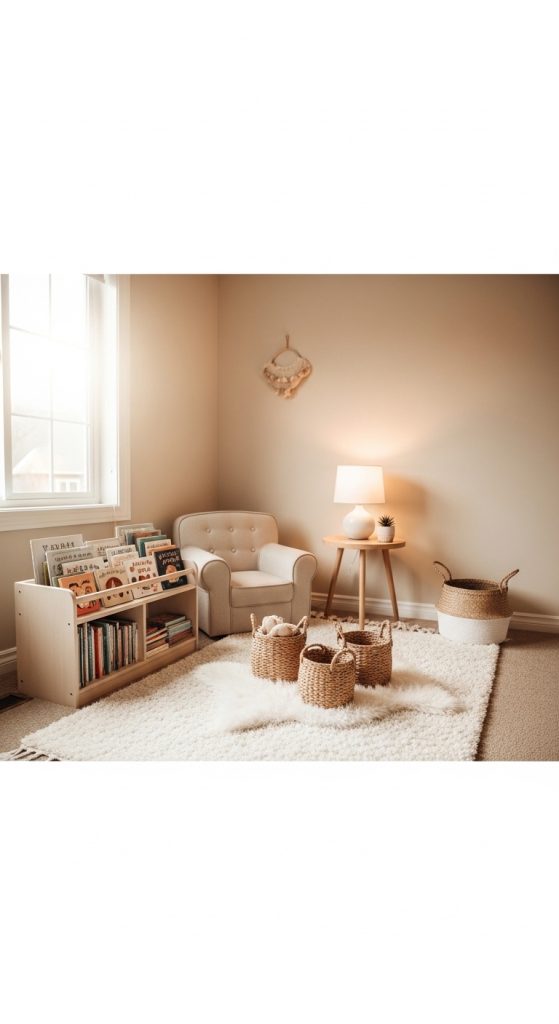
A calming playroom reduces overstimulation and supports quiet time. Soft neutral tones combined with a cozy reading corner create balance between active and calm play.
Definition
A playroom featuring neutral decor and a dedicated book zone.
Step-by-Step Setup
- Choose soft beige, cream, or light gray tones.
- Add a low bookshelf.
- Place floor cushions or a mini armchair.
- Add soft lighting like a small lamp.
- Keep books front-facing for easy access.
Materials
• Low bookshelf
• Soft floor cushions
• Neutral area rug
• Small lamp
• Toddler-friendly books
Perfect for winding down.
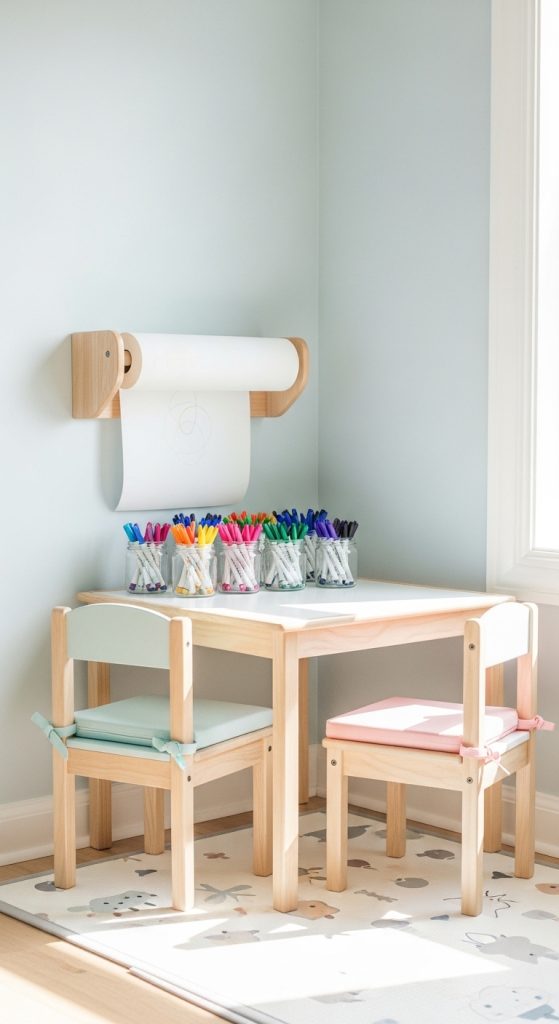
3. Creative Art Corner Station
Toddlers love to create. A designated art area encourages creativity while containing mess.
Definition
Small art station with washable surfaces and accessible supplies.
Steps
- Add child-sized table and chairs.
- Install wall-mounted paper roll.
- Use clear containers for crayons.
- Store washable paints separately.
- Add smock hook nearby.
Materials
• Toddler table & chairs
• Washable crayons
• Paper roll holder
• Storage containers
• Washable paint
Encourages hands-on creativity.
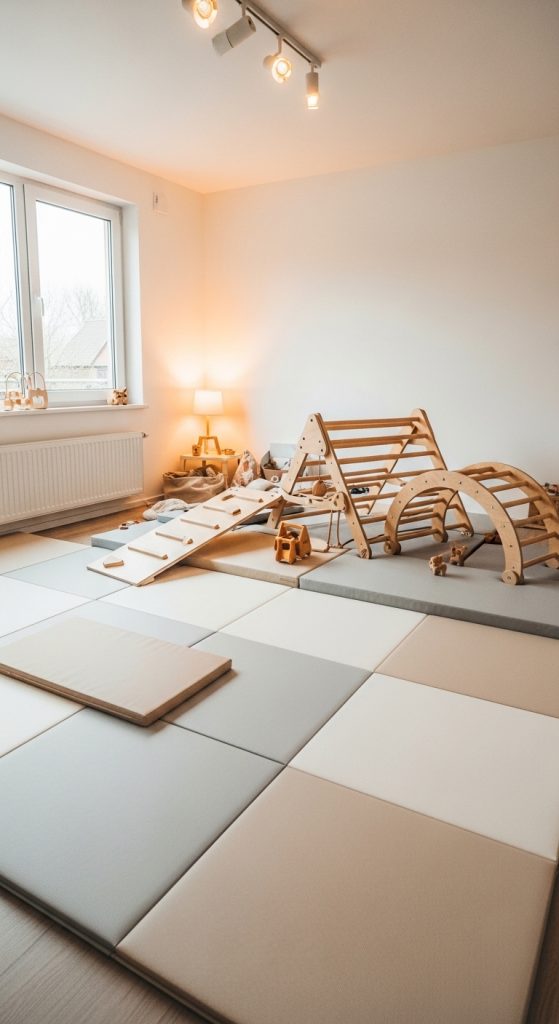
4. Indoor Climbing & Gross Motor Zone
Toddlers need movement. A safe climbing zone supports physical development.
Definition
Soft climbing structures and open movement space.
Steps
- Use padded floor mats.
- Add toddler climbing triangle or foam blocks.
- Keep walls clear around equipment.
- Supervise always.
- Store toys separately to avoid clutter.
Materials
• Foam mats
• Wooden climbing triangle
• Soft play blocks
Great for energy release.
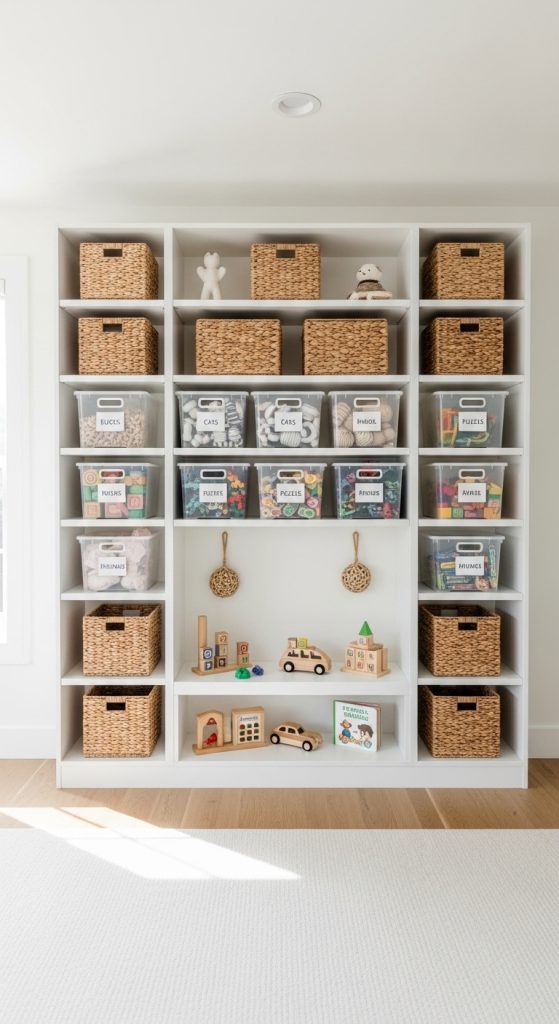
5. Toy Rotation Storage System
Too many toys cause overwhelm. Rotation keeps play fresh.
Definition
Storing extra toys and rotating weekly.
Steps
- Sort toys into categories.
- Store extras in labeled bins.
- Keep only selected toys accessible.
- Rotate every 1–2 weeks.
Materials
• Clear storage bins
• Labels
• Storage closet or cabinet
Reduces clutter dramatically.
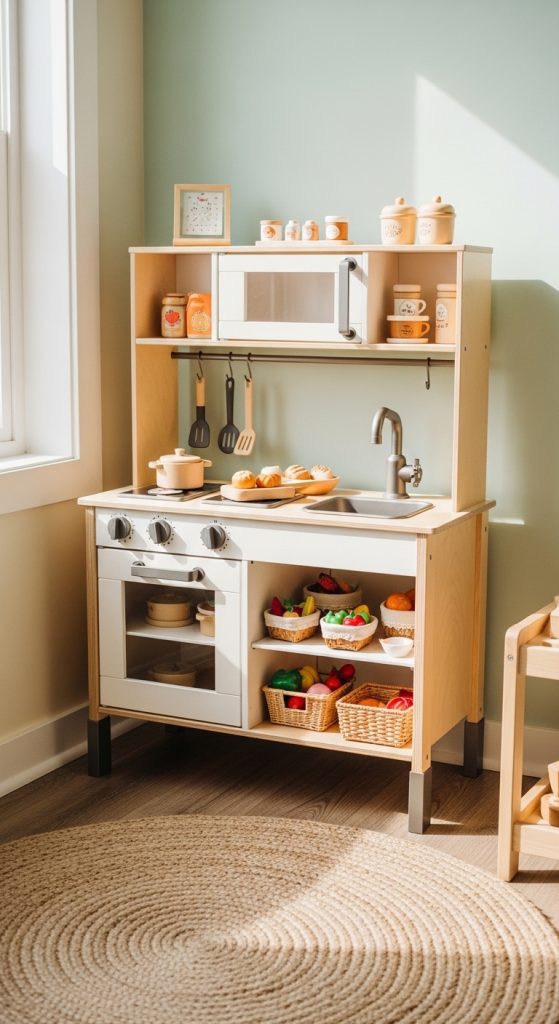
6. Themed Imaginative Play Corner
Create a small pretend play zone like a kitchen or market stand.
Definition
Dedicated imaginative play setup.
Steps
- Choose theme (kitchen, grocery store).
- Add child-sized play set.
- Store accessories in baskets.
- Add small rug to define area.
Materials
• Play kitchen or stand
• Toy food
• Small baskets
Encourages role-playing skills.
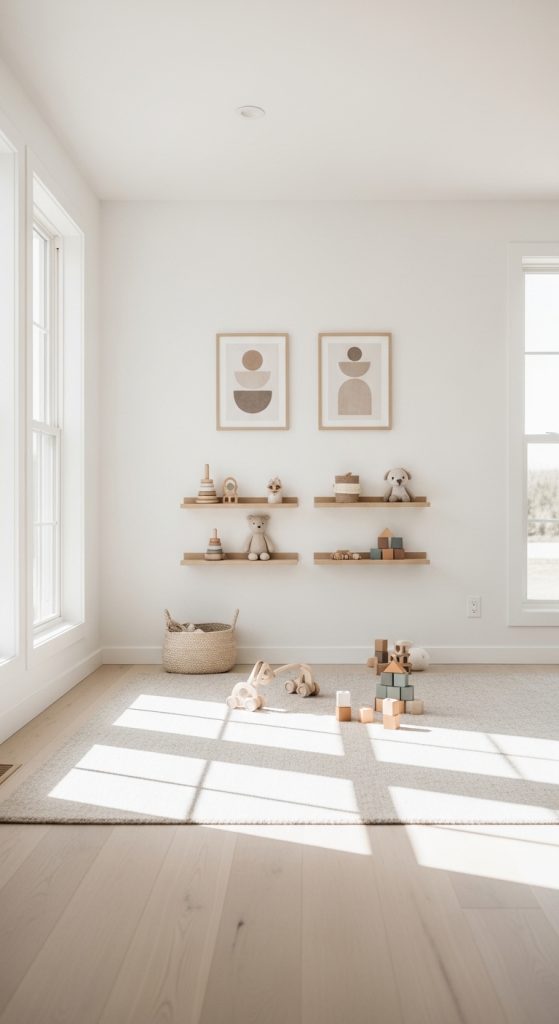
7. Minimalist Scandinavian Playroom
Light wood, white tones, and simple decor.
Definition
Clean, airy aesthetic with minimal clutter.
Steps
- Use light wood furniture.
- Keep walls neutral.
- Add one statement wall decor.
- Limit toy display.
Materials
• Wooden shelves
• Neutral rug
• Simple wall art
Calm and stylish.
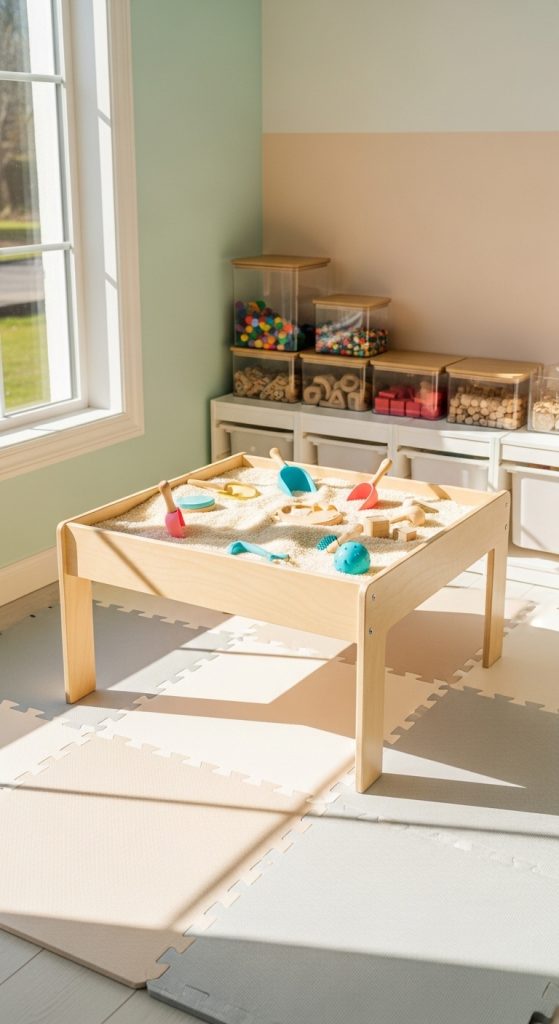
8. Sensory Play Table Setup
Sensory play builds fine motor skills.
Definition
Table designed for sand, water, or sensory bins.
Steps
- Choose sensory table with lid.
- Add safe fillers (rice, sand).
- Include scoops and cups.
- Supervise during use.
Materials
• Sensory table
• Storage bins
• Scooping tools
Messy but developmental.
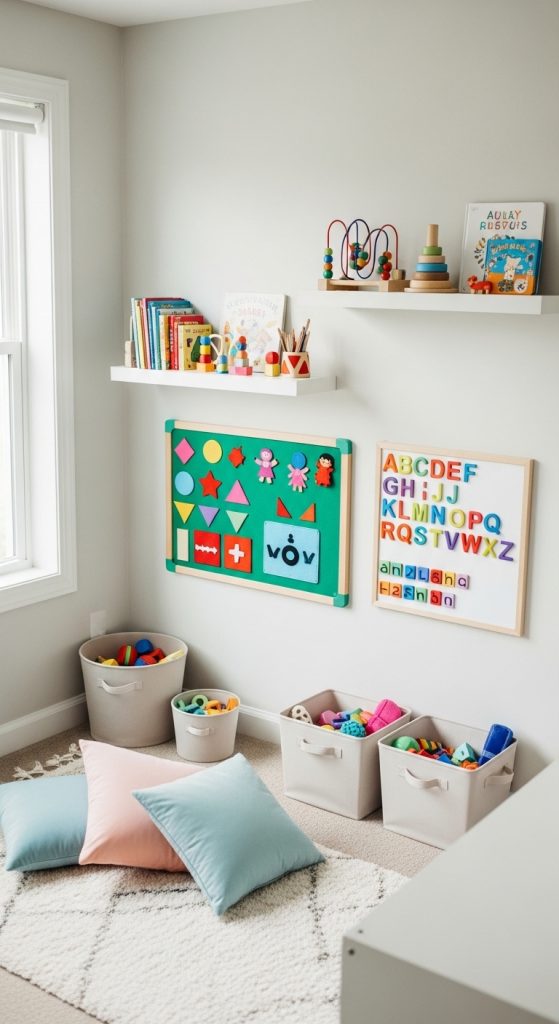
9. Colorful Learning Wall
Interactive wall elements stimulate curiosity.
Definition
Wall-mounted educational toys and boards.
Steps
- Install felt board or magnetic board.
- Add alphabet posters.
- Use wall-safe adhesive hooks.
- Keep elements at toddler height.
Materials
• Felt board
• Alphabet wall art
• Magnetic letters
Encourages early learning.
10. Multi-Functional Small Space Playroom
Perfect for apartments.
Definition
Compact storage and foldable furniture.
Steps
- Use storage ottomans.
- Choose foldable play table.
- Install wall shelves.
- Use toy baskets under furniture.
Materials
• Storage ottoman
• Foldable table
• Stackable bins