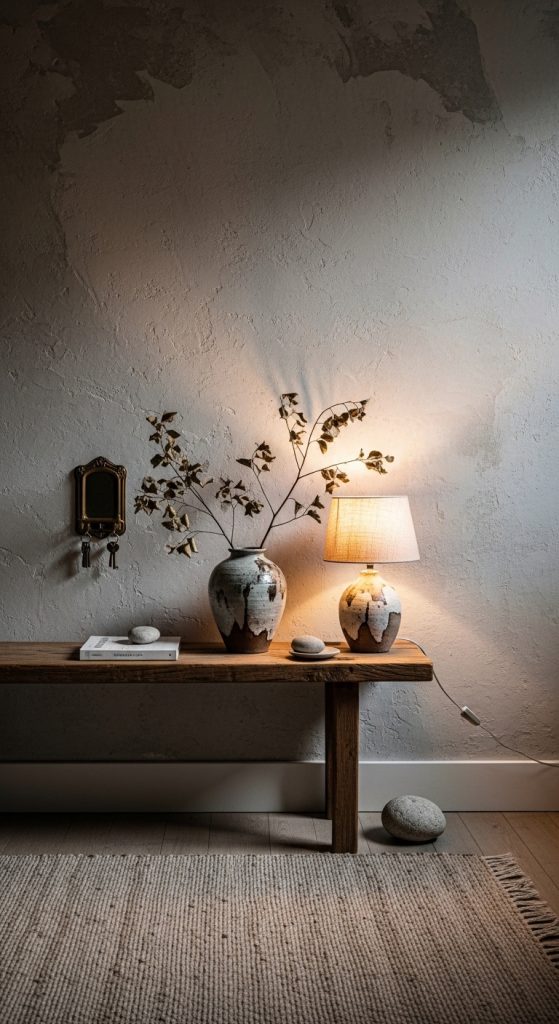


Wabi-sabi is a Japanese design philosophy that embraces simplicity, imperfection, and the beauty of natural materials. Instead of focusing on perfection or luxury, wabi-sabi interiors celebrate authenticity, calmness, and the quiet elegance of things that are handmade, aged, or imperfect. In apartment interior design, this style creates a peaceful and balanced atmosphere that helps people feel relaxed and connected to nature.
In modern homes, life can often feel busy and cluttered. Wabi-sabi interior design offers a refreshing alternative by encouraging minimalism and intentional living. Rather than filling a space with many decorative items, the focus is on a few meaningful pieces that highlight craftsmanship, texture, and natural beauty.
Wabi-sabi apartments often feature neutral color palettes inspired by nature. Colors like beige, sand, warm gray, clay, stone, olive green, and soft brown are commonly used to create a calm environment. These earthy tones help create a harmonious space that feels warm and grounded rather than overly decorative.
Natural materials are a key element of wabi-sabi interiors. Wood, stone, clay, linen, bamboo, and handmade ceramics are frequently used in furniture and decor. These materials add texture and character to the space while reflecting the imperfect beauty that defines this design philosophy.
Lighting also plays an important role in creating a wabi-sabi atmosphere. Soft and warm lighting is preferred over bright or artificial lighting. Lamps made from rice paper, linen, or bamboo produce a gentle glow that enhances the peaceful mood of the apartment.
Furniture in wabi-sabi apartments is usually simple and low-profile. Instead of large or overly decorative pieces, the focus is on functional items with clean lines and natural finishes. Wooden tables, linen sofas, woven chairs, and ceramic accessories are commonly used to maintain a relaxed and balanced look.
Another important aspect of wabi-sabi design is embracing negative space. Empty areas are not considered wasted space but rather a way to allow the room to breathe. This openness helps create a sense of calm and mindfulness within the home.
Plants and organic decor elements are also frequently included in wabi-sabi interiors. Indoor plants, dried branches, and simple ceramic vases can add life and texture while maintaining the minimalist aesthetic. These natural elements help strengthen the connection between the home and the natural world.
In this guide, we will explore ten inspiring wabi-sabi apartment interior design ideas. Each idea includes a clear explanation, simple steps to recreate the look, and a list of materials that can help bring this peaceful design style into your apartment.
1. Minimal Wabi-Sabi Living Room
A minimalist living room focuses on simplicity and calmness while using natural textures.
How to Create This Look
- Choose a neutral linen sofa.
- Add a low wooden coffee table.
- Use minimal decor such as a ceramic vase.
- Keep the color palette soft and earthy.
Materials Needed
- Linen sofa
- Wooden coffee table
- Ceramic vase
- Neutral rug
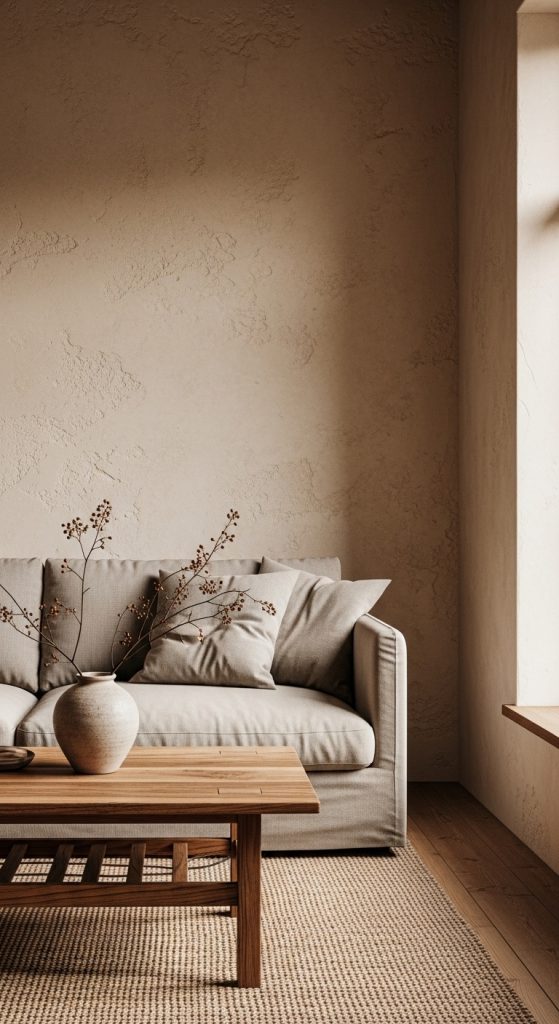
2. Wabi-Sabi Textured Walls
Textured walls add depth and natural imperfection to the apartment.
How to Create This Look
- Use plaster or limewash wall finishes.
- Choose soft earthy colors.
- Avoid glossy or overly polished surfaces.
Materials Needed
- Limewash paint
- Plaster finish
- Neutral wall decor
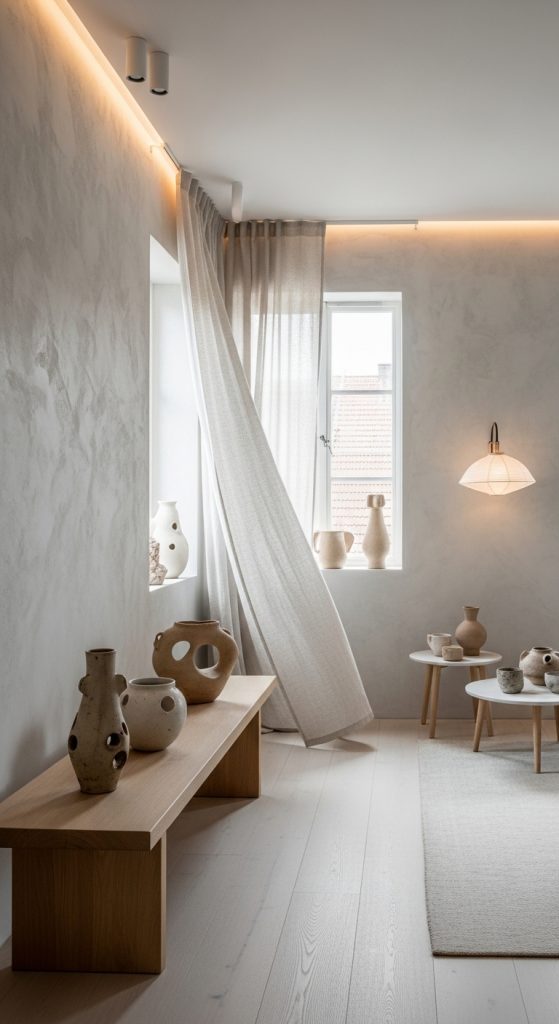
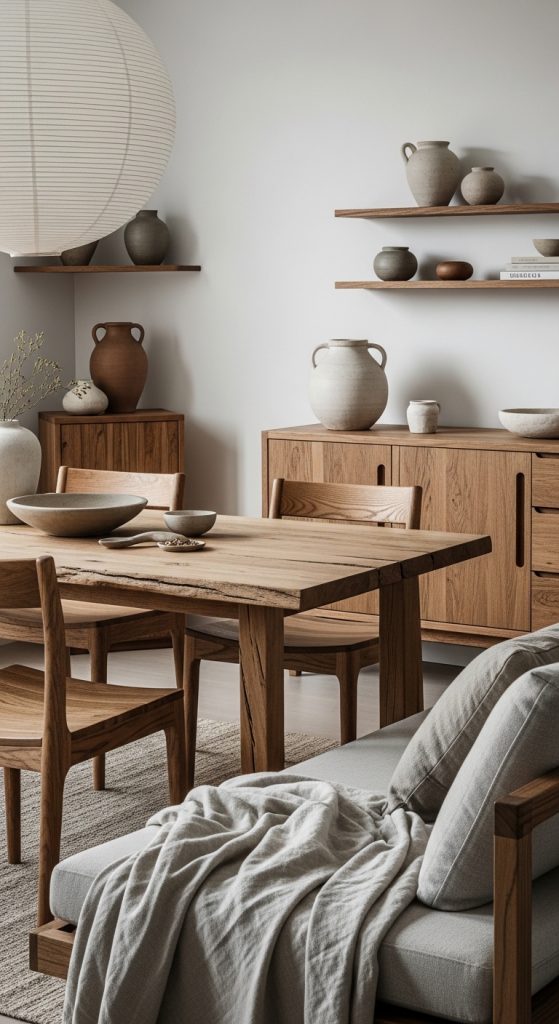
3. Natural Wood Apartment Interior
Natural wood furniture adds warmth and authenticity.
How to Create This Look
- Choose solid wood furniture pieces.
- Keep finishes raw or lightly treated.
- Pair with neutral textiles.
Materials Needed
- Wooden table
- Wooden chairs
- Linen cushions
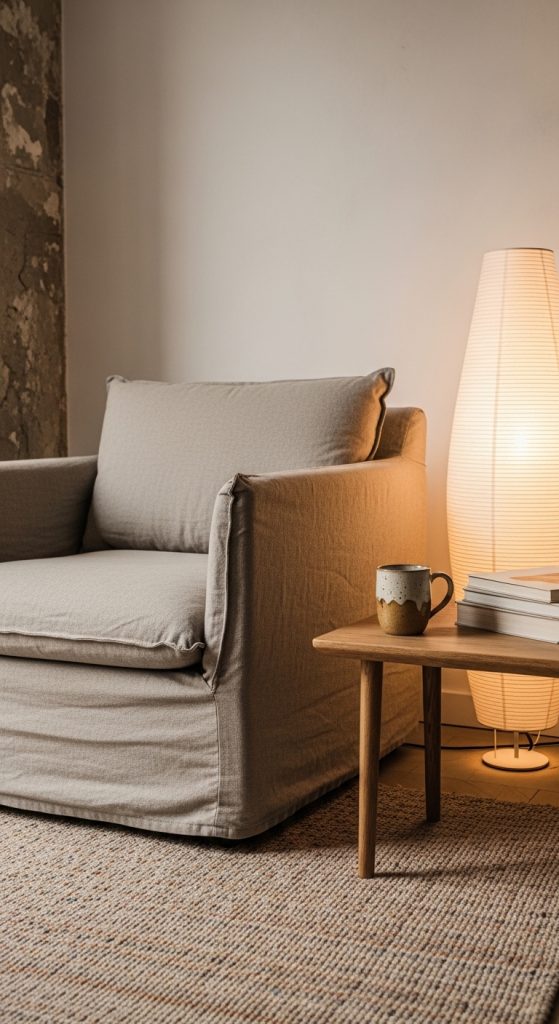
4. Wabi-Sabi Reading Corner
A quiet reading corner can create a relaxing retreat in an apartment.
How to Create This Look
- Place a comfortable armchair near natural light.
- Add a simple floor lamp.
- Include a small wooden side table.
Materials Needed
- Armchair
- Floor lamp
- Wooden table
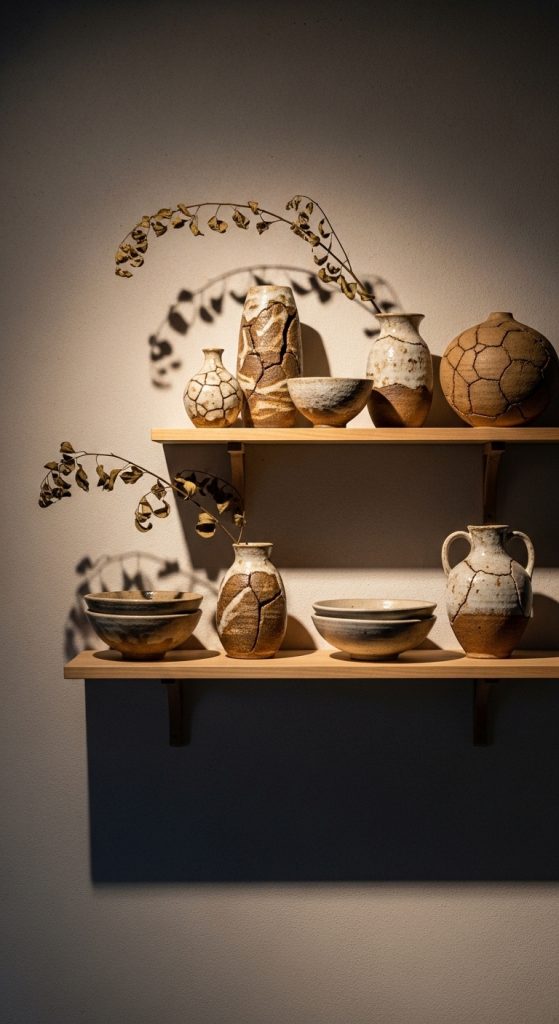
5. Clay and Ceramic Decor
Handmade ceramics add character and natural beauty.
How to Create This Look
- Use handmade ceramic vases and bowls.
- Display them on wooden shelves.
- Keep arrangements simple.
Materials Needed
- Ceramic vases
- Wooden shelves
- Decorative bowls
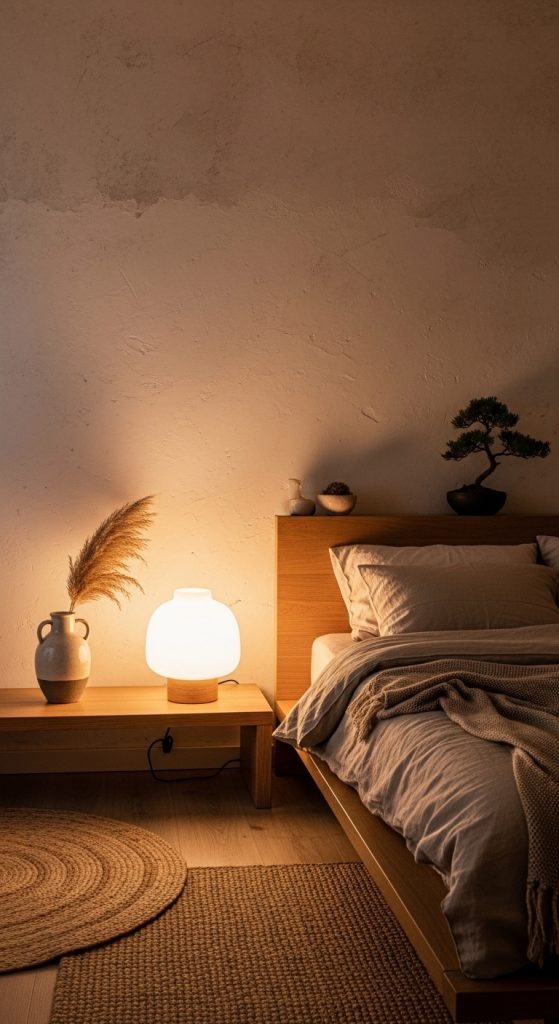
6. Wabi-Sabi Bedroom Design
A calm bedroom helps create a restful atmosphere.
How to Create This Look
- Use neutral linen bedding.
- Add wooden bedside tables.
- Include soft warm lighting.
Materials Needed
- Linen bedding
- Wooden nightstand
- Table lamp
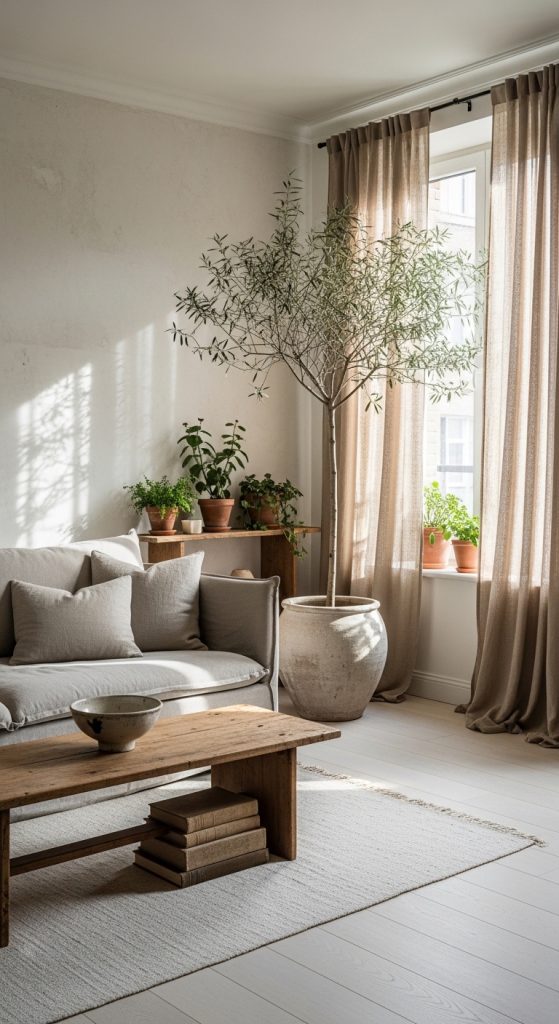
7. Indoor Plants and Natural Decor
Plants bring life to a minimalist wabi-sabi apartment.
How to Create This Look
- Place indoor plants near windows.
- Use simple ceramic pots.
- Choose plants with natural shapes.
Materials Needed
- Indoor plants
- Ceramic pots
- Wooden plant stands
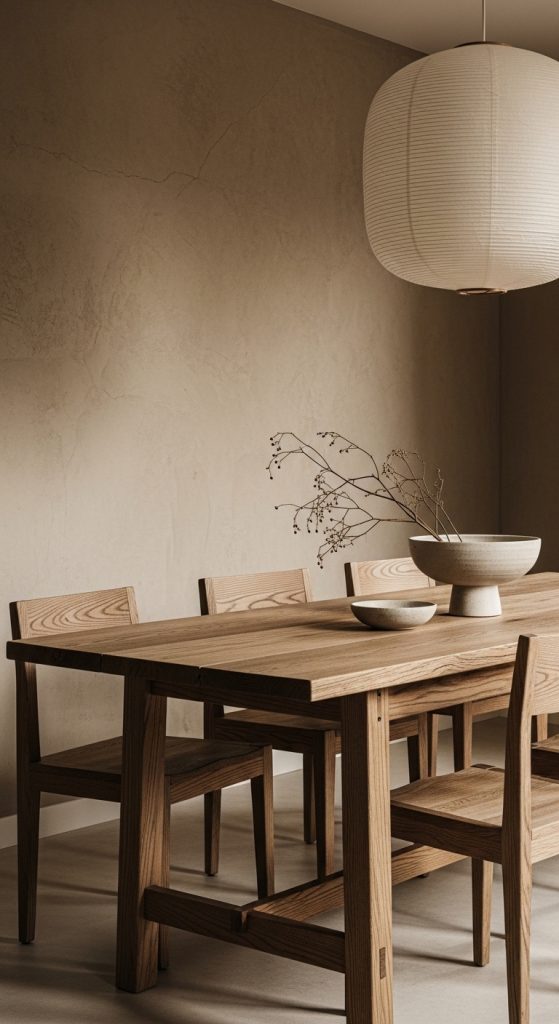
8. Wabi-Sabi Dining Area
A simple dining space can feel warm and inviting.
How to Create This Look
- Choose a wooden dining table.
- Add simple chairs with natural fabric.
- Decorate with a ceramic centerpiece.
Materials Needed
- Wooden dining table
- Dining chairs
- Ceramic bowl
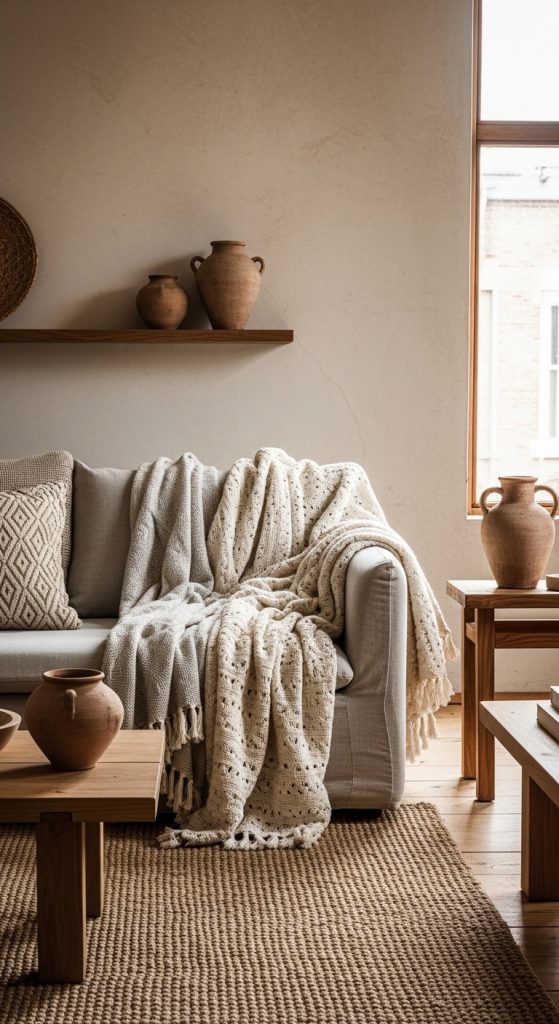
9. Neutral Textile Decor
Soft textiles add warmth to minimalist spaces.
How to Create This Look
- Use linen curtains.
- Add woven rugs and blankets.
- Choose neutral colors.
Materials Needed
- Linen curtains
- Woven rug
- Throw blanket
10. Wabi-Sabi Entryway
A simple entryway sets the tone for the apartment.
How to Create This Look
- Place a wooden bench near the door.
- Add a ceramic vase with branches.
- Include soft lighting.
Materials Needed
- Wooden bench
- Ceramic vase
- Table lamp