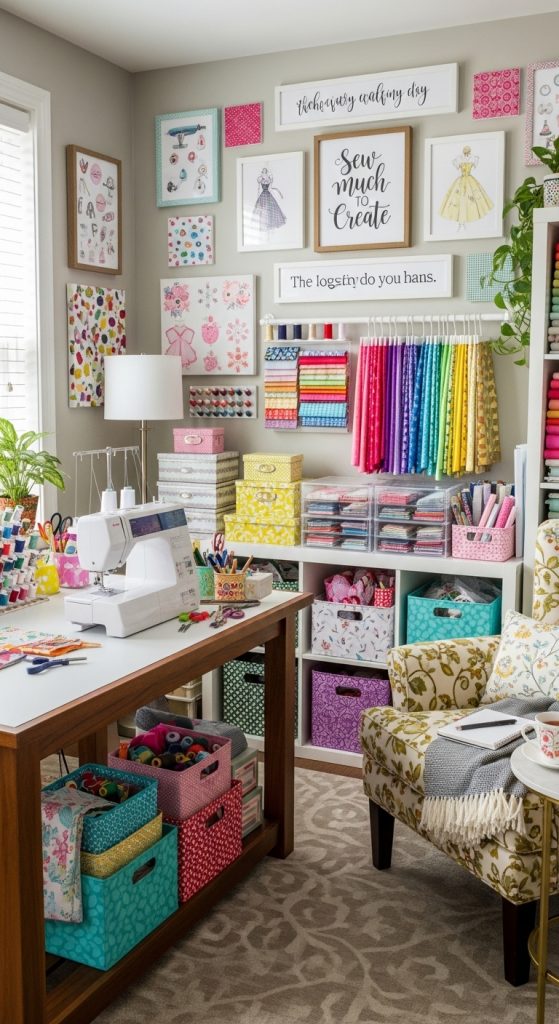
A well-designed sewing room is more than just a place to store fabric and a sewing machine — it’s a creative workspace that supports productivity, organization, and inspiration. Whether you sew as a hobby, run a handmade business, or simply enjoy occasional DIY projects, having a dedicated sewing room can completely transform your sewing experience. The right setup reduces frustration, saves time, and makes sewing more enjoyable from start to finish.
One of the biggest challenges sewists face is clutter. Fabric piles, patterns, tools, and machines can quickly overwhelm a space if there’s no clear system in place. A thoughtfully planned sewing room focuses on workflow — cutting, sewing, pressing, and storage — ensuring everything has a place and purpose. When your tools are easy to access and your space feels calm, creativity flows more naturally.
Another key element of a great sewing room is comfort. Sewing often involves long periods of sitting or standing, so ergonomic furniture, proper lighting, and sufficient workspace are essential. A sewing room should support your body as much as your creativity. Adjustable chairs, correct table heights, and good lighting help prevent fatigue and strain, allowing you to enjoy sewing for longer periods.
Pinterest searches for sewing room ideas continue to grow because sewists want spaces that are both practical and beautiful. Modern sewing rooms are no longer hidden corners — they’re bright, organized, and styled with intention. From minimalist studios to cozy craft rooms, sewing spaces today reflect personal style while remaining highly functional.
Storage plays a crucial role in sewing room design. Fabric needs protection, tools need visibility, and patterns need organization. Open shelving, drawers, pegboards, and labeled bins all help create order without sacrificing accessibility. Even small sewing rooms can feel spacious when storage is planned thoughtfully.
Lighting is another often-overlooked aspect. Natural light is ideal, but task lighting is essential for precision work. Combining overhead lighting with focused task lamps ensures you can see clearly at every stage of your project.
In this article, you’ll find 10 detailed sewing room ideas designed to suit different room sizes, budgets, and sewing styles. Each idea includes a clear explanation, step-by-step guidance on how to set it up, and a list of essential furniture or materials. Whether you’re starting from scratch or refreshing an existing space, these sewing room ideas will help you create a workspace that’s organized, efficient, and inspiring.
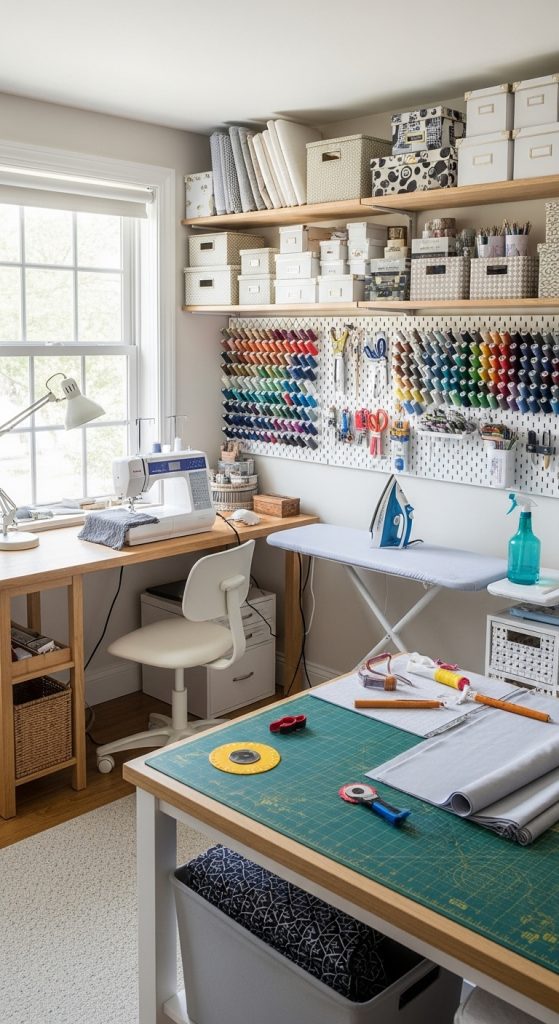
1. Functional Sewing Room with Defined Work Zones
A sewing room works best when it’s divided into clear zones for cutting, sewing, pressing, and storage. Defining these areas helps streamline your workflow and reduces unnecessary movement.
This layout is ideal for medium to large rooms.
How to Set This Up
- Assign a specific area for each task.
- Place the sewing machine near electrical outlets.
- Position the cutting table in an open area.
- Keep the ironing station nearby.
- Store tools close to where they’re used.
Materials / Furniture Used
- Sewing machine table
- Cutting table
- Ironing board or station
- Storage cabinets
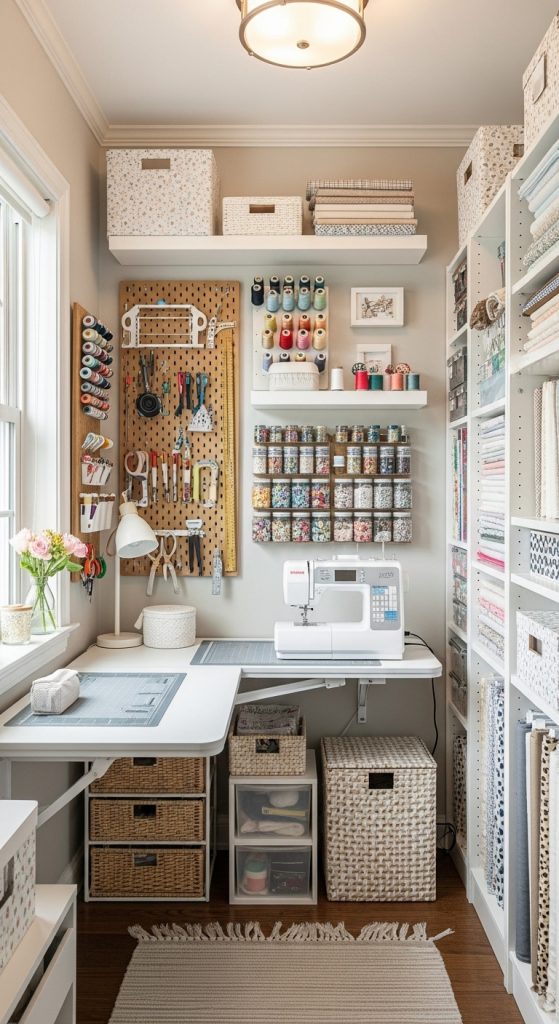
2. Small Sewing Room with Space-Saving Furniture
Even a small room can function beautifully with the right furniture choices. Compact, foldable, or multifunctional furniture helps maximize limited space.
This idea is perfect for apartments or shared rooms.
How to Set This Up
- Choose foldable or wall-mounted tables.
- Use vertical storage.
- Select compact furniture pieces.
- Keep the layout simple.
- Avoid overcrowding.
Materials / Furniture Used
- Foldable table
- Wall shelves
- Compact storage units
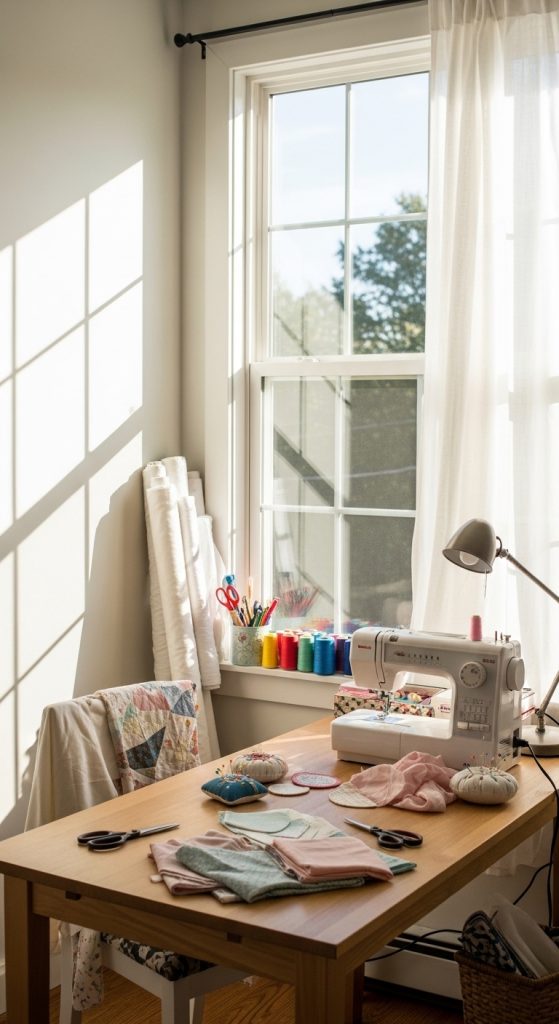
3. Bright Sewing Room with Natural Light
Natural light improves visibility and creates an uplifting sewing environment. A bright sewing room feels more open and energizing.
This setup works best near windows.
How to Set This Up
- Place your sewing table near a window.
- Use light-colored walls.
- Keep window areas clutter-free.
- Add sheer curtains if needed.
- Supplement with task lighting.
Materials / Furniture Used
- Sewing table
- Sheer curtains
- Task lamps
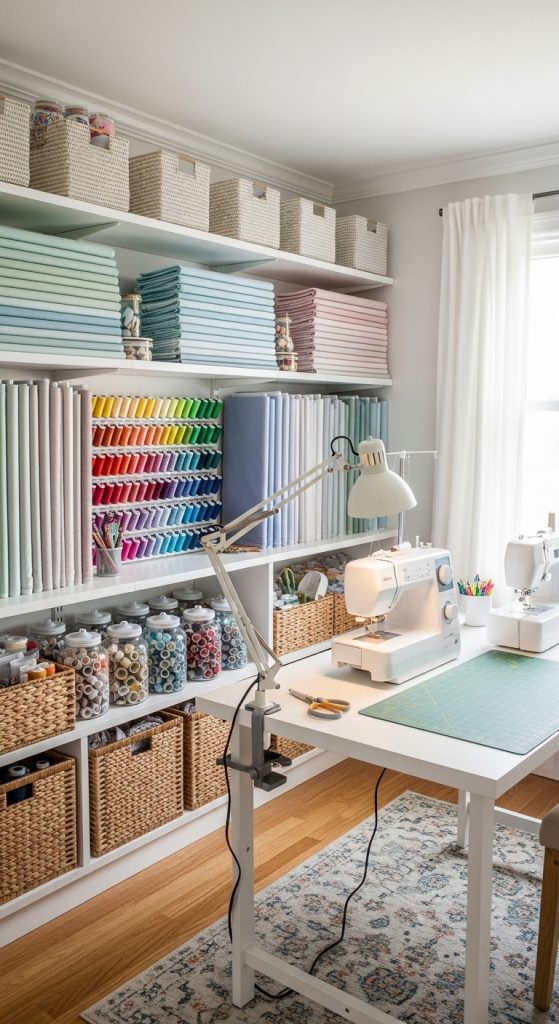
4. Organized Sewing Room with Open Shelving
Open shelving keeps supplies visible and accessible. This setup is ideal for frequently used items like fabric, thread, and tools.
It also adds a decorative element to the room.
How to Set This Up
- Install sturdy open shelves.
- Sort supplies by category.
- Use baskets for smaller items.
- Keep shelves neat.
- Label when necessary.
Materials / Furniture Used
- Open shelving
- Storage baskets
- Fabric organizers
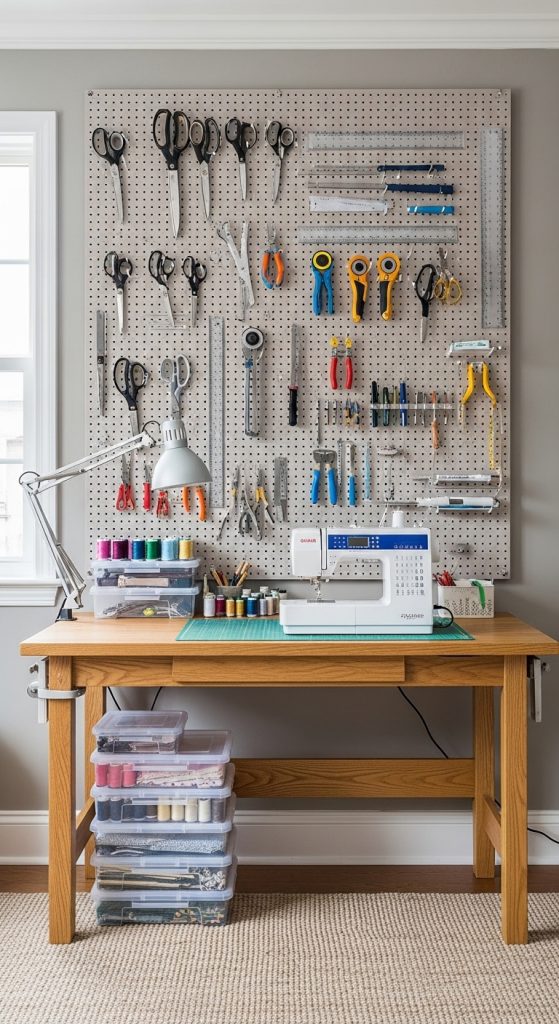
5. Sewing Room with Pegboard Tool Wall
A pegboard wall keeps tools organized and within reach. It’s highly customizable and works in rooms of all sizes.
This idea improves efficiency and visibility.
How to Set This Up
- Mount a pegboard securely.
- Arrange hooks for tools.
- Keep frequently used items visible.
- Adjust layout as needed.
- Maintain spacing for easy access.
Materials / Furniture Used
- Pegboard
- Hooks and holders
- Sewing tools
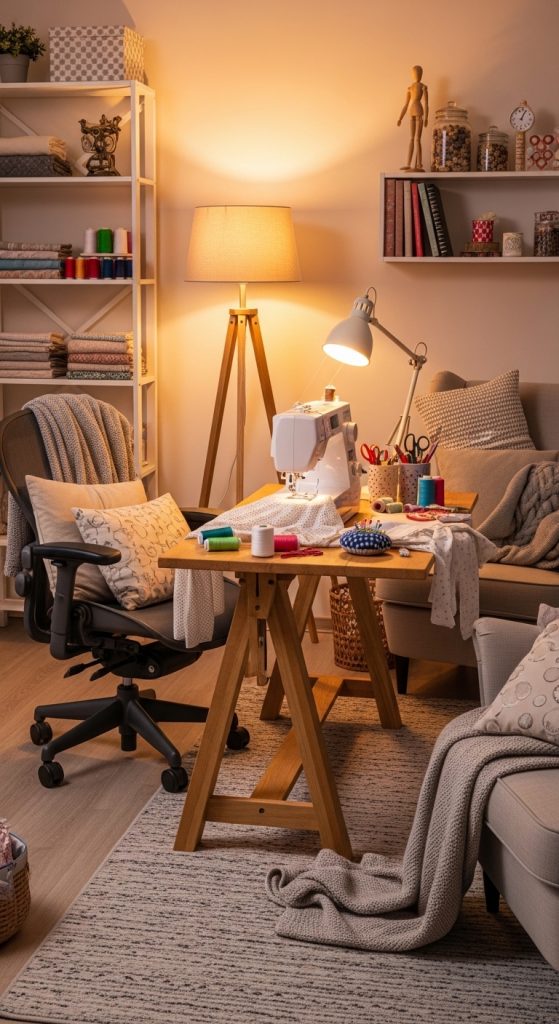
6. Cozy Sewing Room with Comfortable Seating
Comfort is essential in a sewing room. A supportive chair and cozy touches make long sewing sessions more enjoyable.
This setup focuses on comfort without sacrificing function.
How to Set This Up
- Choose an ergonomic chair.
- Add cushions or footrests.
- Use soft lighting.
- Keep essentials within reach.
- Maintain clear floor space.
Materials / Furniture Used
- Ergonomic sewing chair
- Cushions
- Floor lamp
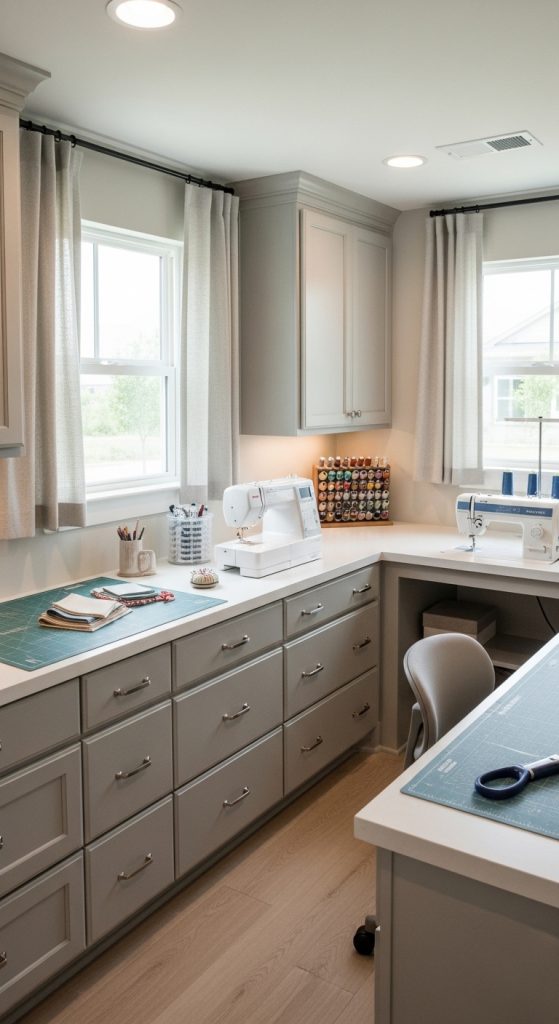
7. Sewing Room with Built-In Storage Cabinets
Built-in cabinets provide ample storage while keeping the room looking clean and organized. They’re ideal for hiding clutter.
This setup suits dedicated sewing rooms.
How to Set This Up
- Install cabinets along walls.
- Use drawers for small tools.
- Store fabric neatly.
- Keep countertops clear.
- Label storage sections.
Materials / Furniture Used
- Built-in cabinets
- Drawer organizers
- Storage bins
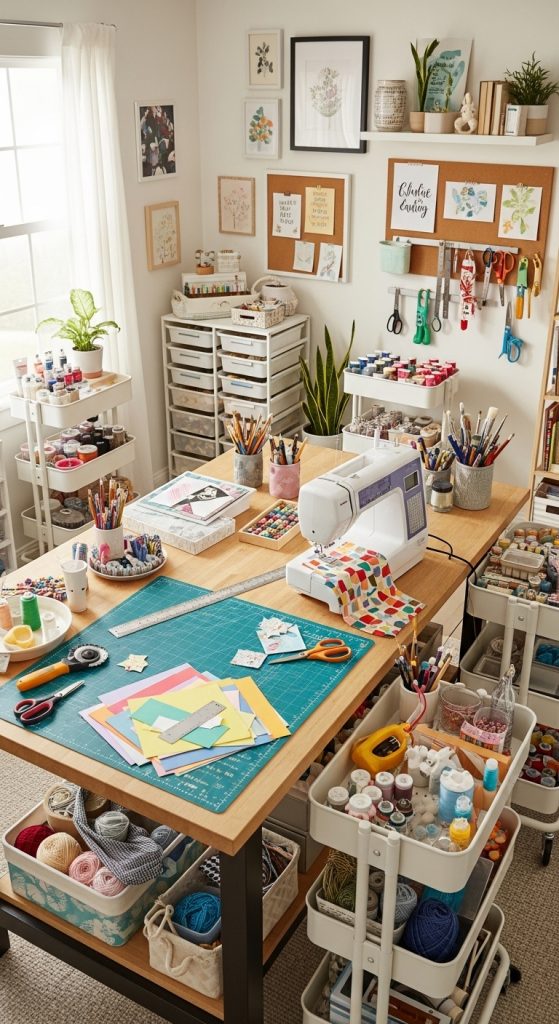
8. Multi-Purpose Sewing and Craft Room
A multi-purpose sewing room accommodates other crafts like quilting, embroidery, or packing handmade items.
This idea is great for creative households.
How to Set This Up
- Use a large central table.
- Store supplies by craft type.
- Keep work surfaces flexible.
- Use movable storage.
- Define zones visually.
Materials / Furniture Used
- Large work table
- Rolling storage carts
- Multi-use shelving
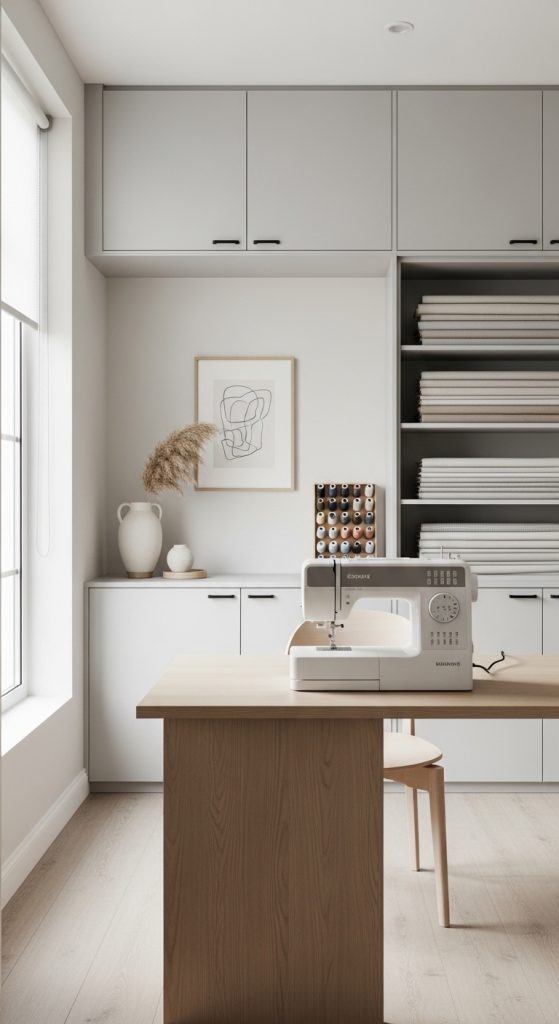
9. Minimalist Sewing Room for a Clean Look
Minimalist sewing rooms focus on simplicity and clarity. Fewer items create a calm, distraction-free environment.
This style is ideal for focused sewing.
How to Set This Up
- Keep only essential tools.
- Use neutral colors.
- Store extras out of sight.
- Maintain clear surfaces.
- Focus on functionality.
Materials / Furniture Used
- Simple sewing table
- Neutral storage units
- Minimal décor
10. Sewing Room with Personal Style and Décor
Adding personal touches makes your sewing room inspiring and enjoyable. Décor can reflect your creativity without cluttering the space.
This idea blends function and personality.
How to Set This Up
- Add artwork or inspirational quotes.
- Display favorite fabrics.
- Use decorative storage.
- Balance décor with function.
- Refresh seasonally.
Materials / Furniture Used
- Wall art
- Decorative storage boxes
- Fabric displays