Paint is one of the most powerful and affordable ways to completely transform a playroom. The right color can energize, calm, inspire creativity, or define activity zones — all without adding clutter. Whether you’re designing a toddler play space, a shared sibling playroom, or a full indoor activity zone, thoughtful paint choices set the tone for the entire room.
When selecting paint for a playroom, keep these factors in mind:
• Lighting (natural vs. basement lighting)
• Room size (light colors expand, dark colors add coziness)
• Age of children
• Longevity (will it grow with them?)
• Washability (always choose washable, durable finishes)
Most modern Pinterest-worthy playrooms balance playful color with neutral foundations. Instead of painting every wall bright red or neon green, today’s design trends lean toward soft pastels, warm neutrals, statement accent walls, and creative paint techniques like arches or color blocking.
Finish matters too. For playrooms, choose:
• Eggshell or satin finish (easy to wipe clean)
• Low-VOC paint for better air quality
• Durable scrubbable formulas
This guide explores 10 detailed playroom paint ideas that are stylish, practical, and beginner-friendly. Each idea includes a clear design explanation, how to execute it step-by-step, and the materials needed.
Let’s transform your playroom walls into something inspiring and beautiful.
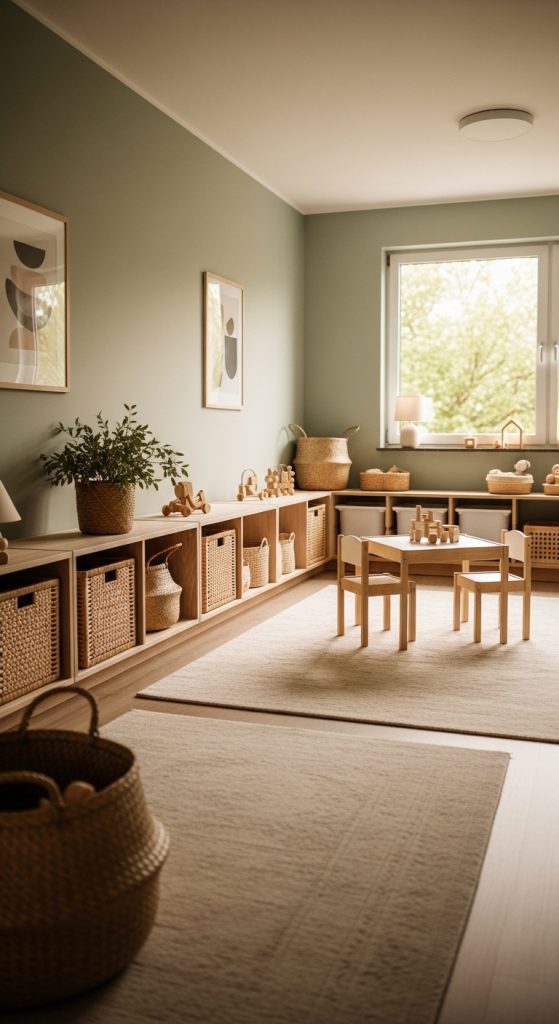
1. Soft Sage Green Walls
Sage green is calming yet playful. It brings nature indoors and works beautifully in both bright and basement playrooms.
Why It Works
Green promotes calm focus while still feeling fresh and youthful.
Step-by-Step Setup
- Choose a soft sage tone (avoid dark forest shades).
- Prep walls by filling holes and sanding.
- Apply primer if walls are dark.
- Paint two coats of sage.
- Pair with light wood furniture and neutral rugs.
Materials Needed
• Sage green interior paint
• Primer
• Roller & brushes
• Drop cloth
• Painter’s tape
Timeless and gender-neutral.
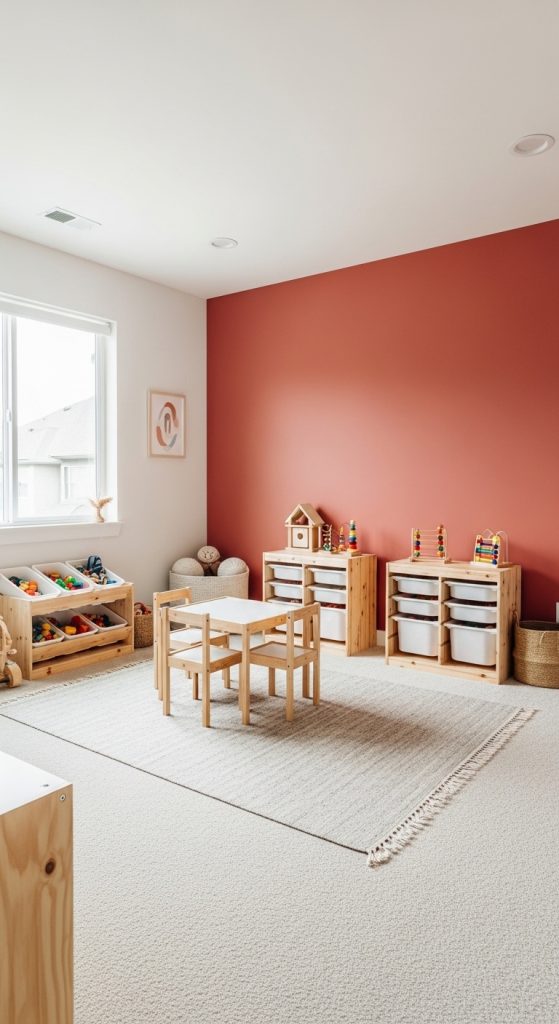
2. Warm White with Colorful Accent Wall
A neutral base with one bold wall keeps the room bright but interesting.
Why It Works
Prevents overstimulation while adding personality.
Steps
- Paint three walls warm white.
- Choose one wall for bold color (blue, mustard, coral).
- Tape edges carefully.
- Apply two coats.
- Balance with neutral decor.
Materials
• Warm white paint
• Accent color paint
• Painter’s tape
• Rollers
Great for growing kids.
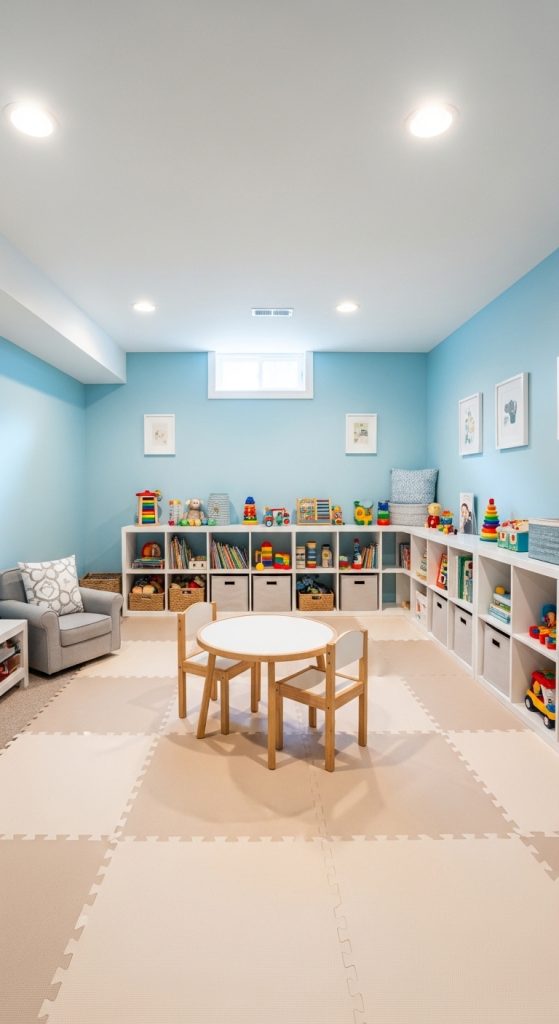
3. Soft Sky Blue Playroom
Sky blue creates an open, airy feel — perfect for smaller spaces.
Why It Works
Blue encourages calm while still feeling playful.
Steps
- Choose light blue shade.
- Prime if needed.
- Apply even coats.
- Pair with white shelves and colorful toys.
Materials
• Light blue paint
• Roller
• Drop cloth
Ideal for brightening basements.
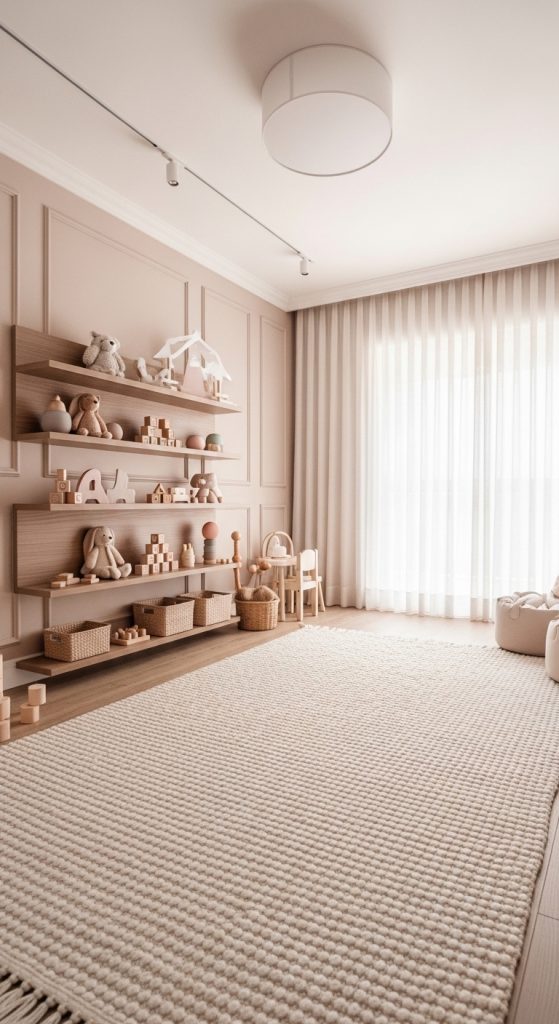
4. Blush Beige Neutral Playroom
Modern playrooms often use soft beige or blush undertones.
Why It Works
Adds warmth without overwhelming.
Steps
- Choose warm beige or blush tone.
- Prep walls.
- Apply two coats.
- Add textured rugs and woven baskets.
Materials
• Beige/blush paint
• Roller
• Painter’s tape
Soft and stylish.
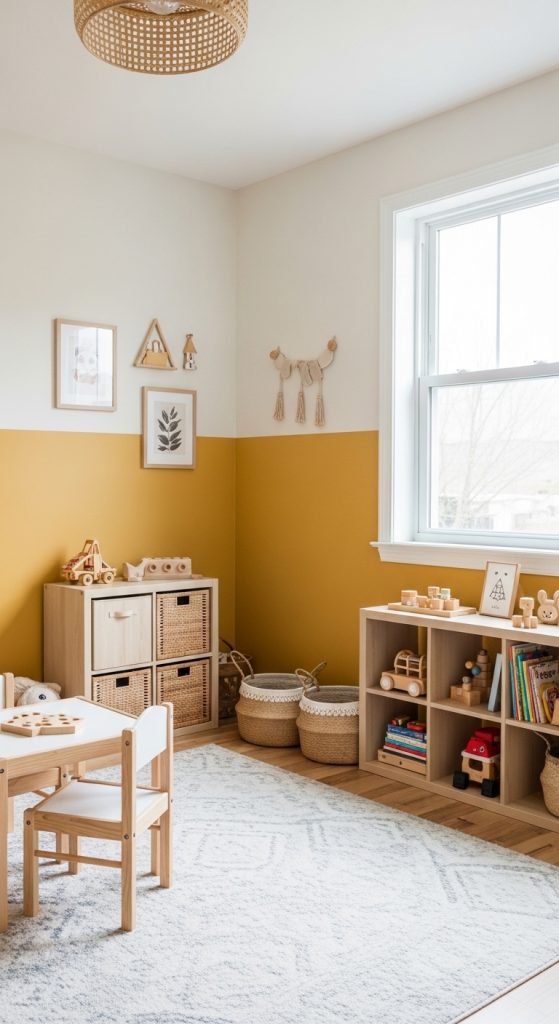
5. Playful Half-Wall Color Blocking
Paint only the lower half of the wall in color.
Why It Works
Visually interesting and practical for scuff marks.
Steps
- Measure halfway up wall.
- Tape clean straight line.
- Paint lower half bold shade.
- Leave upper half neutral.
Materials
• Two paint colors
• Level
• Painter’s tape
Creative yet controlled.
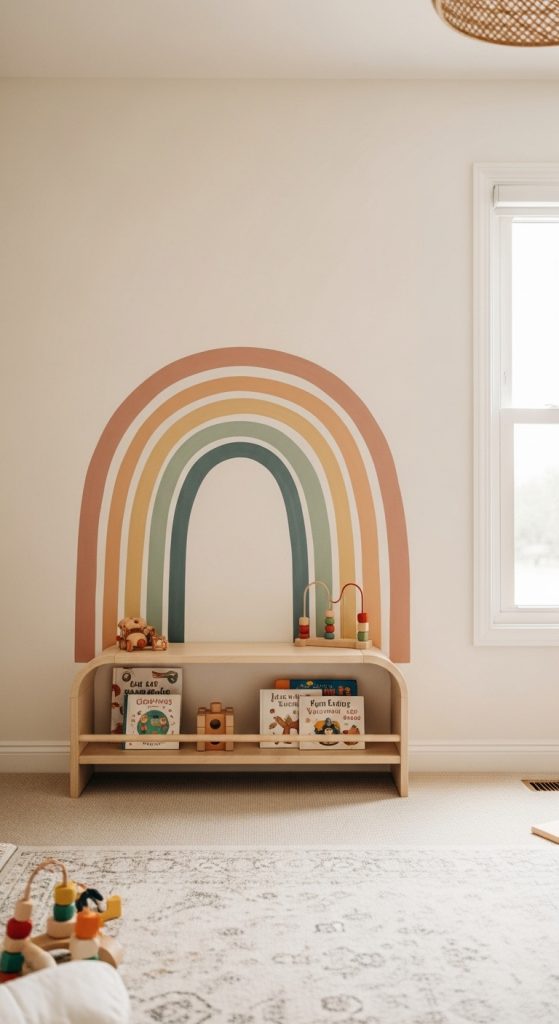
6. Painted Rainbow Arch Accent
A rainbow arch adds charm without overwhelming.
Why It Works
Creates a playful focal point.
Steps
- Sketch arch lightly.
- Use small brushes for curves.
- Layer soft pastel colors.
- Let dry fully.
Materials
• Multiple pastel paints
• Small brushes
• Painter’s tape
Perfect for creative corners.
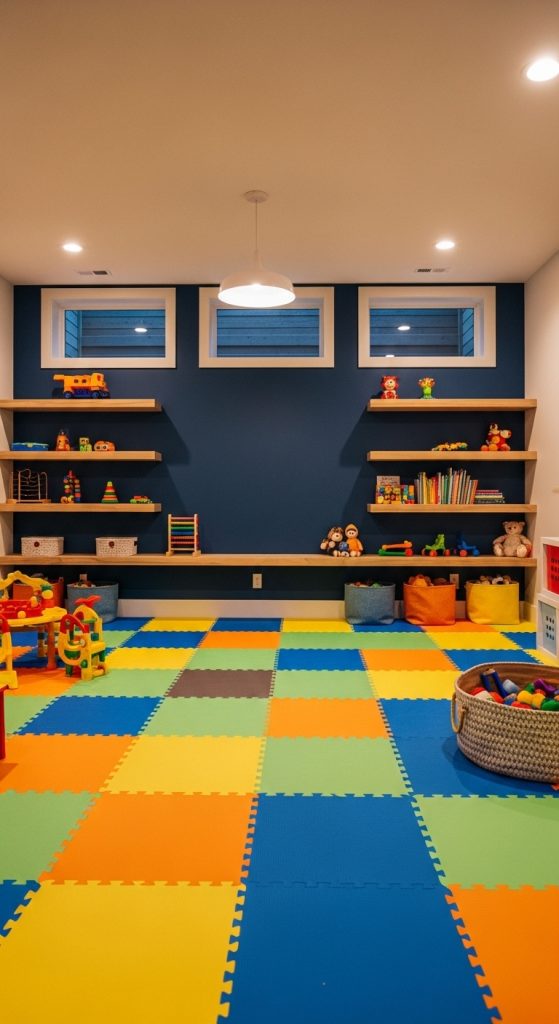
7. Moody Navy Accent Wall
For older kids’ playrooms.
Why It Works
Creates cozy contrast while hiding marks.
Steps
- Choose one wall.
- Prime thoroughly.
- Apply two coats navy.
- Balance with lighter decor.
Materials
• Navy paint
• Primer
• Roller
Great for basement spaces.
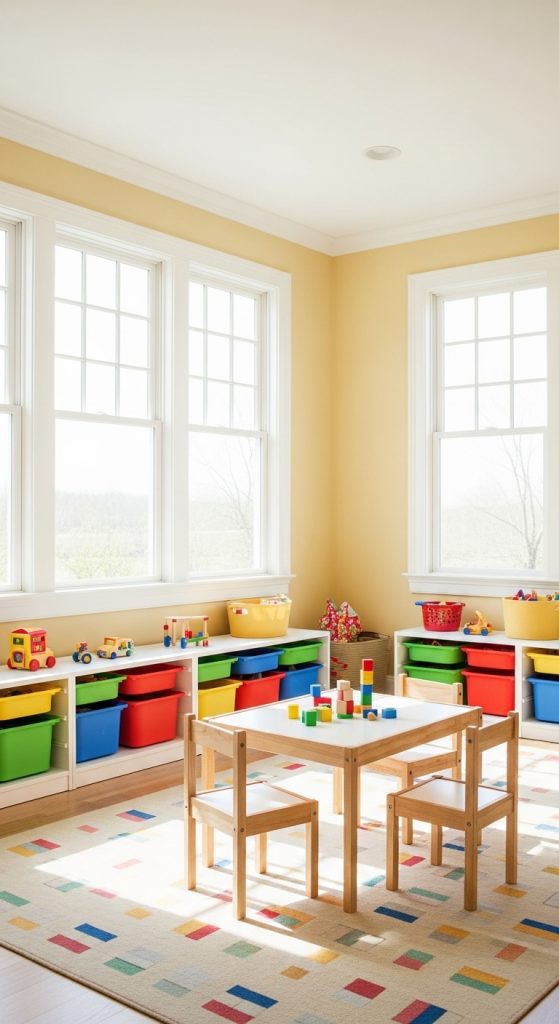
8. Soft Yellow Sunshine Walls
Light buttery yellow brightens dark rooms.
Why It Works
Adds warmth and energy.
Steps
- Choose pale yellow (avoid neon).
- Prep walls.
- Apply evenly.
- Pair with white trim.
Materials
• Soft yellow paint
• Roller
Cheerful and welcoming.
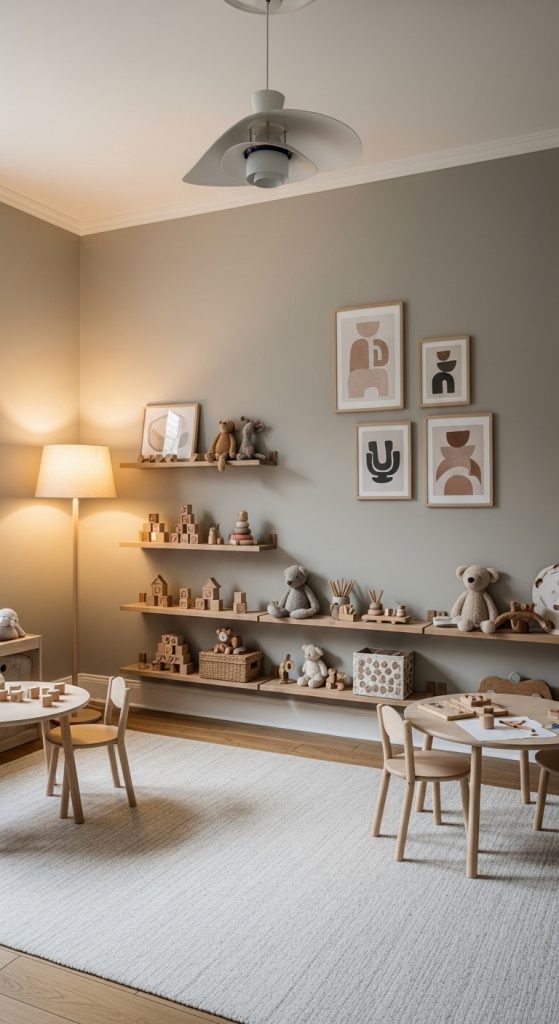
9. Neutral Greige Playroom
Greige blends gray and beige beautifully.
Why It Works
Modern, versatile, and hides wear.
Steps
- Choose warm greige tone.
- Apply primer.
- Paint two coats.
- Add colorful storage bins for contrast.
Materials
• Greige paint
• Roller
• Primer
Sophisticated yet kid-friendly.
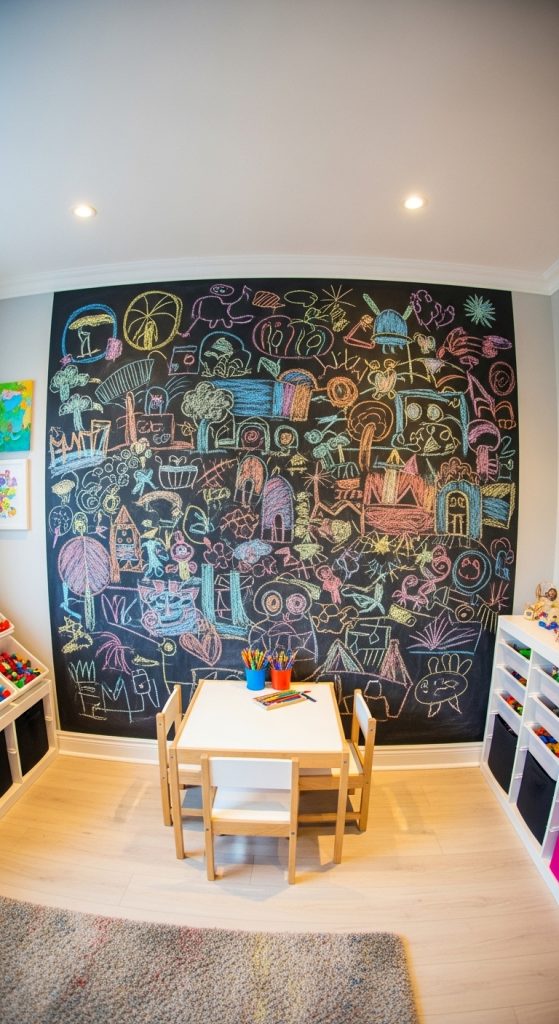
10. Chalkboard Paint Wall
Functional and fun.
Why It Works
Encourages creativity without wall damage.
Steps
- Choose one wall.
- Apply chalkboard paint.
- Let cure 3 days.
- Add chalk tray underneath.
Materials
• Chalkboard paint
• Roller
• Chalk