A kid’s closet is one of the most important yet often most chaotic spaces in a home. From clothes and shoes to toys, school supplies, and seasonal items, everything tends to get mixed together without a proper system. A well-organized kid closet is not just about neatness—it plays a major role in teaching children responsibility, independence, and daily routine habits.
Unlike adult closets, kid closets need to be designed with accessibility and simplicity in mind. Children should be able to see, reach, and understand where everything belongs. When storage is intuitive and visually clear, kids are more likely to participate in organizing their own belongings.
Modern kid closet organization focuses on combining functionality with fun. Bright colors, labeled bins, adjustable shelves, and easy-to-reach hanging rods all contribute to a system that grows with the child. The goal is to reduce clutter while making daily dressing and cleanup easier for both parents and children.
A well-designed closet also saves time during busy mornings. Instead of searching for clothes or mismatched items, everything is clearly categorized and ready to use. It also helps extend the life of clothing by keeping items properly stored and maintained.
Ultimately, a kid’s closet should be simple, flexible, and engaging—a space that supports both order and independence.
What Makes a Functional Kid Closet?
A functional kid closet is designed around three core principles: accessibility, visibility, and flexibility. These elements ensure that children can easily use the space without constant adult assistance.
Accessibility means that everything should be within reach of the child. Lower rods, open shelves, and pull-out drawers allow kids to independently choose their clothes or toys. This builds confidence and encourages responsibility from an early age.
Visibility is equally important. When children can see their options clearly, they are more likely to keep things organized. Transparent bins, open shelving, and labeled sections help make items easy to identify.
Flexibility ensures that the closet grows with the child. Adjustable shelves, removable dividers, and modular storage units allow the system to evolve as clothing sizes and storage needs change.
Safety is another essential factor. Rounded edges, secure installations, and lightweight materials prevent accidents and make the closet child-friendly.
A functional kid closet is not about perfection—it is about creating a system that is easy, practical, and adaptable for everyday life.
How to Organize a Kid Closet Step by Step
Organizing a kid closet starts with a full reset. First, remove everything from the closet and sort items into categories: keep, donate, store, or discard. This step helps reduce clutter and gives you a clear view of what actually needs to be stored.
Next, categorize all remaining items. Separate clothing by type such as shirts, pants, dresses, school uniforms, and seasonal wear. Also group shoes, accessories, and toys if they are stored in the closet.
After sorting, measure your closet space. Understanding the available height, width, and depth helps you choose the right storage solutions that fit efficiently.
Now create zones within the closet. For example, one section for hanging clothes, one for folded clothes, one for shoes, and one for accessories or toys. Zoning keeps everything structured and easy to maintain.
Then, install or adjust storage systems. Use lower hanging rods for children, shelves for folded clothes, and bins for smaller items. Label everything clearly using words or pictures.
Finally, maintain the system. Teach children where everything belongs and encourage them to participate in daily organization. Regular tidying ensures the system stays effective over time.
Materials Used in Kid Closet Organization
The materials used in kid closet organization must be durable, safe, and easy to handle. Since children interact with the closet daily, practicality is more important than complexity.
Plastic bins are one of the most common materials. They are lightweight, easy to clean, and come in various colors and sizes. Transparent plastic bins are especially helpful for visibility.
Fabric storage baskets are another popular choice. They are soft, safe, and flexible, making them ideal for storing clothes, toys, or accessories.
Wood is widely used for closet shelving and frames. It provides strength and a clean aesthetic. Painted or laminated wood is often used to match kids’ room themes.
Metal rods and frames are used for hanging clothes. They are strong and durable, capable of holding multiple garments without bending.
Labels made from paper, vinyl, or laminated stickers help maintain organization. Visual labels with icons are especially useful for younger children who cannot read yet.
Drawer dividers and compartment trays are also essential for separating small items like socks, underwear, and accessories.
Together, these materials create a safe, functional, and visually organized closet system.
Pinterest-Style Kid Closet Inspiration
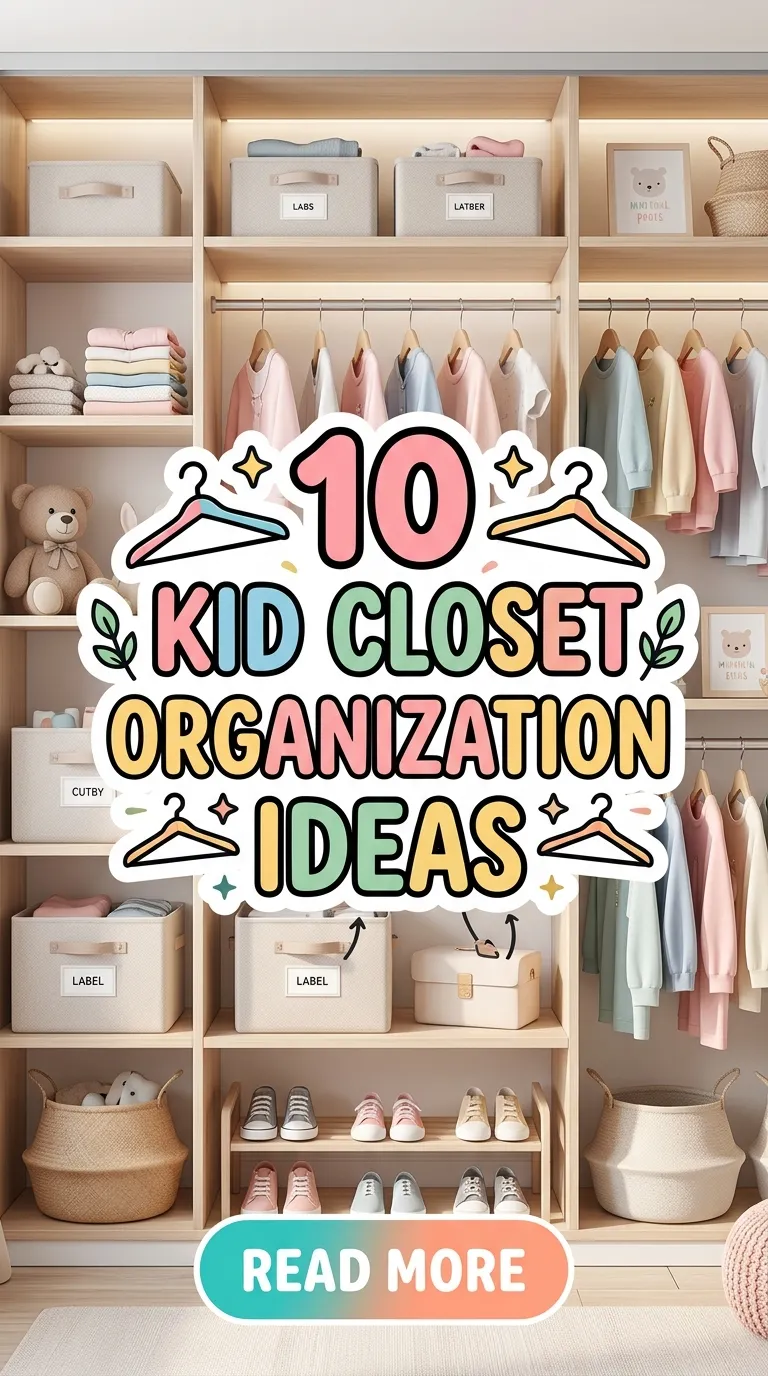
Pinterest-style kid closet organization focuses on clean visuals, soft colors, and smart storage ideas that feel both playful and structured. The design is often simple but highly aesthetic.
One major trend is pastel color coordination. Soft pinks, blues, greens, and neutrals are used to create a calm and visually pleasing environment.
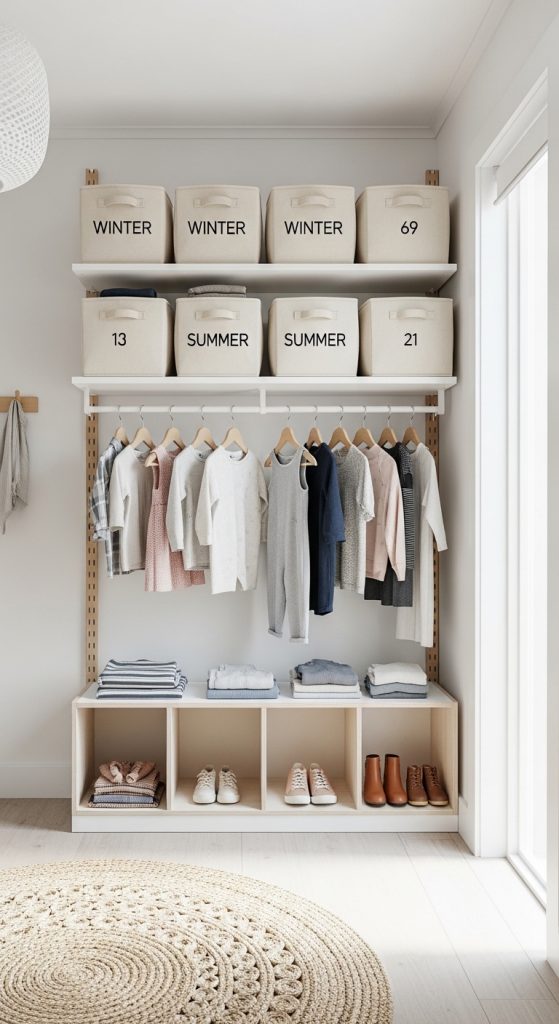
Another popular style is open shelving with matching bins. This creates a uniform look while making everything easily accessible.
Minimal labeling with icons is also trending. Instead of cluttered tags, simple symbols help children identify where items belong.
Wooden and white combinations are widely used in Pinterest-inspired designs. They create a modern yet warm aesthetic suitable for kids’ spaces.
Another idea is “capsule wardrobe organization,” where only essential clothing is displayed, and the rest is stored away. This reduces clutter and simplifies choices.
Decorative touches like fairy lights, wall decals, or soft rugs can be added without overwhelming the space.
Overall, Pinterest-style kid closets are about balancing functionality with soft, beautiful design.
10 Kid Closet Organization Ideas
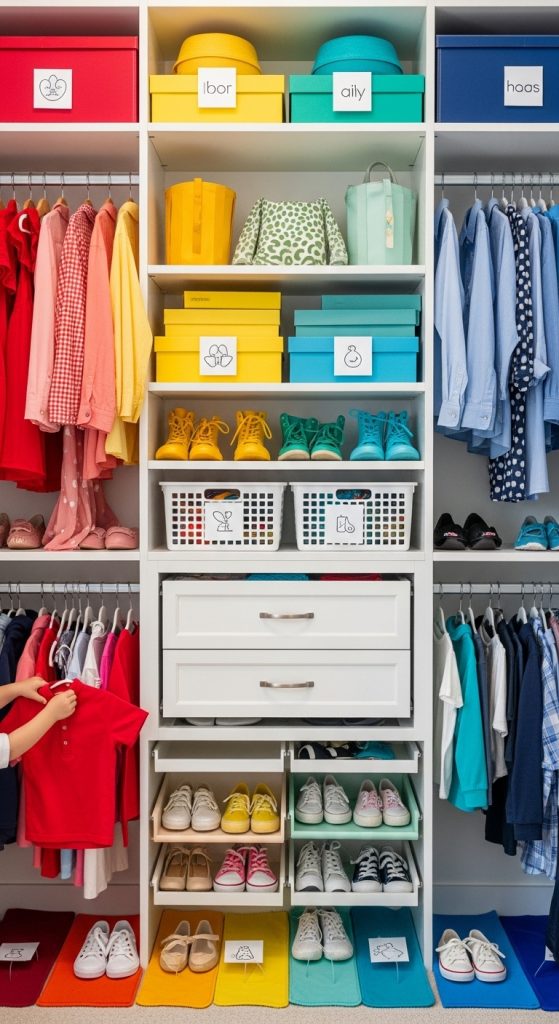
1. Color-Coded Clothing Sections
Separate clothes by color or category to make selection easier for kids. This helps children visually understand organization and speeds up daily dressing routines.
2. Low Hanging Rod System
Install a lower rod so kids can easily reach their clothes without adult help. This encourages independence and responsibility.
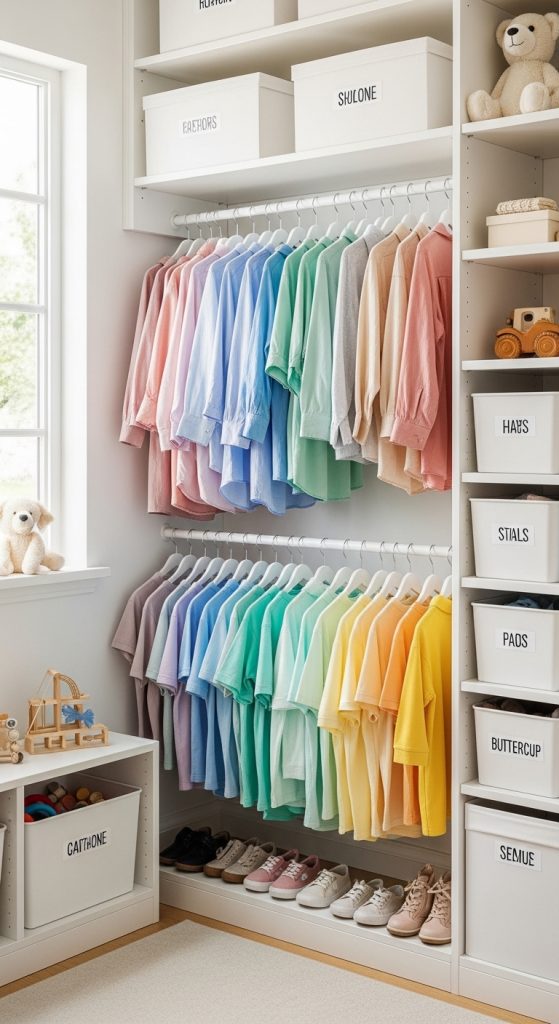
3. Clear Storage Bins for Toys and Accessories
Use transparent bins to store toys, socks, or small accessories. Visibility helps kids quickly find and return items.
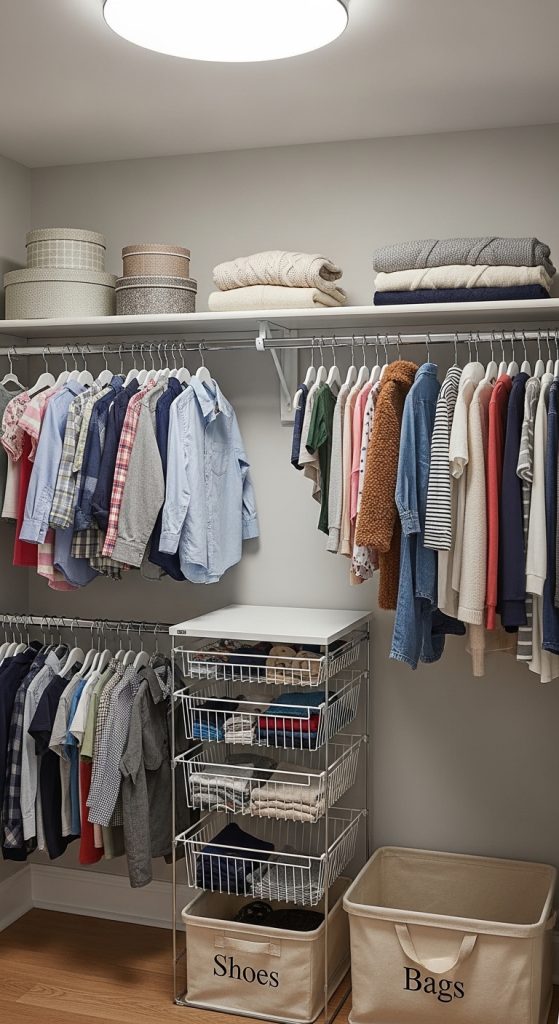
4. Labelled Drawer System
Each drawer should have a clear label or icon indicating its contents. This helps maintain long-term organization.
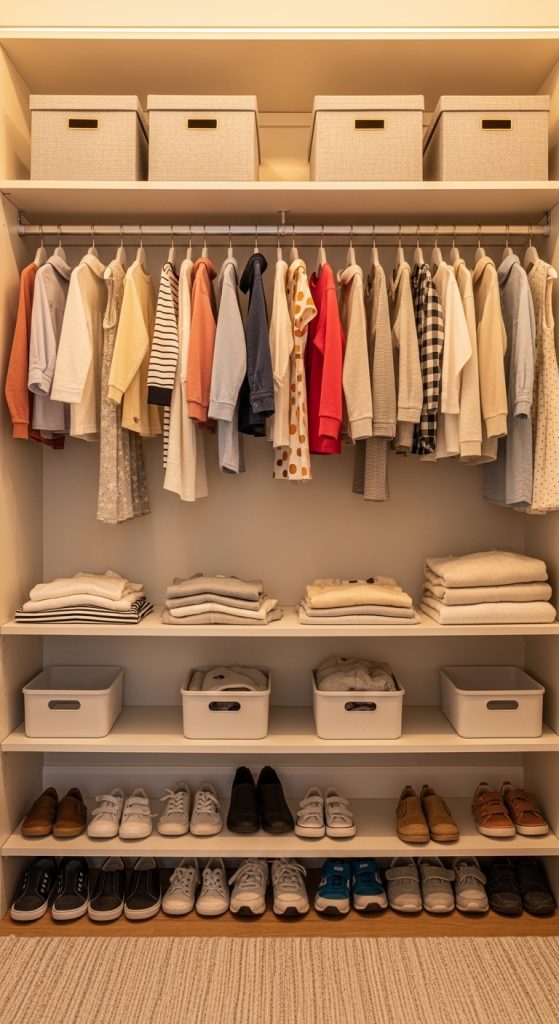
5. Seasonal Clothing Rotation
Store off-season clothes in upper shelves or separate bins. Rotate clothing based on weather to keep the closet uncluttered.
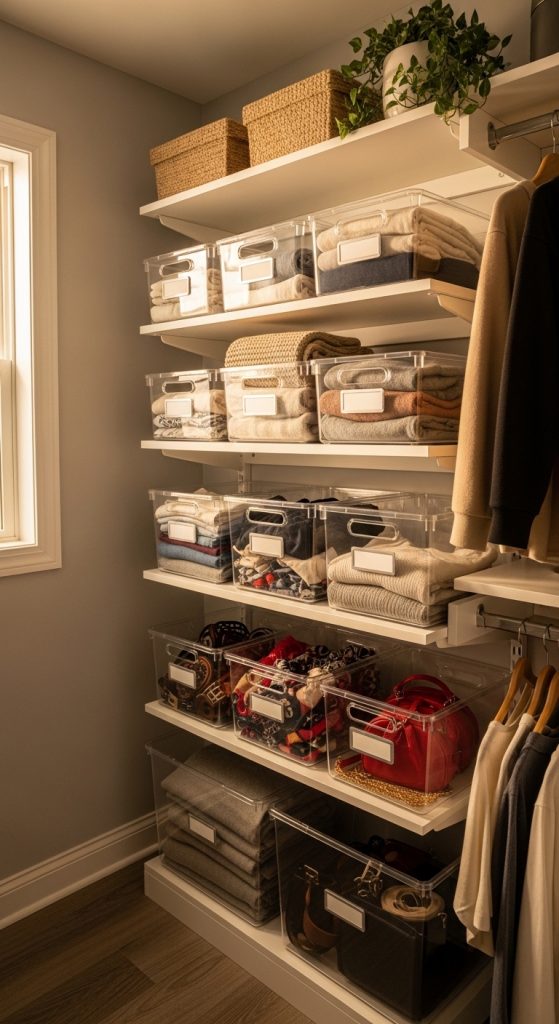
6. Shoe Organization Rack
A dedicated shoe rack at the bottom of the closet keeps footwear neat and easy to access. It also prevents clutter on the floor.
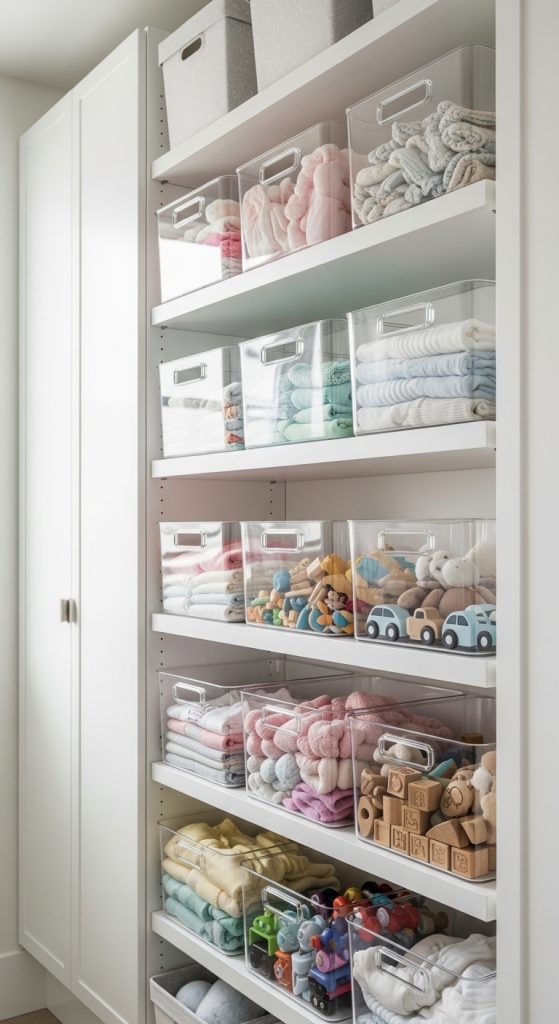
7. Folded Clothes Shelf System
Use open shelves for neatly folded clothes like t-shirts, pajamas, and sweaters. Stack them in categories for easy access.
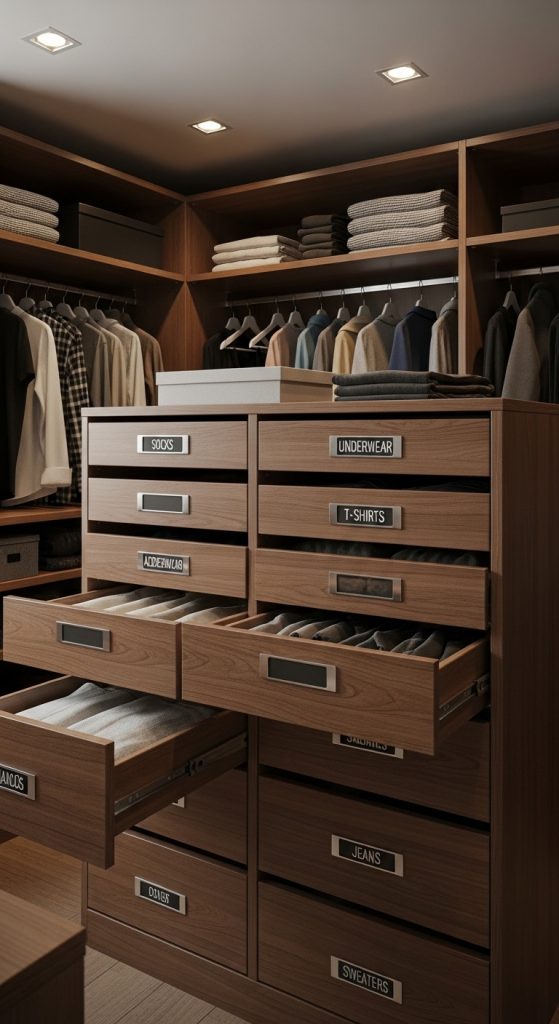
8. Accessory Hanging Hooks
Install hooks for bags, hats, belts, and accessories. This keeps small items organized and visible.
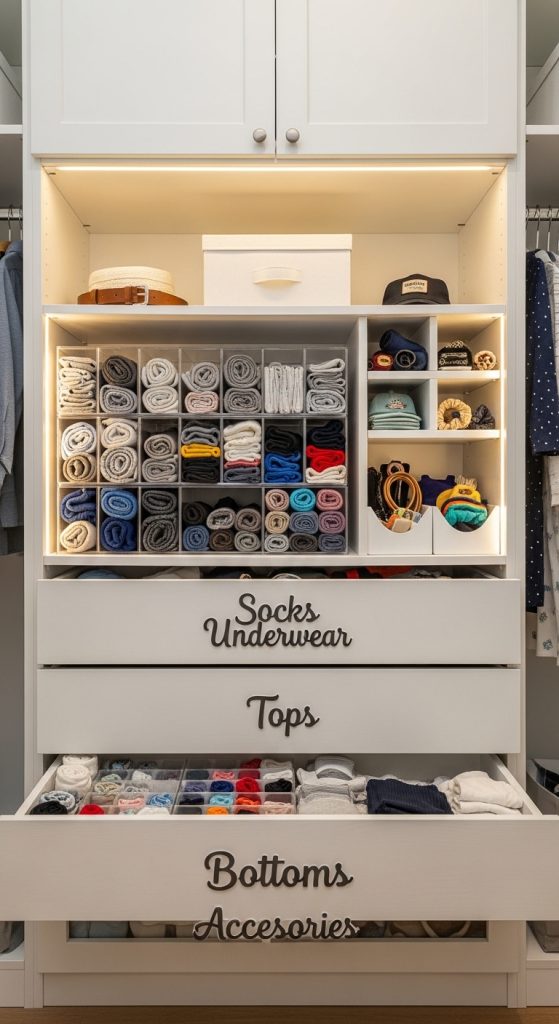
9. Toy Storage Integration
If space allows, include bins or shelves for toys inside the closet. This keeps the room more organized overall.
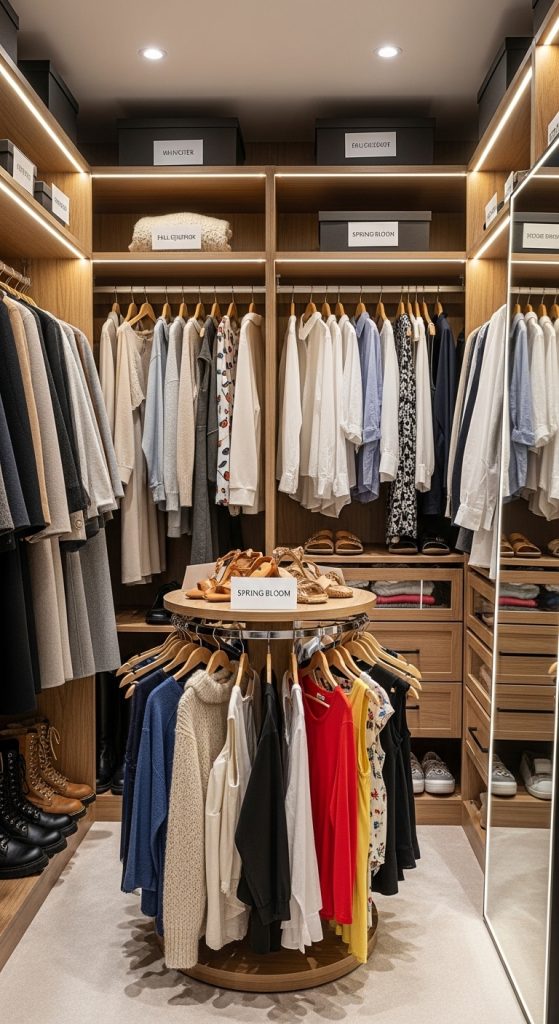
10. Growth-Friendly Adjustable Closet Design
Use adjustable shelves and rods so the closet can change as the child grows. This makes the system long-lasting and flexible.
Conclusion
A well-organized kid closet is more than just a storage solution—it is a system that teaches structure, independence, and daily responsibility. By combining simple organization methods with child-friendly design, parents can create a space that is both functional and easy to maintain.
From color-coded sections and labeled bins to adjustable rods and seasonal rotation systems, each idea plays a role in reducing clutter and improving efficiency. The key is to keep things simple, visible, and accessible for children.