

A Japanese-inspired bathroom is all about calmness, simplicity, and harmony with nature. Rooted in Zen philosophy and traditional Japanese interior design, these bathrooms focus on clean lines, natural materials, soft lighting, and clutter-free spaces.
Instead of being just a functional room, a Japanese bathroom becomes a personal spa-like retreat, designed for relaxation and mindfulness. Whether you have a large bathroom or a small compact space, Japanese design principles can instantly elevate it into something peaceful and luxurious.
This guide includes how to design a Japanese bathroom, materials used, and 10 Pinterest-style Japanese bathroom ideas you can recreate.
Introduction to Japanese Bathroom Design
Japanese bathroom design is built around the concept of “less is more.” Every element is intentional, simple, and calming. The goal is not decoration overload but emotional balance and visual peace.
Traditional Japanese bathrooms often separate bathing and washing areas. Even in modern homes, the idea remains the same: a clean, organized space where bathing becomes a relaxing ritual rather than a rushed routine.
Key elements include:
- Natural wood textures
- Stone and neutral tones
- Soft warm lighting
- Minimal furniture
- Zen-inspired layout
The result is a bathroom that feels like a spa in your own home, promoting relaxation and mental clarity.
How to Design a Japanese Inspired Bathroom
Designing a Japanese bathroom starts with creating a clean, open layout. Avoid clutter and unnecessary items. Everything should have a designated place or be hidden in storage.
Start with the color palette. Use neutral tones such as white, beige, soft grey, and natural wood brown. These colors reflect calmness and simplicity.
Next, choose natural materials. Wood is essential in Japanese design, especially for vanities, stools, and bath surrounds. Stone tiles or textured ceramic tiles work well for floors and walls.
Lighting should be soft and warm. Avoid harsh white lighting. Instead, use indirect lighting, paper lantern-style lights, or LED strips with warm tones.
Storage should be hidden or minimal. Built-in cabinets and floating shelves help maintain a clean look.
If space allows, add a soaking tub (ofuro-style bath), which is a signature element of Japanese bathrooms. It transforms bathing into a meditative experience.
Plants like bamboo or small indoor greenery can be added to enhance the natural Zen atmosphere.
Materials Used in Japanese Bathroom Design
Materials play a very important role in achieving an authentic Japanese bathroom aesthetic.
For flooring, use stone tiles, matte ceramic, or textured porcelain. These materials are durable, water-resistant, and visually natural.
Walls often feature neutral-colored tiles or wood-inspired panels. Waterproof treated wood or wood-look tiles are commonly used to bring warmth into the space.
Vanities and furniture should be made from natural wood such as oak, teak, or bamboo. These materials add warmth and organic beauty.
Countertops can be stone, quartz, or matte solid surfaces for a clean and minimal finish.
Accessories like soap trays, storage boxes, and stools are often made from bamboo or wood.
Lighting fixtures should use warm LED bulbs with soft diffusion. Paper lantern-style lamps or hidden lighting strips enhance the Zen atmosphere.
Even small details like towels and mats should be neutral-colored and made from natural fabrics like cotton or linen.
10 Japanese Inspired Bathroom Ideas (Zen & Modern Spa Style)
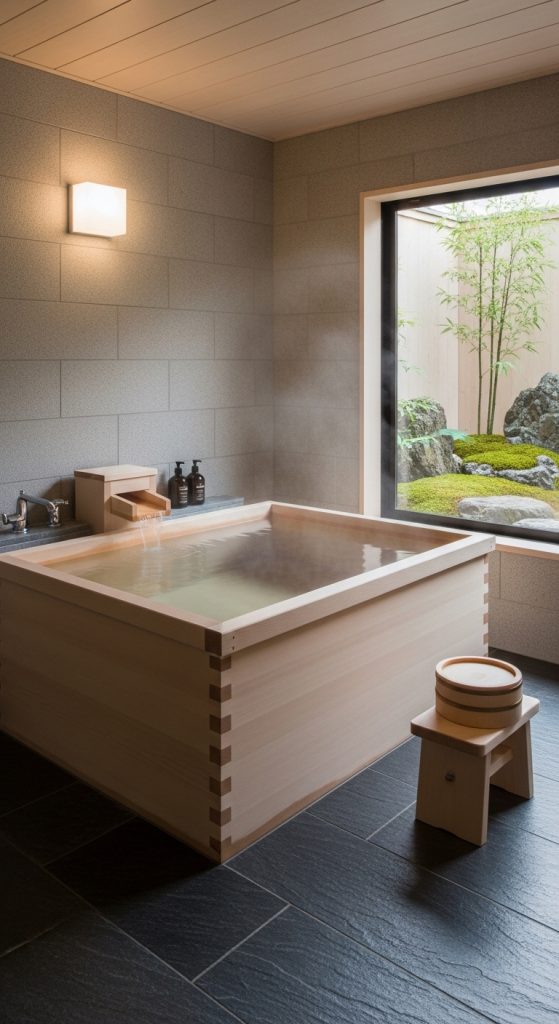
1. Traditional Japanese Wooden Soaking Bath
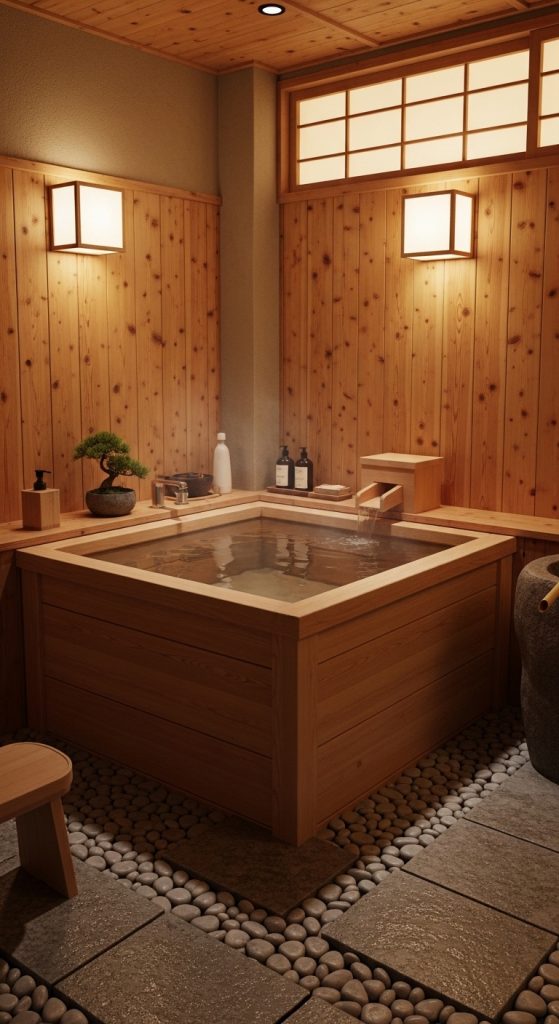
This design features a deep wooden soaking tub (ofuro style) as the centerpiece. The bathroom is surrounded by natural wood walls and stone flooring.
Soft lighting and minimal decor create a peaceful spa-like environment. This is the most authentic Japanese bathroom style.
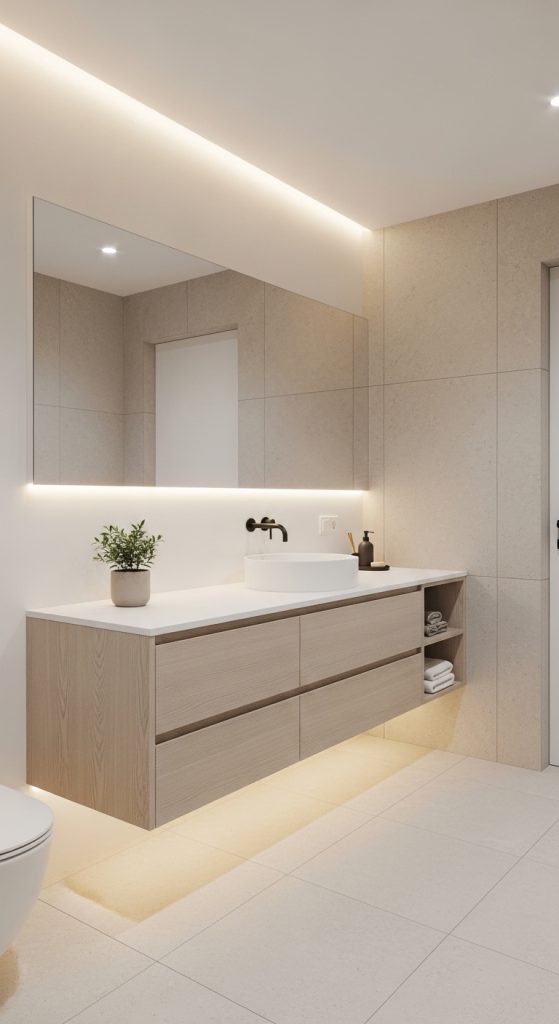
2. Modern Zen Minimal Bathroom
A clean white and beige bathroom with floating vanity, hidden storage, and soft lighting.
Simple design, no clutter, and natural textures create a calm and modern Zen atmosphere.
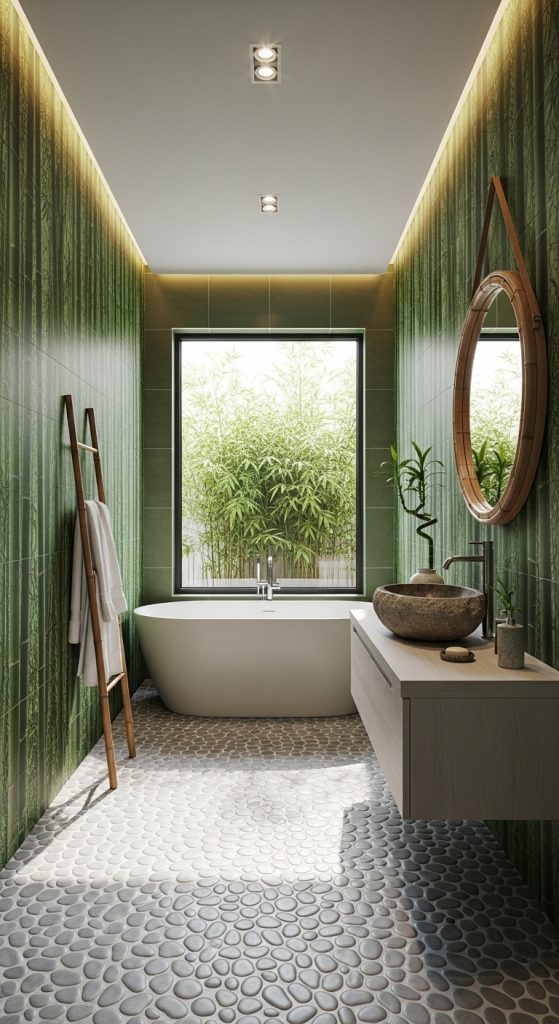
3. Bamboo Forest Inspired Bathroom
This bathroom is inspired by Japanese bamboo forests. Green bamboo plants are placed around the space, paired with stone tiles and wooden accents.
Natural light enhances the fresh, organic feeling.
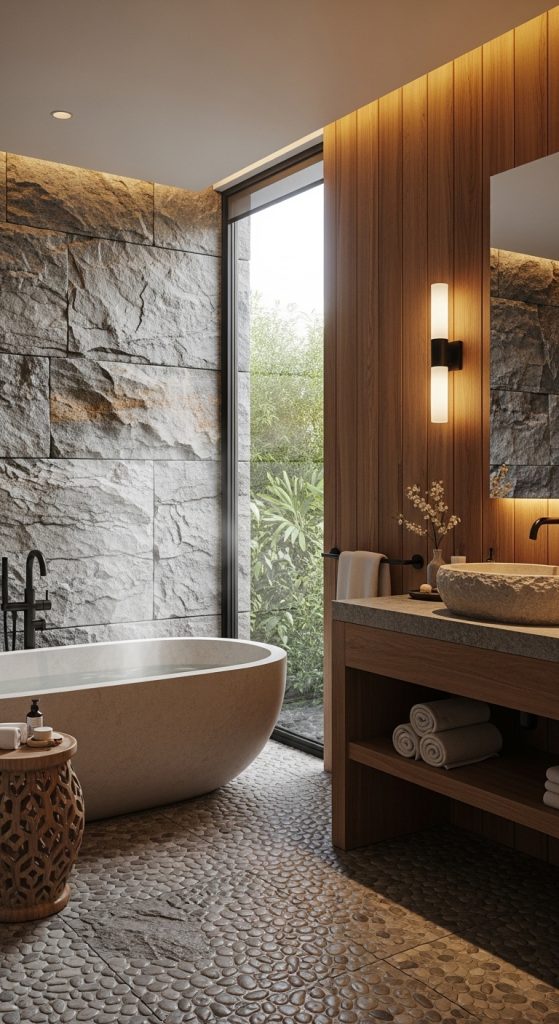
4. Stone & Wood Natural Spa Bathroom
A combination of stone walls and wooden elements creates a grounded spa-like environment.
A freestanding bathtub sits in a minimalist layout with warm lighting and natural textures.
5. Small Japanese Compact Bathroom Design
Perfect for small spaces, this design uses sliding doors, compact fixtures, and vertical storage.
Light colors and mirrors make the space feel larger and brighter.

6. Tatami-Inspired Bathroom Design
Inspired by traditional Japanese tatami rooms, this bathroom uses straw-textured mats, wood finishes, and neutral tones.
It creates a soft, natural, and culturally inspired aesthetic.
7. Luxury Japanese Spa Bathroom
A high-end version with marble stone, wooden accents, ambient lighting, and a large soaking tub.
Minimal decor and elegant materials create a premium spa experience.
8. Rain Shower Zen Bathroom
A walk-in shower with rainfall showerhead, stone walls, and soft lighting.
The design focuses on relaxation and water flow as a calming experience.

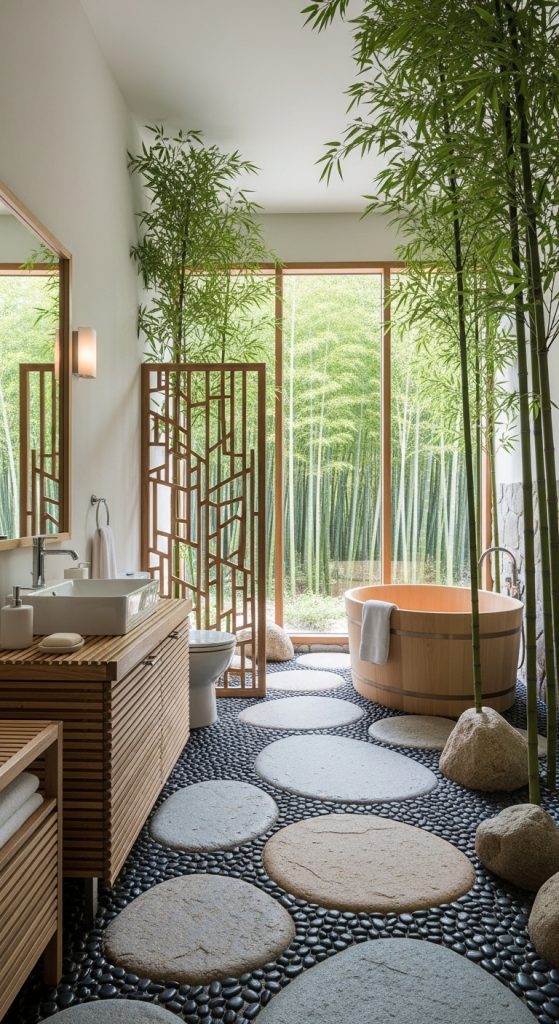
9. Open Courtyard Japanese Bathroom
This design connects the bathroom with nature through glass walls or open courtyards.
Plants, stones, and natural light bring an outdoor spa feeling indoors.
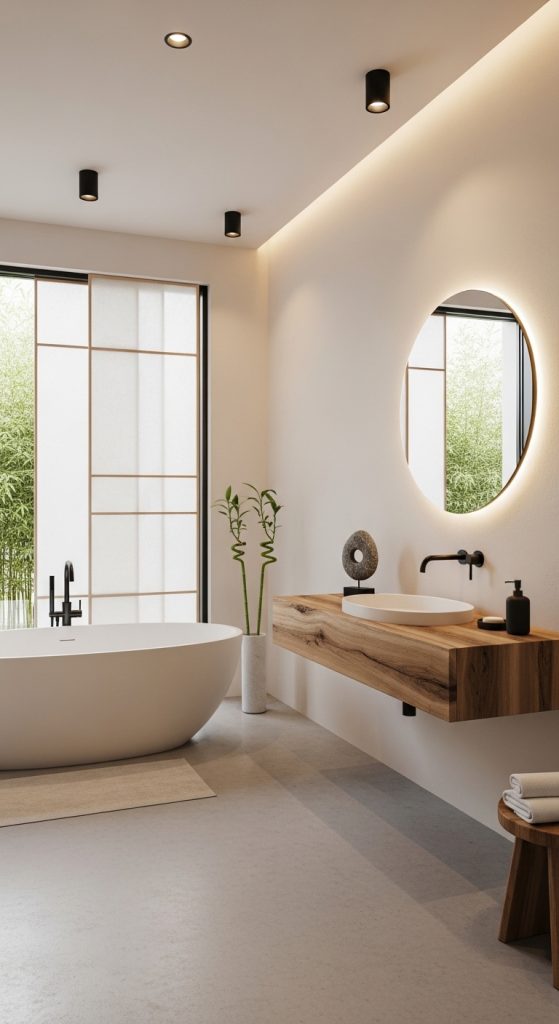
10. Soft Neutral Modern Japanese Bathroom
A balanced design with beige, cream, and light wood tones.
Floating vanity, minimal decor, and soft lighting create a clean and peaceful space.
Conclusion
A Japanese-inspired bathroom is the perfect combination of simplicity, nature, and relaxation. It transforms an everyday routine into a calming ritual and brings spa-level comfort into your home.


