
Indoor gardening is no longer just a hobby; it has become a lifestyle. From improving air quality to boosting mood and creativity, having greenery indoors has many benefits. If you have limited outdoor space or live in an urban setting, indoor greenhouses are a perfect solution to grow plants year-round. Indoor greenhouses not only help your plants thrive but also add a stylish and functional element to your home decor. In this blog, we will explore 10 indoor greenhouse ideas to inspire your next gardening project.

1. Classic Glass Terrarium Greenhouse
A glass terrarium is one of the most popular indoor greenhouse ideas. These small, enclosed spaces are perfect for creating a microenvironment for plants that need humidity, such as ferns, orchids, and mosses. Terrariums come in various shapes and sizes, from geometric glass containers to traditional dome-shaped designs.
How to create it:
- Choose a clear glass container with a lid.
- Add a layer of small rocks or pebbles for drainage.
- Include activated charcoal to prevent odors and bacteria growth.
- Add a layer of potting soil suitable for your plants.
- Place your plants and finish with decorative moss or stones.
Glass terrariums work well on coffee tables, shelves, or windowsills. They are low-maintenance and make your indoor space feel fresh and vibrant.

2. Vertical Indoor Greenhouse
For homes with limited floor space, vertical greenhouses are a game-changer. These greenhouses use shelves or wall-mounted structures to grow plants upward rather than outward. Vertical greenhouses are ideal for growing herbs, succulents, and small vegetables.
How to create it:
- Use a multi-tiered shelving unit made of wood or metal.
- Add small pots or containers on each shelf.
- Consider using LED grow lights to ensure all plants get enough light.
- Water carefully to prevent runoff onto lower shelves.
This design maximizes space, keeps plants organized, and adds a modern touch to your interior. Vertical greenhouses can be placed near windows or even in corners of your living room.

3. DIY Recycled Bottle Greenhouse
If you enjoy sustainable projects, a recycled bottle greenhouse is perfect. Using plastic bottles or jars, you can create small greenhouses for seedlings or delicate plants. This idea is budget-friendly, environmentally conscious, and fun for DIY enthusiasts.
How to create it:
- Collect clear plastic bottles of the same size.
- Cut them in half to make mini greenhouses.
- Place them over small pots or seed trays to create a humid environment.
- Secure the bottles with tape or simply let them rest on the tray.
This method is ideal for propagating seeds or cuttings. You can place several bottle greenhouses on a windowsill or countertop to create a mini indoor garden.

4. Hanging Indoor Greenhouse
Hanging greenhouses are a stylish way to add greenery without taking up floor space. These suspended gardens can be made from glass, acrylic, or lightweight metal. They are perfect for trailing plants, ferns, or even small vegetables.
How to create it:
- Select a hanging greenhouse container or terrarium.
- Fill with lightweight soil and your chosen plants.
- Attach sturdy hooks to the ceiling or wall for support.
- Rotate occasionally to ensure even light exposure.
Hanging greenhouses create a striking visual effect, especially when grouped together at varying heights. They are excellent for kitchens, living rooms, or hallways where space is limited.

5. Indoor Window Greenhouse
A window greenhouse takes advantage of natural light to help your plants flourish. These are essentially small greenhouses placed on windowsills or built into window frames. They are ideal for herbs, flowers, and small fruiting plants.
How to create it:
- Choose a window with sufficient sunlight, ideally south-facing.
- Install a small greenhouse box or cabinet on the sill.
- Use clear panels or glass doors to trap heat and humidity.
- Ensure proper ventilation to prevent overheating.
Window greenhouses are practical and convenient. They allow you to garden indoors while taking advantage of natural sunlight, reducing the need for artificial lighting.

6. Repurposed Cabinet Greenhouse
An old cabinet or bookshelf can be transformed into an indoor greenhouse. This idea combines recycling with functionality, creating a unique focal point in your home. Glass doors allow light in while keeping the humidity levels consistent.
How to create it:
- Choose a sturdy cabinet with doors that can close.
- Add shelves to create multiple levels for plants.
- Use grow lights if the cabinet is not near natural sunlight.
- Place plants according to their height and light needs.
Repurposed cabinets not only save money but also add a vintage or rustic charm to your indoor gardening space. They are perfect for tropical plants, succulents, and decorative flowers.

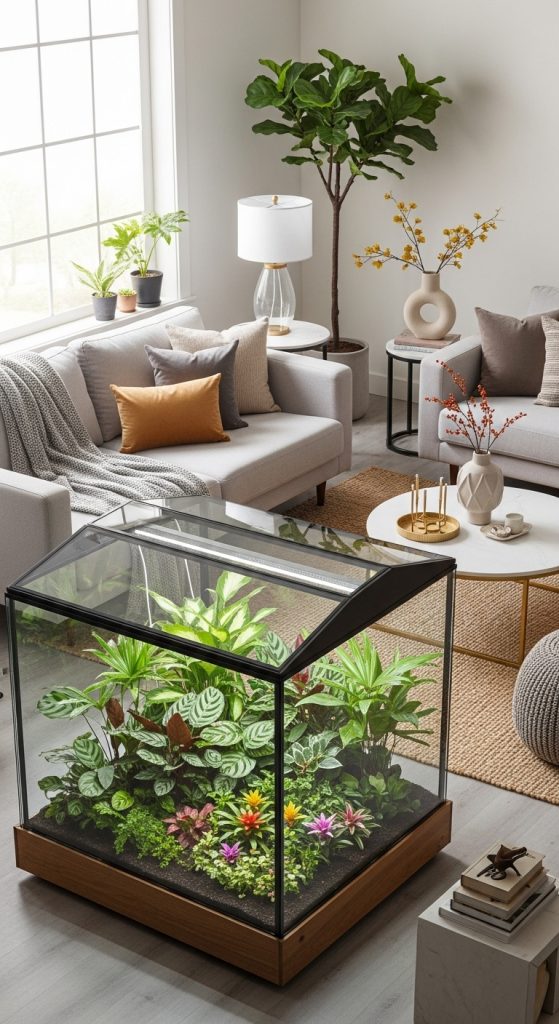
7. Indoor Greenhouse Table
An indoor greenhouse table combines furniture and gardening into one. These tables have built-in glass or acrylic enclosures, allowing plants to thrive while being part of your living or dining space. They are both functional and decorative.
How to create it:
- Choose a table with a glass or acrylic top.
- Ensure the table has enough depth for soil and roots.
- Place humidity-loving plants like ferns or orchids inside.
- Maintain ventilation by opening the top occasionally.
Indoor greenhouse tables are perfect for people who love to entertain while keeping greenery nearby. They create a cozy and natural atmosphere in living spaces.
8. Mini Greenhouse Cabinet for Kitchen
If you want fresh herbs year-round, a mini kitchen greenhouse is ideal. These compact greenhouses can be placed on countertops or hung above kitchen cabinets. Growing herbs indoors ensures you always have fresh ingredients for cooking.
How to create it:
- Use a small cabinet or shelf with transparent doors.
- Place herbs like basil, mint, and thyme inside.
- Add a grow light if the kitchen does not receive enough sunlight.
- Water regularly and trim herbs to encourage growth.
This type of indoor greenhouse is practical and adds a touch of greenery to your kitchen decor. It also saves money by providing fresh herbs without the need to buy them from the store.

9. Indoor Greenhouse with Automated Watering
For plant lovers who travel frequently, an indoor greenhouse with an automated watering system is perfect. This type of greenhouse ensures your plants receive the right amount of water and humidity consistently.
How to create it:
- Choose a greenhouse with a built-in watering system or install one.
- Use drip irrigation or self-watering pots inside the greenhouse.
- Monitor humidity levels to ensure plants thrive.
- Add sensors for light and temperature if desired.
Automated indoor greenhouses reduce maintenance while keeping plants healthy. They are ideal for busy lifestyles or those who want a low-maintenance indoor garden.

10. Indoor Greenhouse Corner Nook
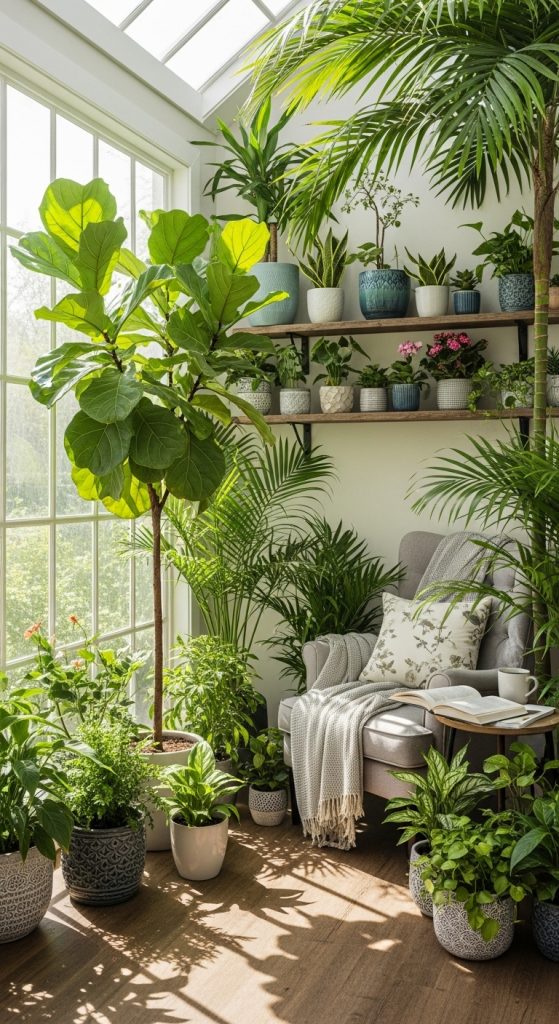
If you have an unused corner in your home, transform it into a dedicated indoor greenhouse nook. This idea creates a cozy, green retreat inside your house, perfect for relaxing and connecting with nature.
How to create it:
- Choose a corner near a window or provide adequate grow lights.
- Add tall plants like palms or fiddle leaf figs for height.
- Use smaller plants on shelves or stands to add layers.
- Include a small chair or bench to enjoy the space.
An indoor greenhouse nook is not only functional for growing plants but also adds a serene, spa-like atmosphere to your home. It can serve as a reading corner, meditation spot, or simply a place to enjoy your greenery.
Tips for Maintaining Your Indoor Greenhouse
- Choose the right plants: Consider the light, temperature, and humidity requirements of your plants. Tropical plants often thrive in humid greenhouses, while succulents prefer drier conditions.
- Provide adequate light: Use natural sunlight whenever possible, and supplement with LED grow lights if needed.
- Maintain humidity: Many indoor greenhouses benefit from humidity trays, misting, or enclosed environments.
- Regular watering: Check soil moisture levels regularly. Overwatering is a common mistake in indoor greenhouses.
- Monitor pests: Indoor plants can attract pests like aphids or spider mites. Inspect plants regularly and treat them promptly.
Conclusion
Indoor greenhouses offer endless possibilities for plant lovers, from small terrariums to full-scale corner greenhouses. They bring nature indoors, improve air quality, and add aesthetic charm to your living space. Whether you are a beginner gardener or an experienced plant enthusiast, these 10 indoor greenhouse ideas can inspire your next project.
Transform your home into a green sanctuary, experiment with different plants, and enjoy the calming benefits of having your personal indoor garden.
With these ideas, growing plants indoors has never been easier or more stylish.