
Cardboard box houses are a timeless way to spark a child’s imagination. They are affordable, customizable, and perfect for hands-on creativity. Whether it’s a rainy day activity, a birthday project, or a DIY family weekend, building cardboard houses can bring hours of fun while encouraging problem-solving and imaginative play. In this article, we’ll explore ten inspiring cardboard box house ideas for kids, complete with tips for construction, decoration, and play.
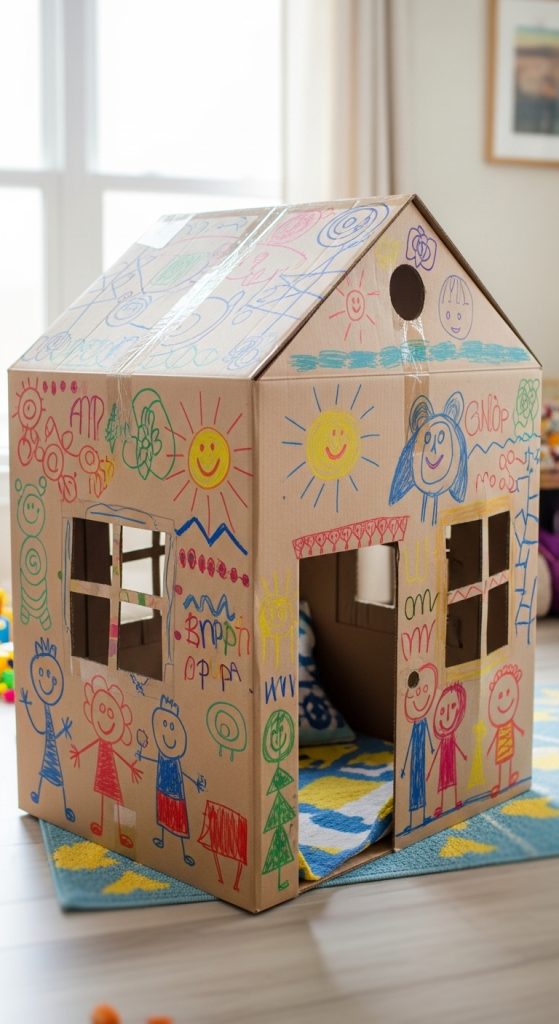
1. Classic Playhouse
The classic playhouse is a perfect starting point for cardboard creations. Using a large moving box or appliance box, you can cut out windows and a door to make a simple, charming home for imaginative play.
How to make it:
- Select a sturdy, large box.
- Cut out a door and windows using scissors or a box cutter.
- Decorate with markers, crayons, or paint. You can add curtains, flowers, or a mailbox for a realistic touch.
- Add a rug or cushion inside for comfort.
Why it works:
This project is simple but offers endless opportunities for customization. Kids can pretend to be homeowners, chefs, or shopkeepers.
Extra tip: For durability, tape the corners and edges with masking tape or packing tape.
2. Castle Fortress
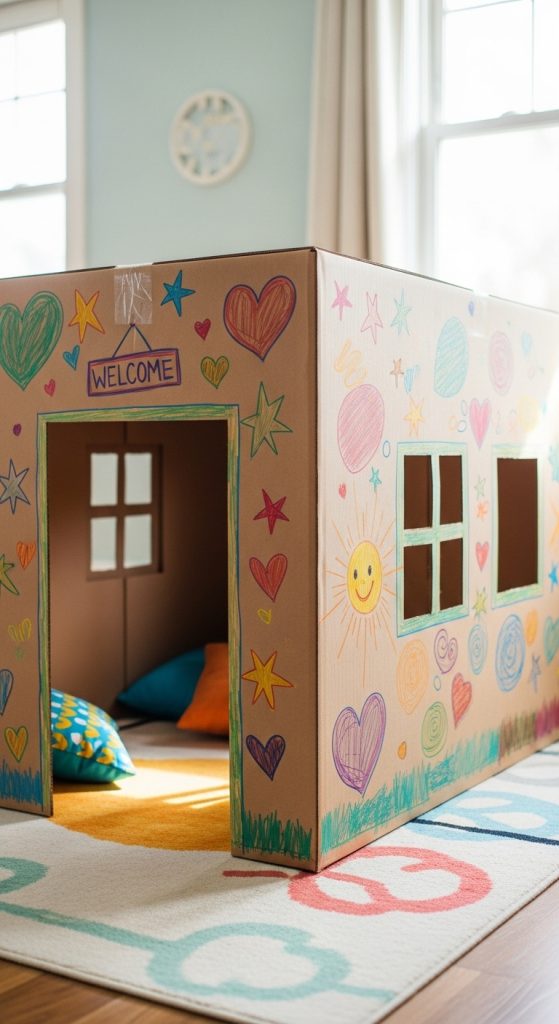
Transform a simple box into a mighty castle. Cardboard castles let kids play knights, princesses, or dragons while learning about medieval architecture.
How to make it:
- Use multiple boxes stacked to create towers.
- Cut battlements and arrow slits for a realistic castle look.
- Paint the boxes gray for stone walls or add stickers for decorative touches.
- Include a drawbridge made from cardboard for extra fun.
Why it works:
This type of cardboard house encourages role-playing, storytelling, and imaginative adventures. The tall towers and multiple rooms also make it great for group play.
Extra tip: Use colored markers to create flags for the towers or shields to hang on the walls.
3. Space Rocket House
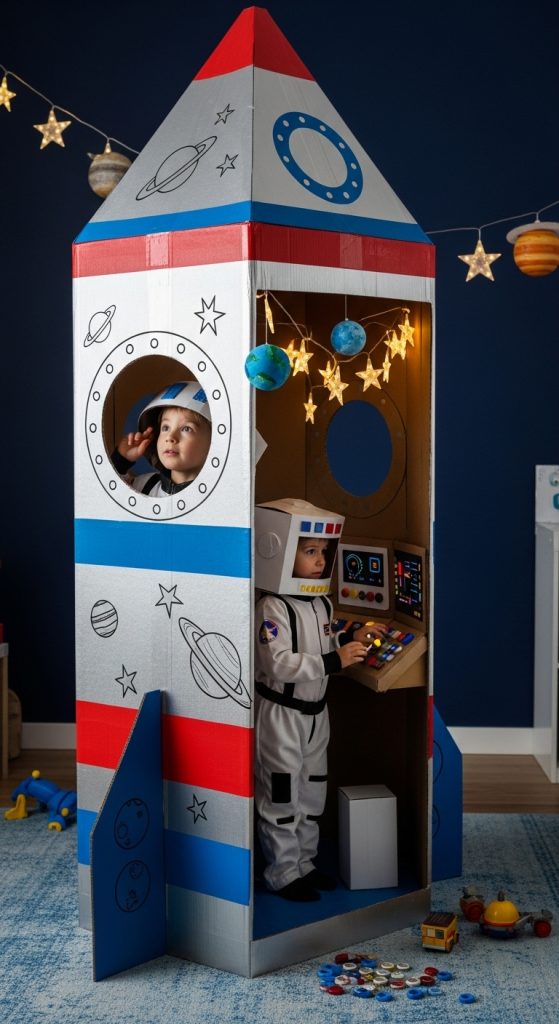
For kids who love outer space, a cardboard rocket ship doubles as a house and a spaceship. It encourages imagination and creativity while teaching basic shapes.
How to make it:
- Select a tall, narrow box for the rocket body.
- Cut a round window for a cockpit view.
- Use cone-shaped cardboard for the rocket tip.
- Decorate with metallic or bright-colored paper to simulate a spaceship.
Why it works:
Kids can pretend to explore new planets, blast off into space, or become astronauts. This house merges science and creativity, making it both educational and fun.
Extra tip: Add cardboard fins on the sides to make the rocket more realistic and stable.
4. Fairy Tale Cottage
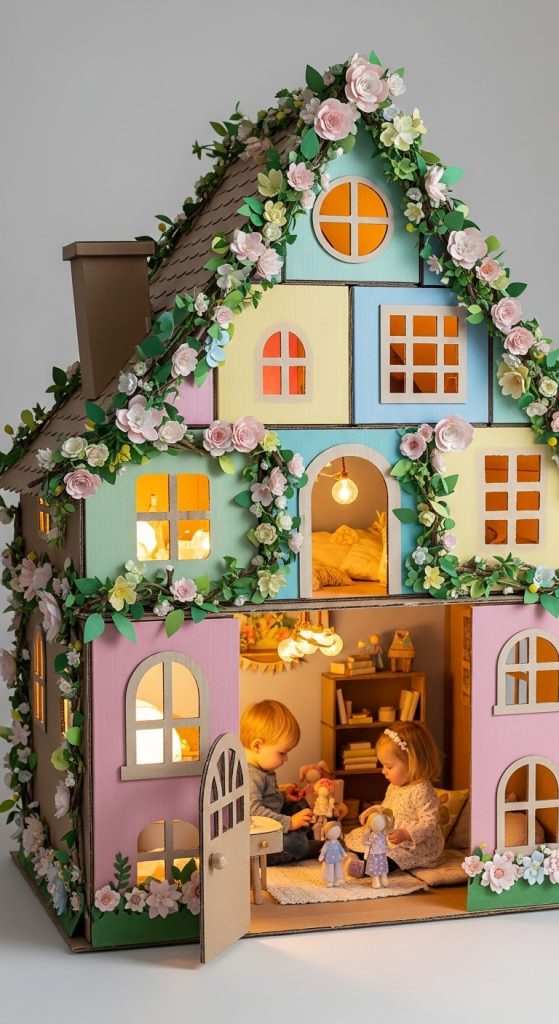
A cardboard cottage brings fairy tales to life. Perfect for imaginative play and storytelling, it can become a home for fairies, dolls, or even tiny pets.
How to make it:
- Use small boxes stacked together to form the main house and roof.
- Cut out windows and doors.
- Add natural elements such as twigs, leaves, or small stones for decoration.
- Paint or color the house in pastel shades for a magical look.
Why it works:
The cottage theme encourages storytelling, creativity, and artistic expression. It can be used as a prop for reading sessions, puppet shows, or imaginative games.
Extra tip: Create a small garden around the house using craft materials like colored paper flowers.
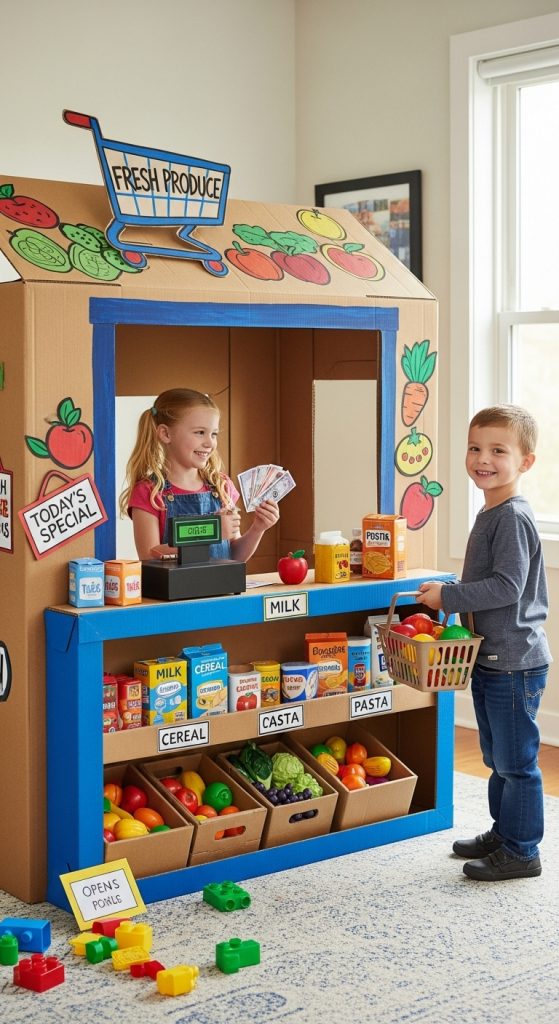
5. Grocery Store or Shop
Turn a cardboard box into a miniature store for kids who love role-playing. A grocery store, bakery, or toy shop encourages social interaction and imaginative business play.
How to make it:
- Cut out a window to serve as a counter.
- Add shelves inside for pretend goods.
- Use cardboard or paper to make play money and products.
- Decorate with labels, signs, or drawings.
Why it works:
This cardboard house promotes role-play, math skills, and social interaction. Children can pretend to be cashiers, customers, or store managers.
Extra tip: Create a small apron for your child to wear, enhancing the shopping experience.
6. Pirate Ship Hideout
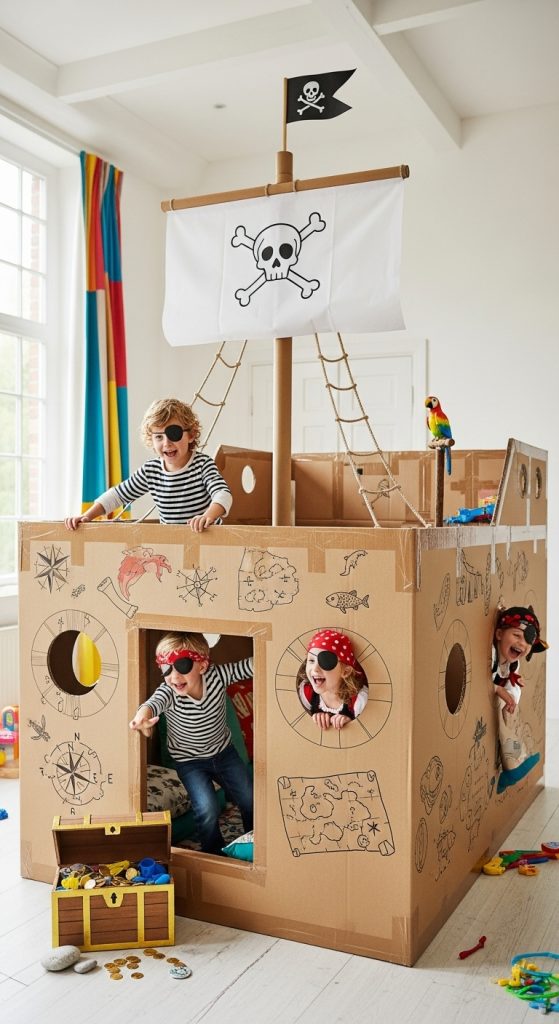
Ahoy, matey! A pirate ship cardboard house is perfect for adventurous kids who love swashbuckling stories. It combines physical play with imaginative adventures.
How to make it:
- Use a large rectangular box as the main ship body.
- Add a cardboard mast and sail.
- Cut out windows as portholes.
- Decorate with a pirate flag, treasure maps, or gold coin cutouts.
Why it works:
This design promotes imaginative play, storytelling, and even physical activity as kids climb in and out or pretend to sail.
Extra tip: Attach a rope ladder made of string and cardboard for a more interactive pirate experience.
7. Modern Tiny Home
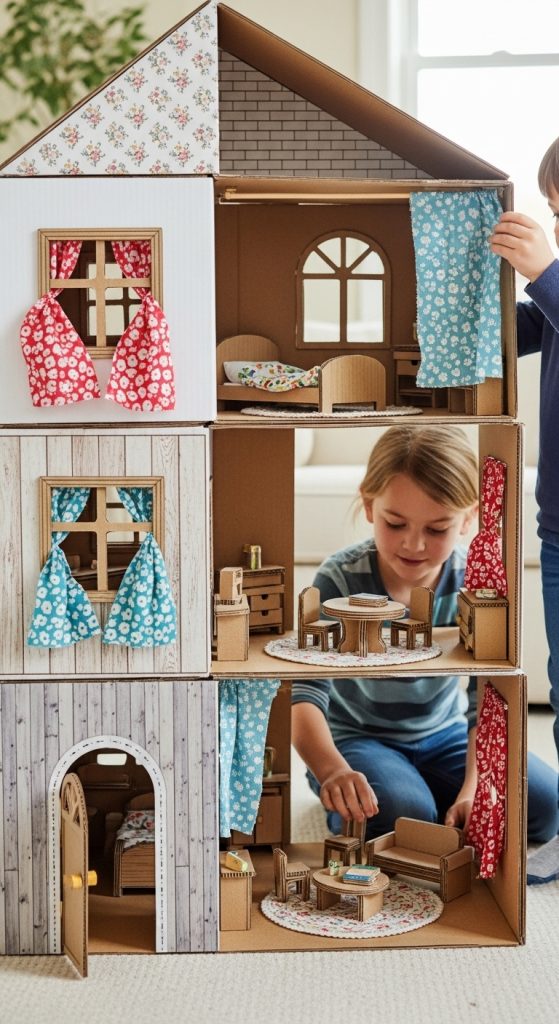
For kids interested in real-world architecture, a tiny home made from cardboard teaches design and spatial skills. It’s a miniature version of modern house designs with multiple rooms.
How to make it:
- Stack boxes to create multiple rooms.
- Cut out windows and doors in proportion.
- Use dividers to separate spaces like bedroom, living room, and kitchen.
- Decorate with printed paper patterns or washable paint.
Why it works:
This project introduces children to basic architecture and spatial awareness while allowing them to personalize their living space.
Extra tip: Use small fabric scraps for rugs, curtains, and bedding to make it cozy and realistic.
8. Treehouse in a Box
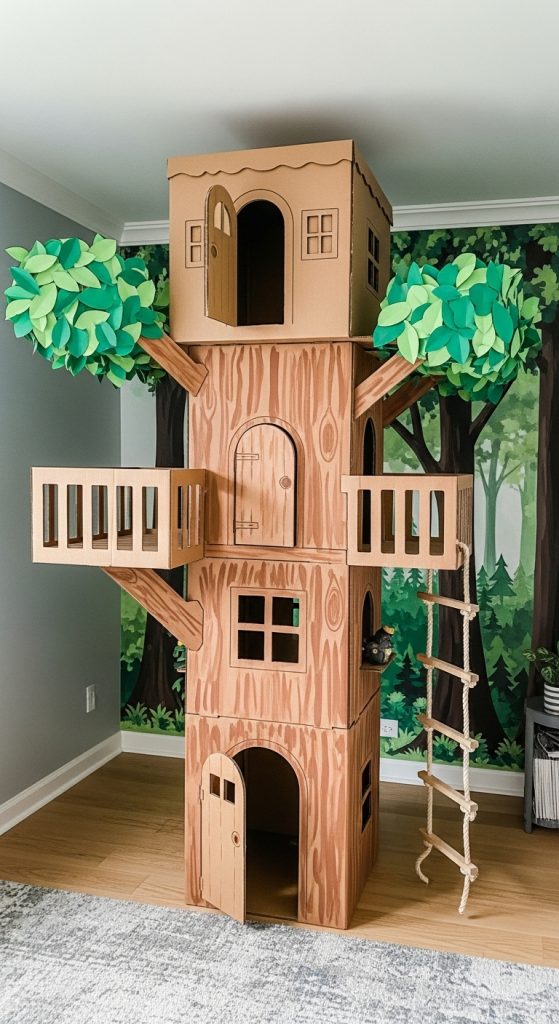
Bring the outdoors inside with a cardboard treehouse. Perfect for kids who love nature, it blends imagination with creative design.
How to make it:
- Use a tall box for the base and smaller boxes for platforms.
- Cut out doors and windows for climbing access.
- Decorate with green paper leaves and brown paint for the tree trunk.
- Add a rope swing or ladder using string and cardboard strips.
Why it works:
The treehouse encourages physical activity, imaginative play, and connection to nature. It’s also an excellent way to teach about trees and habitats.
Extra tip: Attach small LED lights for a magical nighttime effect inside the treehouse.
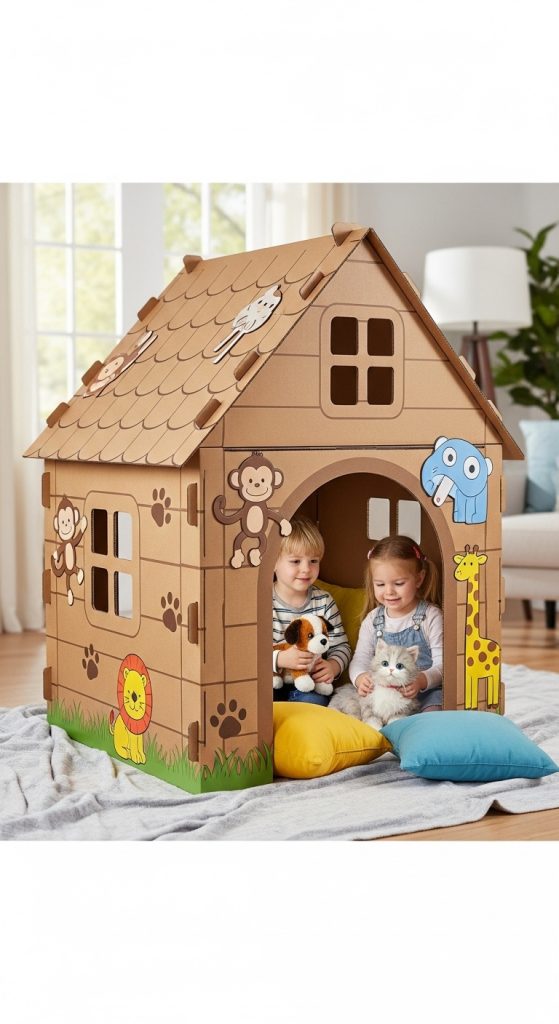
9. Animal or Pet House
A cardboard house can double as a pet home or an animal-themed playhouse. Kids who love animals will enjoy creating a themed environment for their stuffed toys or real pets.
How to make it:
- Choose a medium-sized box for the main house.
- Cut out a small door and windows.
- Decorate according to the animal theme, such as a doghouse, jungle, or zoo.
- Add animal cutouts or paw prints for decoration.
Why it works:
This project promotes empathy, care for animals, and imaginative play. Kids can pretend to feed, groom, and play with their toys or real pets.
Extra tip: Make small cardboard furniture inside, like beds or feeding areas for stuffed animals.
10. Fantasy Castle with Moat
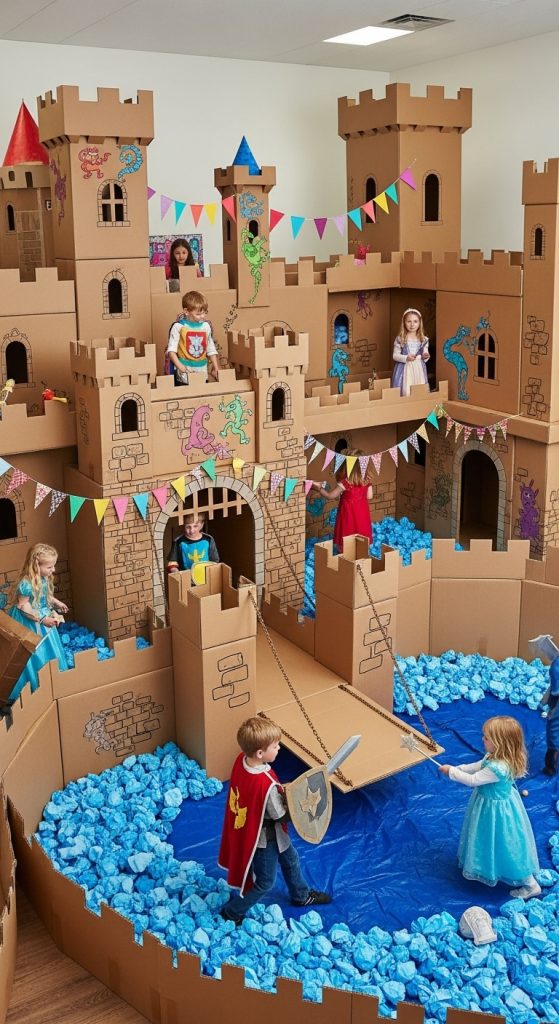
Take cardboard castles to the next level by adding a moat, drawbridge, and surrounding landscape. This elaborate design turns a simple cardboard box into a full fantasy kingdom.
How to make it:
- Use multiple boxes for towers and walls.
- Cut out battlements and windows.
- Create a moat using blue paper or fabric.
- Add a drawbridge and bridges using cardboard strips.
Why it works:
This cardboard house encourages storytelling, engineering skills, and imaginative adventures. It’s also excellent for collaborative play among siblings or friends.
Extra tip: Use small toy figures or LEGO characters to populate the castle for extra fun.
Tips for Building Cardboard Box Houses
- Choose the Right Box: Bigger boxes allow more creative freedom. Appliance boxes, moving boxes, or large shipping boxes work best.
- Safety First: Always use child-safe scissors and supervise with box cutters.
- Stability Matters: Reinforce edges and corners with masking or packing tape.
- Decorate with Creativity: Paint, markers, stickers, paper, and even natural elements like leaves and twigs can make your house unique.
- Encourage Imaginative Play: Once the house is complete, let kids invent games, stories, and roles.
- Reuse and Recycle: When the playhouse is no longer needed, recycle the cardboard or repurpose it for a new project.
Benefits of Cardboard Box Houses
Cardboard box houses are more than just fun; they offer numerous benefits for child development:
- Enhances Creativity: Kids design, decorate, and customize their homes.
- Encourages Problem Solving: Building the house requires planning and spatial thinking.
- Promotes Physical Activity: Crawling, lifting, and moving boxes improves coordination and strength.
- Fosters Social Skills: Shared building and role-playing teach cooperation and teamwork.
- Affordable and Sustainable: Cardboard boxes are inexpensive and recyclable, making this an eco-friendly activity.
Final Thoughts
Creating cardboard box houses for kids is a wonderful way to combine fun, creativity, and learning. From castles to tiny homes, pirate ships to fairy cottages, these ten ideas are just the beginning. With a little imagination, simple cardboard boxes can turn into magical spaces where children explore, learn, and play for hours.
No matter the theme, the most important part is letting your child’s imagination take the lead. Cardboard houses are versatile, reusable, and endlessly customizable, making them the perfect DIY project for kids of all ages.

